



In the contemporary construction industry, steel structure buildings have emerged as a dominant force, driven by their inherent strength, versatility, and adaptability. As global challenges such as climate change, extreme weather events, and rapid urbanization intensify, the demand for building solutions that combine innovation and resilience has never been higher. Innovative and resilient steel structure building solutions integrate cutting-edge design methodologies, advanced materials, and precision engineering to deliver structures that not only push the boundaries of architectural possibility but also withstand the test of time and harsh environmental conditions. This article explores the multifaceted dimensions of these solutions, covering technological innovations in design and construction, resilience performance in extreme scenarios, real-world application cases, sustainability integration, and future development trends, providing a comprehensive overview of how steel structure technology is reshaping the built environment.
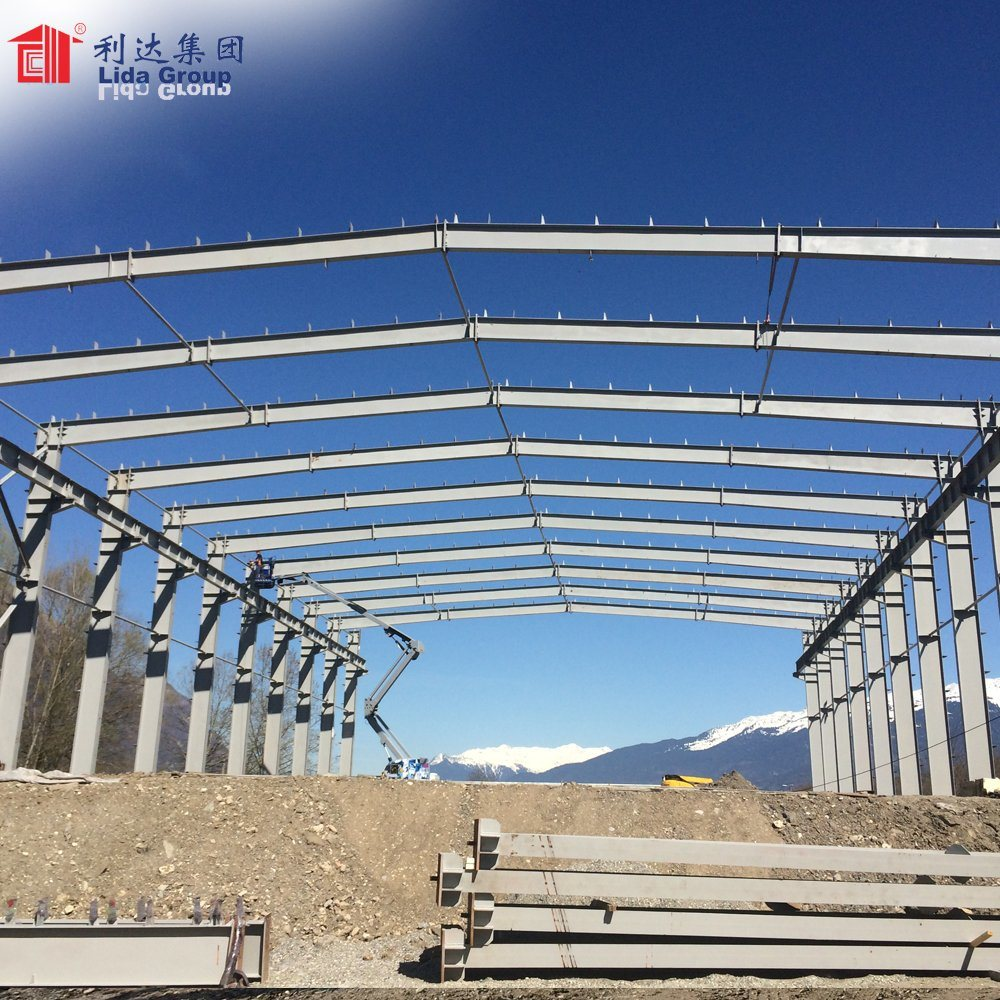
1. Technological Innovations: Redefining Steel Structure Design and Construction
The evolution of steel structure building solutions is intrinsically linked to technological innovation, which has continuously enhanced the performance, efficiency, and flexibility of steel-based constructions. From material optimization to intelligent construction processes, innovations have addressed traditional limitations and opened up new avenues for architectural design. This section delves into the key innovative technologies that are transforming steel structure buildings.
1.1 Advanced Material Innovations and Structural Optimization
Material innovation stands as the cornerstone of progressive steel structure solutions. Modern steel production has witnessed the development of high-performance steel grades with superior mechanical properties, including enhanced strength, ductility, and corrosion resistance. Among these, transversely hybrid steel elements have emerged as a game-changing innovation, addressing the inefficiency of uniform-section steel components. By utilizing different types of steel for flanges and webs—tailoring material properties to the stress distribution within the structure—engineers can significantly improve structural efficiency while reducing weight and material consumption. This approach leverages the fact that flanges and webs endure varying stress levels under bending, making it unnecessary to use high-strength steel uniformly across the entire component.
Geometric optimization further complements material innovations, with mathematical algorithms playing an increasingly pivotal role in structural design. Sequential Quadratic Programming (SQP) methods have been applied to optimize the shape and physical properties of thin-walled beam-like structures, while heuristic algorithms such as the Big Bang-Big Crunch method have yielded practical insights into flange tapering and weight reduction for doubly symmetric I-beams. Genetic algorithms, in particular, have demonstrated remarkable efficacy in cost optimization—Martins et al. (2023) utilized this approach to optimize I-section steel girders, achieving material cost savings of 30–35% without compromising structural integrity. For extreme conditions, topology optimization methods, such as the BESO method proposed by Habash Neh et al. (2024), integrate thermoelastic-plastic behavior and geometric imperfections to design steel beams that mitigate heat transfer under elevated temperatures, enhancing fire resilience.
Cold-formed thin-walled steel (CFS) technology represents another significant material innovation, enabling the construction of lightweight yet robust structures. With steel thicknesses ranging from 1.2 to 1.8 millimeters, CFS components offer an exceptional strength-to-weight ratio, reducing overall building weight to approximately one-fourth that of traditional brick-concrete structures. This technology has been validated through groundbreaking research, such as the world-first 6-story CFS building vibration test conducted by Chongqing University. The test structure, equipped with innovative double-insulated shear walls, withstood bidirectional magnitude-8 earthquakes—exceeding the performance of previous one-way tests conducted in the United States—with only minor damage to wall panels and fasteners, confirming the technology’s potential for high-rise resilient construction.
1.2 Intelligent Construction and Prefabrication Technologies
Prefabrication has revolutionized steel structure construction, shifting a significant portion of work from on-site to factory environments, where precision and quality control are vastly improved. Modern steel structure prefabrication integrates automated production lines, robotic welding, and digital quality monitoring to ensure consistent component accuracy. For instance, advanced production facilities feature automatic composite panel lines, purlin production lines, and fully automated light steel villa assembly systems, enabling high-volume production with minimal human error. Roller straightening techniques, optimized through finite element modeling, further enhance the dimensional accuracy of H-beams, critical for ensuring structural stability in large-scale projects.
Digital twin and Building Information Modeling (BIM) technologies have become integral to intelligent steel structure construction. BIM facilitates seamless collaboration across design, production, and construction phases, enabling 3D visualization of structural components, clash detection, and precise material quantification. By integrating real-time data from sensors installed on prefabricated components, digital twins allow for dynamic monitoring of construction progress and structural performance, identifying potential issues before they escalate. This digital integration not only improves construction efficiency but also lays the foundation for post-construction maintenance and lifecycle management.
Innovative connection technologies further enhance the efficiency and resilience of prefabricated steel structures. Bolted connections with high-strength fasteners replace traditional welding in many applications, reducing on-site construction time and enabling easier disassembly and reuse. For seismic-prone regions, ductile connection designs—such as reduced beam section (RBS) connections—absorb earthquake energy through controlled deformation, protecting the main structural components from catastrophic failure. These connection innovations align with international standards, including ANSI/AISC 341-16 and India’s IS 18168:2023, which specify seismic design requirements for steel buildings, emphasizing ductility and energy dissipation.
2. Resilience Performance: Steel Structures Against Extreme Conditions
Resilience—defined as a structure’s ability to withstand, adapt to, and recover from extreme events—is a core attribute of modern steel structure building solutions. Steel’s inherent ductility, strength, and toughness make it inherently resilient, and innovative design and detailing further enhance its performance under earthquakes, typhoons, fires, and other hazards. This section examines how steel structures are engineered to achieve exceptional resilience across diverse extreme scenarios.
2.1 Seismic Resilience: Designing for Earthquake Resistance
Earthquake resilience is a primary focus of steel structure design, particularly in seismically active regions. Steel’s ductile nature allows it to deform plastically without fracturing, absorbing seismic energy and preventing sudden structural collapse. Modern seismic design for steel buildings adheres to rigorous international standards, such as India’s IS 18168:2023, which provides detailed provisions for ductile design and detailing of moment-resisting frames and braced frames. These standards specify requirements for steel mechanical properties, welding electrodes, and joint design, ensuring that structures can sustain damage during strong ground shaking while protecting human life.
Innovative seismic resistance systems have further elevated the resilience of steel structures. The double-insulated shear wall system developed by Chongqing University’s research team exemplifies this advancement. By integrating steel plates on both sides of wall panels and embedding steel cores within the墙体, the system creates a dual lateral load-resisting mechanism that addresses both transverse and longitudinal seismic forces. This design was critical to the success of the 6-story CFS building test, where the structure maintained overall stability despite intense seismic shaking. Base isolation technology, another key innovation, decouples the building from ground motion using isolation bearings, reducing seismic forces transmitted to the superstructure. This approach is increasingly adopted in high-value and critical facilities, aligning with standards such as IS 1893 (Part 6): 2022 for base-isolated buildings.
Metaheuristic algorithm optimization has also contributed to seismic resilience by minimizing the weight of 3D steel frames while enhancing their load-bearing capacity. Optimized non-prismatic elements, designed through these algorithms, exhibit significant weight reductions compared to traditional prismatic components, without sacrificing seismic performance. This balance of efficiency and resilience is essential for sustainable high-rise construction in earthquake-prone regions.
2.2 Resilience Against Extreme Weather and Environmental Hazards
Steel structures are engineered to withstand a range of extreme weather conditions, from typhoons and hurricanes to extreme temperatures and sandstorms. For high-wind environments, steel frames with optimized bracing systems and aerodynamic designs reduce wind loads and prevent structural oscillation. Light steel keel systems, combined with structural panels, form ribbed wall structures that exhibit exceptional wind resistance, making them suitable for typhoon-prone coastal regions. In desert environments, such as Saudi Arabia, steel components are treated with advanced anti-corrosion coatings to resist sand erosion and extreme temperature fluctuations, which can range from sub-zero nights to scorching daytime heat exceeding 50°C.
Fire resilience is another critical aspect of steel structure design, as unprotected steel loses strength at elevated temperatures. Innovative fire protection solutions include intumescent coatings that expand to form an insulating layer when exposed to heat, and concrete encasement for critical components. Topology-optimized steel beams, with strategically designed openings, further enhance fire resilience by mitigating heat transfer, as demonstrated in recent research by Habash Neh et al. (2024). These openings reduce thermal conductivity while maintaining structural integrity, extending the time a structure can withstand fire before requiring evacuation.
Corrosion resistance, essential for long-term resilience in marine and industrial environments, is achieved through material selection and protective treatments. Weathering steel, which forms a stable rust layer that inhibits further corrosion, is increasingly used in outdoor structures. For marine applications, such as coastal bridges and offshore facilities, galvanized steel and epoxy coatings provide robust protection against saltwater exposure, ensuring decades of service life with minimal maintenance.
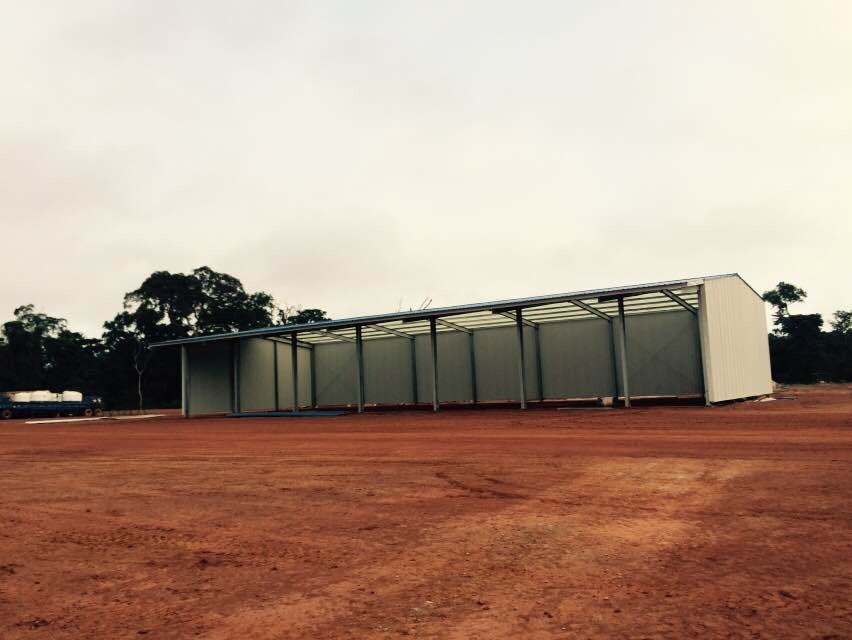
3. Real-World Applications: Innovative and Resilient Steel Structure Projects
The practical application of innovative and resilient steel structure solutions is evident in a diverse range of projects worldwide, spanning high-rises, industrial facilities, emergency shelters, and infrastructure. These projects demonstrate how technological innovations translate into tangible resilience and performance, addressing unique environmental and functional challenges.
3.1 Domestic Landmark Projects
In China, the 6-story cold-formed thin-walled steel building tested by Chongqing University stands as a milestone in resilient low-rise construction. This full-scale test structure, 16.2 meters tall, underwent hundreds of seismic simulations, including the Wenchuan earthquake wave, and successfully withstood bidirectional magnitude-8 earthquakes. The project’s success has paved the way for the widespread adoption of CFS technology in residential and commercial buildings, particularly in earthquake-prone regions such as Sichuan and Yunnan provinces. The Beijing Olympic Sailing Center, another iconic project, utilized corrosion-resistant steel structures to withstand the harsh marine environment, combining aesthetic appeal with long-term durability. The steel components were precision-manufactured using prefabrication technologies, ensuring rapid construction and consistent quality.
China’s high-speed rail infrastructure also relies heavily on innovative steel structures. Railway bridges and stations incorporate optimized steel girders, designed using genetic algorithms to reduce material costs while maintaining resilience against dynamic loads from high-speed trains. These structures are engineered to withstand extreme temperatures and seismic activity, ensuring the reliability of critical transportation networks.
3.2 International Flagship Projects
In Saudi Arabia, the King Saud University Campus project demanded steel structure solutions capable of withstanding extreme desert conditions. The project utilized corrosion-resistant steel components with advanced thermal insulation, ensuring structural stability against sandstorms and temperature extremes. The steel frames were optimized for material efficiency using geometric design algorithms, reducing construction costs while enhancing resilience. This project exemplifies the adaptability of steel structures to harsh environments, establishing a benchmark for future construction in the Middle East.
United Nations Peacekeeping camps in South Sudan, Mali, and Sri Lanka represent critical applications of resilient steel structures in conflict and disaster zones. These modular camps, constructed using prefabricated steel components, are designed to withstand extreme temperatures, heavy rainfall, and potential structural impacts. The modular design enables rapid assembly and disassembly, while the steel structure ensures durability in remote and harsh conditions, providing safe living environments for peacekeeping personnel for years with minimal maintenance. These camps demonstrate how steel structures balance resilience, mobility, and functionality in emergency scenarios.
In Europe, industrial facilities and bridges increasingly adopt hybrid steel-concrete structures, leveraging the strengths of both materials. For example, composite road bridges optimized using genetic algorithms enhance sustainability by reducing material consumption while maintaining resilience against heavy traffic loads and environmental degradation. These projects align with the European Union’s green deal objectives, combining innovation, resilience, and sustainability.
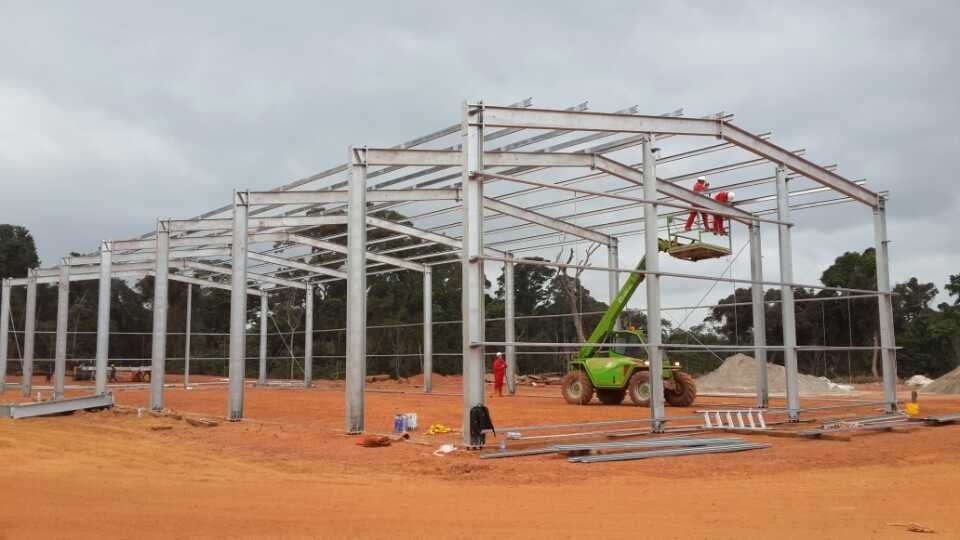
4. Sustainability Integration: Resilient Steel Structures for a Greener Future
In an era of growing environmental consciousness, innovative steel structure building solutions are increasingly integrated with sustainability principles, balancing resilience and performance with environmental responsibility. Steel’s inherent sustainability, combined with innovative design and production processes, makes it a preferred material for green construction.
Steel is one of the most recyclable materials globally, with a recycling rate exceeding 98% in the construction industry. According to 2023 data from the World Steel Association, 98.15% of raw materials in the steel industry are converted into products or co-products, minimizing waste. Recycled steel retains the same mechanical properties as virgin steel, reducing the environmental impact of steel production by lowering energy consumption and carbon emissions. The industry’s energy intensity, measured at 21.27 gigajoules per ton of crude steel, continues to decrease through technological advancements, further enhancing sustainability.
Innovative design and optimization technologies contribute significantly to sustainability by reducing material waste. Genetic algorithms, topology optimization, and geometric design innovations minimize steel usage while maintaining resilience, lowering the carbon footprint of structures. Prefabrication further reduces waste by standardizing components and enabling precise material quantification, with on-site waste reduced by up to 50% compared to traditional construction methods. Additionally, the lightweight nature of steel structures reduces foundation requirements, minimizing soil disturbance and environmental impact during construction.
Steel structures also support energy-efficient building operations. The thermal conductivity of steel can be enhanced with insulation materials, reducing heating and cooling energy consumption. Prefabricated steel components with integrated insulation systems, such as composite panels, provide excellent thermal performance, lowering a building’s lifecycle energy costs and carbon emissions. The steel industry’s commitment to sustainability is further demonstrated by its investment in new technologies, with 7.25% of revenue allocated to research and development of new products and processes in 2023.
5. Future Trends: The Next Frontier of Steel Structure Innovation and Resilience
The future of innovative and resilient steel structure building solutions is shaped by emerging technologies, evolving global challenges, and changing industry demands. Several key trends are poised to drive the next phase of development in steel structure construction.
Digitalization and Intelligent will continue to deepen, with artificial intelligence (AI) and machine learning playing increasingly prominent roles in design and optimization. AI algorithms will enable real-time adaptation of steel structures to changing environmental conditions, such as adjusting bracing systems in response to wind loads. IoT sensors integrated into steel components will provide continuous monitoring of structural health, predicting potential failures and enabling proactive maintenance. This digital transformation will enhance both resilience and lifecycle management, extending the service life of steel structures.
Advanced material development will focus on ultra-high-strength steel grades and functionalized steel components. Self-healing steel, which can repair cracks using embedded materials, is a promising area of research, potentially revolutionizing structural resilience. Nanotechnology applications, such as carbon nanotube-reinforced steel, will further enhance strength and durability, enabling the construction of lighter, taller, and more resilient structures. These materials will be complemented by advancements in fire-resistant and corrosion-resistant treatments, extending the performance of steel structures in extreme environments.
Modular and adaptive steel structures will gain traction in response to urbanization and the need for flexible built environments. Prefabricated modular steel systems enable rapid construction of residential, commercial, and emergency buildings, with the ability to reconfigure spaces as needs change. These systems align with the trend toward circular construction, where components are designed for disassembly and reuse, reducing waste and enhancing sustainability. For high-rise construction, modular steel structures will enable safer and more efficient building processes, with prefabricated components assembled on-site using robotic technologies.
Global collaboration and standardization will further advance steel structure innovation and resilience. International standards, such as those developed by the American Institute of Steel Construction (AISC) and the Bureau of Indian Standards (BIS), will continue to evolve to address emerging challenges, such as climate change and new materials. Cross-industry partnerships between steel manufacturers, engineers, and technology firms will accelerate the development and adoption of innovative solutions, ensuring that steel structures remain at the forefront of resilient and sustainable construction.
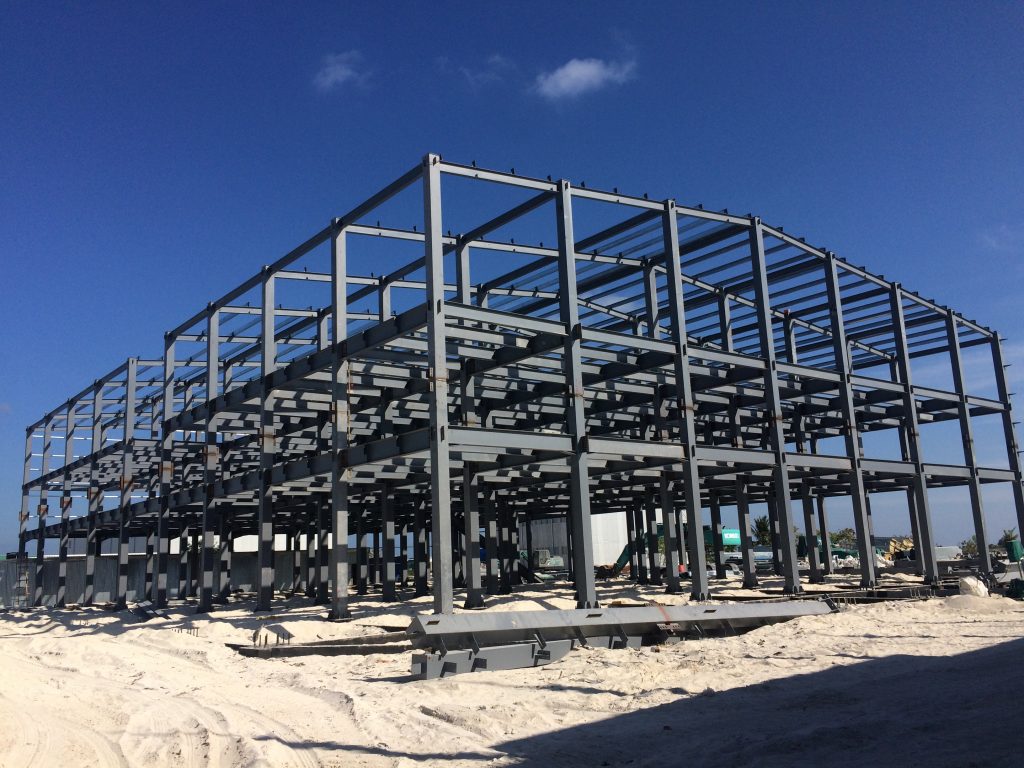
6. Conclusion: The Indispensable Role of Innovative and Resilient Steel Structures
Innovative and resilient steel structure building solutions have established themselves as a cornerstone of modern construction, offering unparalleled performance, adaptability, and sustainability. Through advancements in material science, design optimization, intelligent construction, and resilience engineering, steel structures have transcended traditional limitations, enabling the construction of safer, more efficient, and environmentally responsible buildings and infrastructure.
Material innovations, such as hybrid steel elements, cold-formed thin-walled steel, and optimized geometric designs, have enhanced both the efficiency and resilience of steel structures, reducing material consumption while improving performance under extreme conditions. Intelligent construction technologies, including prefabrication, BIM, and digital twins, have streamlined construction processes, ensuring precision and quality while minimizing environmental impact. Resilience engineering, aligned with rigorous international standards, has equipped steel structures to withstand earthquakes, extreme weather, and fire, protecting lives and assets in the face of global challenges.
Real-world projects, from the seismic-resistant CFS buildings in China to the desert-resilient structures in Saudi Arabia, demonstrate the practical value of these innovations, proving that steel structures can adapt to diverse environmental and functional demands. The integration of sustainability principles, driven by steel’s recyclability and energy efficiency, further cements its role in building a greener future, aligning with global climate goals.
Looking ahead, the continued evolution of digital technologies, advanced materials, and modular systems will unlock new possibilities for steel structure construction. As the world grapples with urbanization, climate change, and the need for resilient infrastructure, innovative and resilient steel structure building solutions will remain indispensable. By combining engineering excellence with environmental responsibility, steel structures will continue to shape the built environment, delivering safe, sustainable, and adaptable spaces for generations to come.
In essence, steel structure technology represents more than just a construction method—it is a catalyst for innovation, resilience, and sustainability. As research and development advance, and as global collaboration strengthens, steel structures will continue to set new benchmarks for performance and responsibility, proving that the future of construction is both strong and sustainable.
Related news
-
Modern Living Redefined with a Metal Frame House
2025-12-25 17:56:50
-
Lida Group Delivers Unmatched High Quality Durable Construction
2025-12-26 16:36:42
-
Engineered for Longevity: Steel Structure Building by Lida Group
2025-12-25 17:44:00
contact us
- Tel: +86-532-88966982
- Whatsapp: +86-13793209022
- E-mail: sales@lidajituan.com
