



Flexible Design in Modern Mobile Container Dormitory Solutions
2026-Jan-22 17:37:24
By Admin
In the context of evolving institutional needs—from dynamic construction site housing and temporary student accommodation to emergency disaster shelters and rural community residences—modern mobile container dormitories have transcended their traditional “temporary structure” label. At the heart of this transformation lies flexible design, a core competency that enables these dormitories to adapt to diverse functional requirements, spatial constraints, and environmental conditions. Unlike rigid brick-and-mortar buildings, modern mobile container dormitories leverage modular engineering, customizable components, and adaptive layouts to deliver tailored solutions for governments, construction enterprises, educational institutions, and non-profit organizations worldwide. This article explores the multi-dimensional flexible design elements of modern mobile container dormitories, analyzes the technical innovations that underpin flexibility, showcases real-world application cases, and discusses market trends and industry impacts, revealing how flexible design redefines the value of mobile container dormitory solutions.
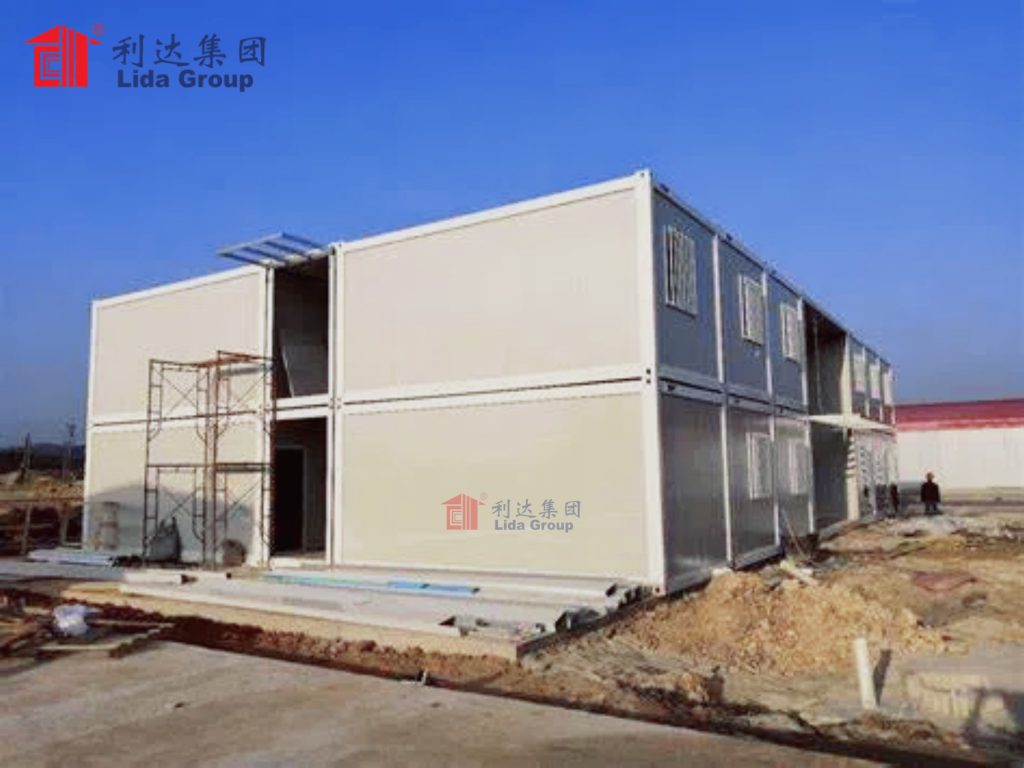
1. Market Context: The Rising Demand for Flexible Container Dormitory Solutions
The global mobile container dormitory market is witnessing steady growth, driven by increasing demand for adaptable, cost-effective, and sustainable housing solutions. Industry data indicates that the Chinese container house market reached 661.2 billion yuan in 2024, with a year-on-year growth of 3.1%, while the global residential container market scaled to 914.96 billion yuan in 2025 and is projected to exceed 1751 billion yuan by 2032, boasting a compound annual growth rate (CAGR) of 9.72% . This growth is not merely quantitative but qualitative—flexibility has become a key purchasing criterion for clients, as institutional needs grow more dynamic and diverse.
1.1 Drivers of Flexible Design Demand
The demand for flexible design in mobile container dormitories stems from three core factors. First, dynamic institutional needs: Construction projects require dormitories that can move with project sites, universities need temporary accommodation for short-term programs, and emergency agencies demand shelters that can be rapidly deployed and repurposed. Second, policy support for modular construction: China’s 14th Five-Year Plan for Construction Industry Development mandates that prefabricated buildings account for over 30% of new constructions by 2025, with the central government allocating 38.7 billion yuan in 2024 to support container-based resettlement housing . Local policies further incentivize flexibility—Guangdong Province requires 100% of temporary housing for large infrastructure projects to use container systems, while Jiangsu Province offers subsidies of 300 yuan per square meter for customizable container dormitories . Third, cost and efficiency pressures: Flexible design reduces total lifecycle costs by enabling reuse, reconfiguration, and adaptation to changing needs, avoiding the waste of permanent structures.
1.2 Market Segmentation and Flexible Design Requirements
Different market segments have distinct flexible design needs. Construction and infrastructure sectors prioritize transportability and rapid reconfiguration; educational institutions focus on space adaptability for student living and learning; emergency relief requires foldable, quick-deploy designs; and rural and cultural tourism projects demand customization to local contexts. This segmentation drives manufacturers to develop modular, multi-functional container dormitories that can be tailored to specific scenarios, rather than one-size-fits-all products. Chinese manufacturers are increasingly catering to global demand, with overseas business share growing from 5.3% in 2022 to 9.7% in 2024, covering Southeast Asia, the Middle East, and “Belt and Road” markets with flexible solutions .
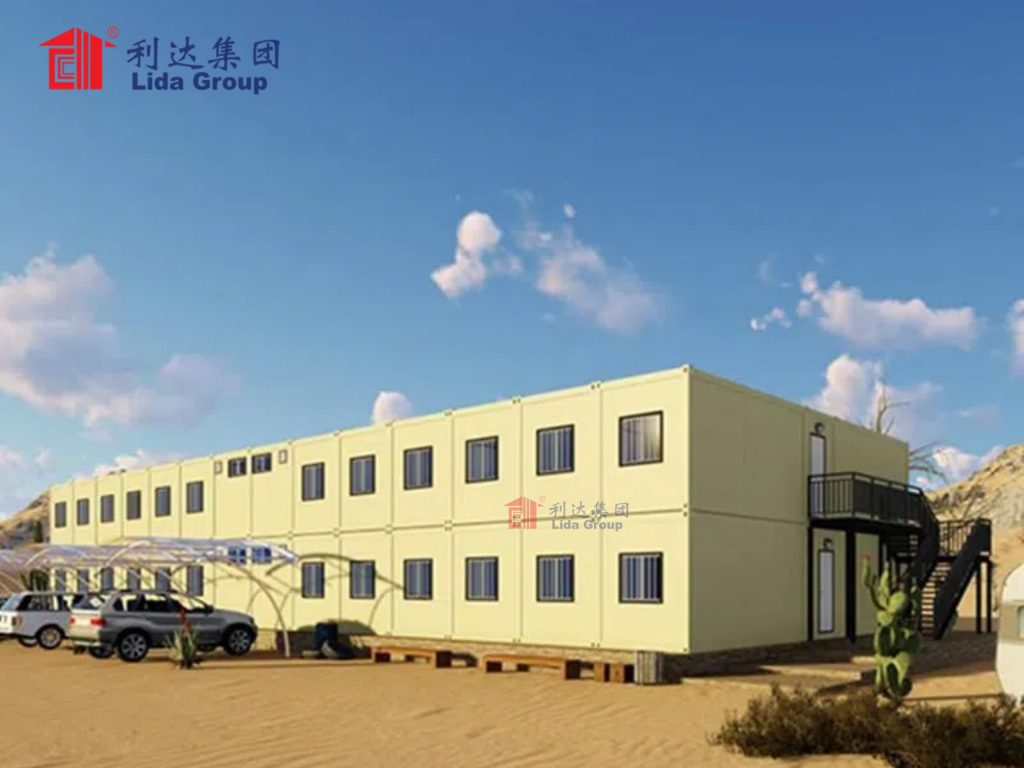
2. Multi-Dimensional Flexible Design Elements of Modern Mobile Container Dormitories
Flexible design in modern mobile container dormitories is a systematic concept, encompassing spatial layout, functional adaptation, transportation and assembly, and sustainable reusability. These dimensions interact synergistically to maximize the adaptability and value of the dormitories across their lifecycle.
2.1 Spatial Layout Flexibility: Modular Combination and Dynamic Adjustment
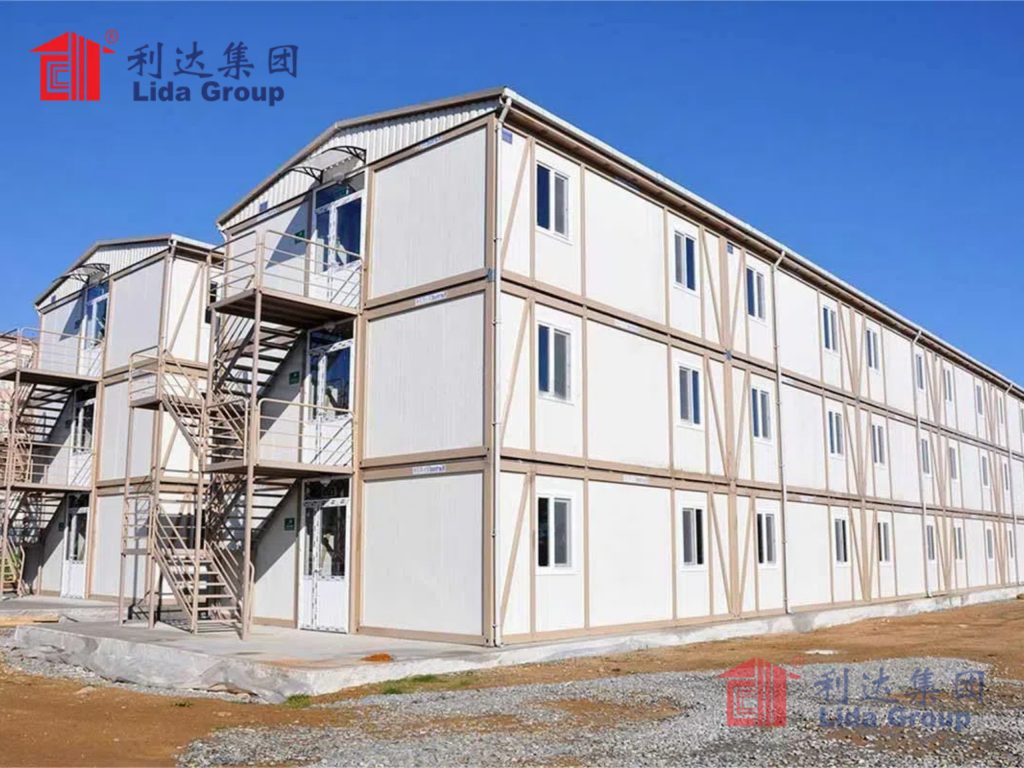
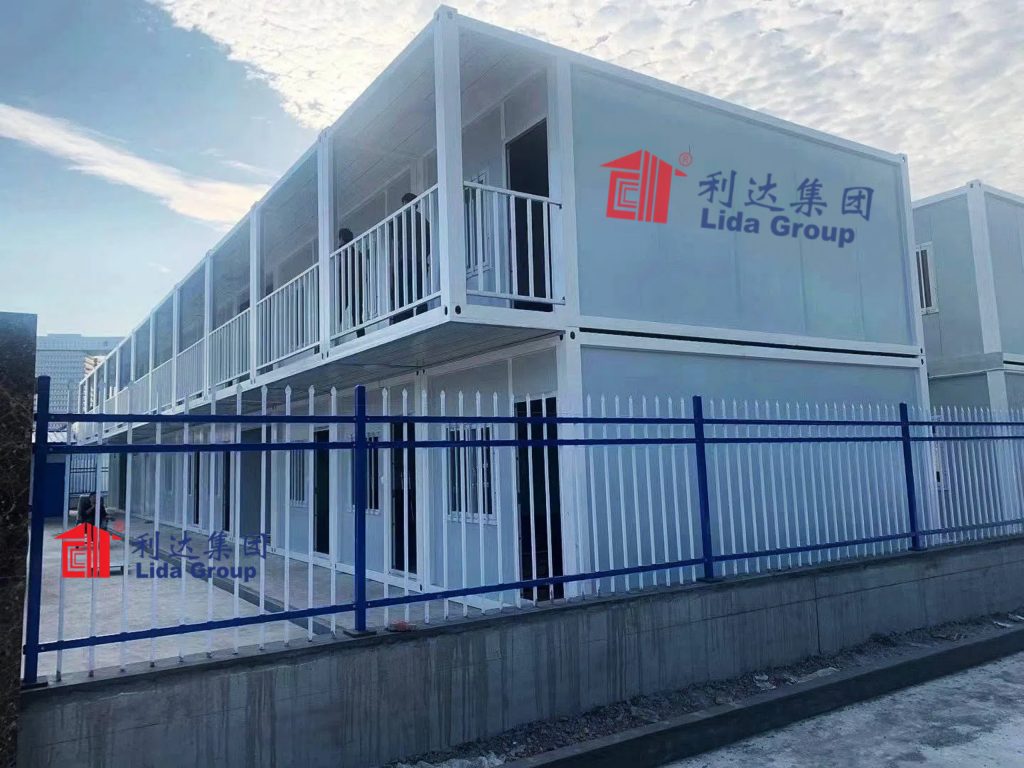
Spatial flexibility is the foundation of modern container dormitory design, achieved through modular combination and adjustable internal layouts. At the structural level, dormitory units are designed as standardized modules (20ft, 40ft, or custom sizes) that can be combined horizontally or vertically to form complexes of varying scales. Horizontal combination allows for the creation of shared spaces such as corridors, lounges, and bathrooms, while vertical stacking (up to 3 levels, compliant with EN 12079 standards) optimizes land use in space-constrained areas like urban construction sites or university campuses.
Internal layout flexibility is enabled by movable partitions, foldable furniture, and multi-functional spaces. For example, the 64-container worker dormitory built by China Railway Sixth Bureau for the suburban railway Fuxi Line project in Beijing features a modular layout that divides 1500 square meters into 10 functional zones, including dormitories, a safety experience hall, a barbershop, a medical room, and a supermarket . Dormitory rooms can be adjusted between 2-person, 4-person, and 6-person configurations using lightweight, soundproof movable partitions, adapting to changes in worker numbers. Foldable beds and wall-mounted desks further maximize space utilization—when not in use, beds can be folded up to create a temporary activity area, while desks can be extended to accommodate group study or meetings.
Advanced designs integrate sliding or folding exterior walls to expand usable space. Tokyo’s Shibuya rooftop container dormitory uses 200 types of green plants to cover the exterior and features folding glass walls that transform 30-square-meter rooms into open-air terraces, enabling seamless switching between living and socializing scenarios . This spatial adaptability ensures that container dormitories can meet diverse user needs without major renovations.
2.2 Functional Adaptability: Scenario-Specific Customization
Functional flexibility refers to the ability of container dormitories to adapt to different institutional scenarios through component customization and system integration. Manufacturers offer a range of configurable components and auxiliary systems to tailor dormitories to specific needs, eliminating the need for post-assembly modifications.
For construction site dormitories, functional customization focuses on safety, durability, and worker well-being. The China Railway Sixth Bureau project integrates an AR fire simulation system and VR safety experience zone into the dormitory complex, allowing workers to conduct safety training without leaving the residence . Dormitory rooms are equipped with anti-theft lockers, air conditioning, and high-speed Wi-Fi, while shared kitchens and laundry rooms feature energy-efficient appliances. An innovative “point reward system” links safety performance to on-site supermarket vouchers, blending living functions with safety management.
For educational and student dormitories, customization prioritizes learning and comfort. Dutch university container dormitories include built-in study desks, bookshelves, and soundproof partitions to create quiet study spaces. Shared areas are equipped with multimedia classrooms and gyms, adapting to both living and educational needs. In rural China, container dormitories for teachers and students integrate local architectural elements—Yunnan Dali’s cultural settlement container dormitories adopt Bai ethnic group-style decorations and outdoor courtyards, blending modern functionality with cultural heritage .
Emergency relief dormitories emphasize rapid deployment and multi-functional conversion. After the 6.8-magnitude earthquake in Tingri County, Tibet, 20 foldable container dormitories provided by Anhui Province were set up in one day, accommodating 200 displaced people . These dormitories can be quickly converted into medical consultation rooms by installing removable medical cabinets and disinfection systems, or into temporary classrooms with foldable desks and blackboards. During the COVID-19 pandemic, Southeast Asian NGOs deployed 50 folding container units as quarantine centers, equipped with medical-grade ventilation and remote health monitoring systems, which were later repurposed as community centers .
2.3 Transportation and Assembly Flexibility: Portability and Rapid Deployment
Transportation and assembly flexibility is critical for mobile container dormitories, enabling them to be deployed across diverse locations with minimal logistical costs. Three design approaches dominate this dimension: foldable structures, demountable modules, and standardized connection systems.
Foldable container dormitories use hydraulic rods to compress units into compact sizes for transport. When unfolded, a 20ft foldable unit can double its usable space from 18㎡ to 22㎡ in 15-20 minutes, with no professional tools required . Ten folded units can fit into a single 40ft shipping container, reducing logistics costs by 50% compared to standard units. This design is ideal for emergency relief and temporary projects, as it enables rapid deployment in remote or disaster-stricken areas.
Demountable container dormitories (also known as “packaging boxes”) are disassembled into standardized components (frames, panels, connectors) for transport. These components can be reassembled on-site in hours, with no welding required, and can be reused multiple times with minimal wear. Shanghai Construction Engineering Group has promoted demountable steel structure container dormitories citywide, establishing standards for design, production, and assembly to ensure flexibility and safety .
Standardized connection systems, such as ISO-compatible Twistlock connectors, enable quick assembly of multiple units. A 2-person team can assemble a 3m×6m unit in 4 hours, while a 40-unit complex can be completed in 5 days . This flexibility eliminates reliance on specialized labor, reducing assembly time and costs for international or remote projects.
2.4 Sustainable Flexibility: Circular Design and Lifecycle Adaptation
Sustainable flexibility integrates circular economy principles into design, enabling container dormitories to be reused, repurposed, and recycled across multiple lifecycles. This not only reduces environmental impact but also enhances long-term cost-effectiveness.
Material selection is central to sustainable flexibility. Modern container dormitories use recycled Q235 galvanized steel for frames, which reduces carbon emissions by 65% compared to virgin steel . Roofs and walls adopt recyclable sandwich panels (rock wool or fiberglass), while interiors use low-VOC paints and renewable materials like bamboo flooring. Shanghai’s zero-carbon exhibition hall container dormitory combines recycled steel, bamboo-wood composite panels, and photovoltaic films, achieving energy self-sufficiency with annual power generation of 8,000 kWh .
Modular design enables repurposing across different scenarios. Zhejiang Anji’s “container homestay village” repurposes old shipping containers into guest rooms, integrating local landscapes to attract over 100,000 tourists annually . After construction projects are completed, dormitories can be relocated to new sites or converted into community centers, schools, or retail spaces. China International Marine Containers (CIMC) has developed a modular system that allows container dormitories to be transformed into office buildings or apartments with minimal modifications, extending their service life to over 20 years.
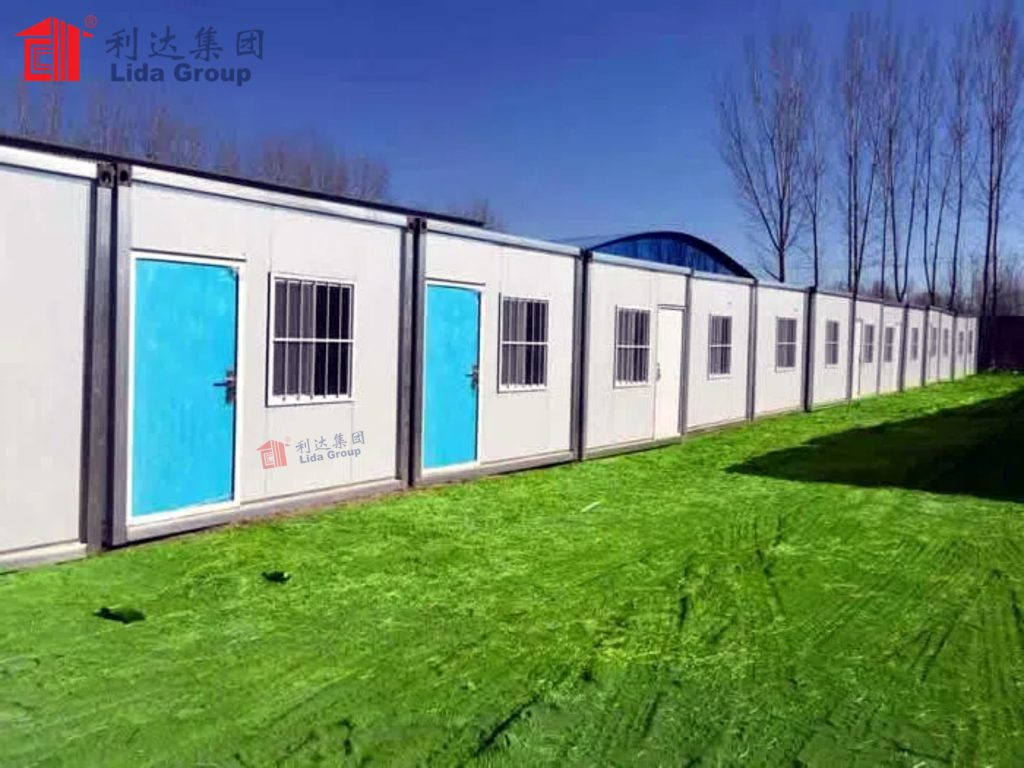
3. Technical Innovations Supporting Flexible Design
The flexibility of modern mobile container dormitories is underpinned by advanced engineering and technological innovations, ensuring that adaptability does not compromise safety, durability, or performance.
3.1 Structural Engineering: Strength and Adaptability
High-strength steel frames form the backbone of flexible container dormitories. Q235 galvanized steel frames, with a yield strength of 235 MPa and 40 g/m² zinc coating, offer corrosion resistance and durability in harsh environments (-45℃ to 50℃). Corner pillars (210×150×30mm with 2.75mm thickness) support vertical stacking and meet grade 8 seismic resistance and level 12 wind resistance standards (220 km/h), enabling safe deployment in earthquake-prone or coastal regions .
Modular joint designs allow for easy disassembly and reconfiguration. Bolted connections replace welding, enabling components to be reused without structural damage. Flexible joint systems absorb seismic energy and accommodate minor structural adjustments, ensuring stability even when units are combined in non-standard configurations.
3.2 Smart and Digital Integration
Digital technologies enhance flexible design by enabling real-time adjustments and remote management. Digital twin technology creates virtual models of container dormitories, allowing developers to simulate different layouts, functional configurations, and energy usage before deployment . This reduces design errors and ensures optimal flexibility for specific scenarios.
IoT sensors and smart control systems enable dynamic adjustment of internal environments. Temperature, humidity, and occupancy sensors automatically adjust heating, ventilation, and lighting, adapting to changing user needs. For off-grid projects, roof-mounted photovoltaic panels and lithium iron phosphate batteries provide renewable energy, with AI-powered systems optimizing power distribution. Remote monitoring systems alert managers to maintenance needs, ensuring that flexible modifications do not compromise performance.
3.3 Material Innovation
New materials enhance both flexibility and performance. Lightweight, high-strength composite panels reduce unit weight, improving transportability while maintaining insulation and fire resistance. 3D-printed components, such as custom connectors and interior fixtures, enable rapid customization of small-batch orders, supporting scenario-specific design needs. Self-healing waterproof membranes and corrosion-resistant coatings extend service life, ensuring that repeated assembly, disassembly, and relocation do not degrade performance.
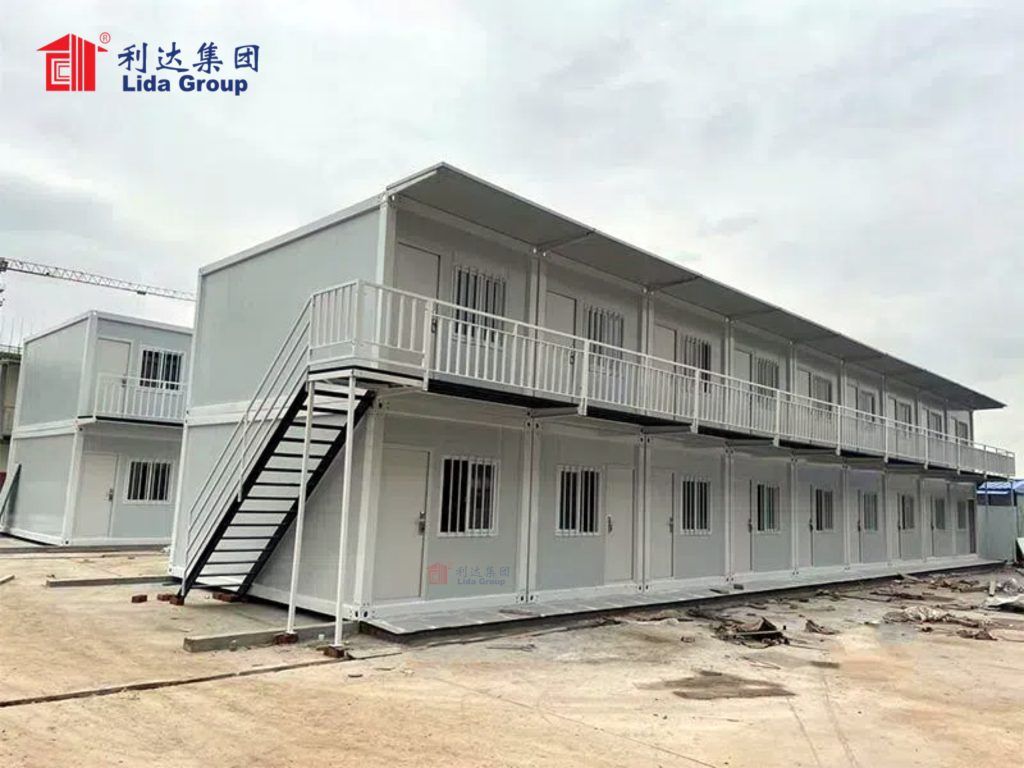
4. Global Application Cases: Flexible Design in Practice
Real-world projects demonstrate the transformative impact of flexible design in modern mobile container dormitories, spanning construction, education, emergency relief, and cultural tourism sectors.
4.1 Construction Site Dormitories: China Railway Sixth Bureau Project
The 64-container worker community for Beijing’s suburban railway Fuxi Line project exemplifies spatial and functional flexibility. Covering 1500 square meters and accommodating 130 workers, the complex integrates living, safety training, healthcare, and daily services. Dormitory rooms use movable partitions to adjust occupancy, while shared spaces include an AR/VR safety experience zone and skill training classrooms. The “point reward system” links living amenities to safety performance, creating a holistic living-work environment. The modular design allows the entire complex to be relocated to new project sites, with components reused for over 10 years.
4.2 Emergency Relief: Tibet Tingri Earthquake Response
After the 2024 Tingri County earthquake, 20 foldable container dormitories were deployed in 24 hours, housing 200 displaced residents. These units feature hydraulic folding systems that expand from transport size to livable space in 20 minutes, with integrated insulation and waterproofing. Within days, some units were converted into medical rooms with removable equipment, while others served as temporary classrooms. After the relief effort, the dormitories were relocated to rural areas to address housing shortages for teachers, demonstrating lifecycle flexibility.
4.3 Cultural Tourism: Zhejiang Anji Container Homestay Village
Anji’s homestay village repurposes old shipping containers into 30 guest rooms, with flexible designs that blend with natural landscapes. Each unit features folding glass walls, extending living space to outdoor terraces. Interiors are customized with local bamboo furniture and handcrafted decorations, while exteriors are covered in climbing plants. The modular design allows for easy expansion—10 new units were added in 2025 to meet growing demand, with minimal disruption to existing operations. The project attracts over 100,000 tourists annually, generating significant rural income.
4.4 Military and Remote Residences: Mongolian Border Base
Mongolian border military bases use container dormitories with extreme climate adaptation and flexible layouts. Units are stacked 2 levels high to save space, with thermal insulation (75mm rock wool panels) maintaining indoor temperatures at 20℃ in -40℃ winters. Solar-storage systems ensure off-grid power supply, while modular interiors allow rooms to be converted between barracks, offices, and medical stations. The dormitories can be relocated as patrol routes change, supporting dynamic military operations.
5. Industry Impact and Future Trends
Flexible design has become a core competitive advantage in the mobile container dormitory market, driving industry innovation, policy evolution, and mainstream adoption.
5.1 Shaping Industry Standards and Competition
Leading manufacturers like CIMC, Shenzhen Yazhi Integrated Housing, and Shanghai Huju Construction Technology are prioritizing flexible design in R&D, promoting the industry toward modular, customizable solutions. The market is shifting from low-cost, generic products to high-value, flexible systems, with headline enterprises dominating large-scale projects through technical barriers and industrial chain integration capabilities. Shanghai Construction Engineering Group’s 《Box-type Steel Structure Temporary Housing Application Standards》 sets benchmarks for flexible design, production, and assembly, influencing industry practices nationwide.
5.2 Policy and Regulatory Adaptation
Governments are updating regulations to support flexible container dormitories. China’s streamlined approval process for modular housing reduces wait times from 3 months to 15 working days, while the EU expands funding for sustainable, flexible modular projects. The U.S. FEMA prioritizes foldable container units in disaster relief guidelines, recognizing their rapid deployment capabilities. These policies reduce barriers to adoption, enabling flexible container dormitories to compete with traditional buildings in permanent applications.
5.3 Future Innovation Trends
Future flexible design will focus on three directions: intelligent customization, material advancement, and circular integration. AI-powered design tools will enable real-time customization of layouts and functions based on user data, while 3D printing will streamline production of personalized components. Carbon-negative steel and recycled ocean plastic insulation will enhance sustainability, while digital twin technology will optimize lifecycle management, enabling remote reconfiguration of dormitory functions. The integration of robotics in assembly will further reduce deployment time, making flexible container dormitories even more accessible for global applications.
6. Conclusion
Flexible design is the defining feature of modern mobile container dormitory solutions, transforming them from temporary shelters into versatile, adaptive housing systems that meet diverse institutional needs. Through spatial modularity, functional customization, transportable assembly, and sustainable reusability, these dormitories deliver value across the entire lifecycle—reducing costs, accelerating deployment, and minimizing environmental impact. Real-world projects, from China Railway Sixth Bureau’s worker community to Tibet’s emergency relief dormitories and Anji’s cultural tourism homestays, demonstrate that flexible design is not merely a technical feature but a strategic enabler of institutional efficiency and sustainability.
Supported by advanced structural engineering, smart technologies, and innovative materials, flexible container dormitories are reshaping the construction industry, driving the adoption of modular, circular building practices. As market demand grows and technology advances, flexible design will continue to evolve—integrating AI, 3D printing, and digital twins to deliver even more adaptable, efficient, and personalized solutions. In an era of dynamic institutional needs and global sustainability goals, modern mobile container dormitories with flexible design are poised to become indispensable tools for governments, developers, and non-profits, building a more agile, inclusive, and sustainable future.
For institutions seeking to balance cost, speed, and functionality, flexible container dormitories offer a proven solution that adapts to changing needs without compromising quality or performance. As the industry embraces flexibility as a core value, these dormitories will play an increasingly critical role in addressing global housing challenges, from infrastructure development and emergency relief to rural revitalization and cultural tourism.
Related news
-
Streamline Housing with Easy Assembly Container Apartment Systems
2026-01-22 16:50:35
-
Efficient Modern Mobile Container Dormitory for Institutional Use
2026-01-22 16:21:13
-
Cost-Effective Prefab House Solutions from Lida Group
2026-01-22 16:01:34
contact us
- Tel: +86-532-88966982
- Whatsapp: +86-13793209022
- E-mail: sales@lidajituan.com
