



Fast-Track Your Project with a Prefab House from Lida Group
2025-Dec-10 09:57:51
By Admin
Introduction
In the global construction industry, time is more than just a resource—it is a critical determinant of project success, profitability, and competitive advantage. Traditional construction methods, plagued by lengthy lead times, on-site inefficiencies, weather delays, and labor shortages, often leave projects over budget and behind schedule. For developers, contractors, and organizations facing tight deadlines—whether for emergency housing, residential developments, industrial camps, or commercial spaces—the need for fast, reliable, and high-quality building solutions has never been more urgent.
Lida Group, a pioneering integrated construction solutions provider with over three decades of expertise, has redefined project acceleration with its innovative prefab house systems. Founded in 1993, Lida Group has evolved from a steel structure manufacturer to a global leader in modular and prefabricated construction, delivering turnkey solutions across 152 countries with 5,000+ completed projects. By leveraging modular design, factory precision manufacturing, rapid deployment technologies, and one-stop service, Lida’s prefab houses cut project timelines by 60-80% compared to traditional construction, while maintaining superior quality, durability, and sustainability.
According to the “2025 Global Prefabricated Building Market Report,” the demand for fast-track construction solutions is growing at a CAGR of 18.2%, driven by the need for efficient project delivery and cost control. Lida Group’s prefab houses stand out in this booming market, offering unique advantages: 90%+ factory prefabrication rates, 95% reduction in on-site wet work, 7-day deployment for emergency projects, and 45-day delivery for large-scale residential developments. These houses are not just temporary structures—they are fully functional, customizable, and durable buildings that meet international standards, including CE (EN1090), ISO9001, ISO14001, and ISO45001 certifications.
This article explores how Lida Group’s prefab houses accelerate projects across diverse sectors, from emergency response and residential construction to industrial camps and commercial spaces. It delves into the technical innovations that enable rapid deployment, presents real-world case studies demonstrating time and cost savings, compares performance to traditional construction, and highlights the sustainability and scalability of Lida’s solutions. With a focus on data-driven insights and actionable benefits, this article proves that Lida Group’s prefab houses are the ultimate tool to fast-track your project without compromising on quality, safety, or functionality.
Core Technologies: The Engine Behind Lida’s Fast-Track Solutions
Lida Group’s ability to deliver prefab houses at unprecedented speeds stems from three integrated technological pillars: modular design standardization, factory-integrated prefabrication, and rapid deployment systems. These innovations work in tandem to eliminate on-site inefficiencies, reduce human error, and streamline the entire construction process—from design to occupancy.
Modular Design: Standardization Meets Flexibility
At the heart of Lida’s fast-track capability is its modular design system, which balances standardized components with customizable configurations. Unlike traditional construction, where each project requires unique on-site fabrication, Lida’s prefab houses are built from pre-engineered, interchangeable modules that can be quickly assembled into diverse layouts and sizes.
Standardized Core Modules
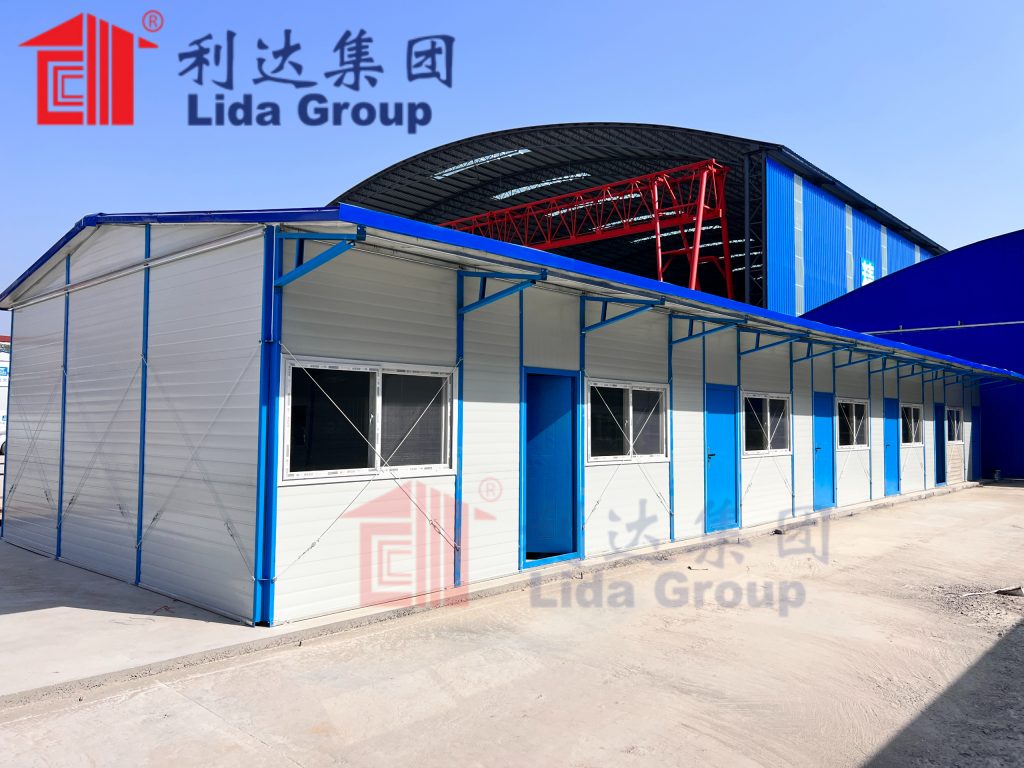
Lida has developed a portfolio of standard modular units—including 18㎡, 24㎡, and 36㎡ base modules—that serve as the building blocks for all projects. These modules are manufactured in consistent dimensions with standardized connections, allowing for seamless horizontal 拼接 (to create large open spaces) and vertical stacking (to build multi-story structures up to 6 floors high). For example, Lida’s 24㎡ residential module includes pre-installed walls, floors, ceilings, windows, and doors, as well as pre-wired electrical systems and plumbing rough-ins. This standardization reduces design time by 70% and ensures that modules fit together with precision (±3mm tolerance) during on-site assembly.
Flexible Customization
While core modules are standardized, Lida offers extensive customization to meet project-specific needs. Clients can choose from 6 + 户型 configurations for residential projects (e.g., one-bedroom, two-bedroom, open-plan), select exterior finishes (wooden cladding, metal panels, stone veneer), and integrate specialized features (smart home systems, solar panels, medical equipment for healthcare facilities). The modular nature allows for easy modification—adding a room, expanding a workspace, or reconfiguring layouts—without disrupting the entire structure. For instance, in a talent apartment project, Lida used 200 standard modules to create 6 distinct 户型,adapting to different tenant requirements while maintaining fast-track delivery.
BIM-Driven Digital Integration
Lida leverages Building Information Modeling (BIM) technology to optimize modular design and streamline project coordination. BIM software creates a 3D digital twin of the entire project, simulating module placement, structural loads, 管线 routing, and installation sequences. This digital pre-visualization eliminates 70% of design changes that would otherwise cause delays during on-site construction. For large-scale projects like the Qingdao Jiangshan Cabin Hospital, BIM was used to coordinate the assembly of 500 病房 modules, ensuring that medical equipment, HVAC systems, and electrical wiring aligned perfectly—critical for fast-track healthcare facilities.
Factory-Integrated Prefabrication: Precision and Efficiency
Lida’s prefab houses are manufactured in state-of-the-art facilities with 90%+ prefabrication rates, meaning nearly all components are completed in controlled factory environments before being shipped to the site. This approach eliminates the inefficiencies of on-site construction, where weather, labor turnover, and material waste often cause delays.
Automated Production Lines
Lida operates 8 steel structure production lines and 6 container module lines across 8 global manufacturing bases, equipped with robotic welding systems, precision cutting machines, and automated assembly stations. These lines produce up to 1,000 modules per month, with consistent quality control at every stage. For example, the steel frames of Lida’s prefab houses are welded by robots with 0.2mm precision, ensuring structural integrity and compatibility between modules. Factory production also allows for parallel processing: while modules are being manufactured, site preparation (e.g., foundation work) can proceed simultaneously, cutting overall project time by 50% compared to traditional construction, where site work and fabrication are sequential.
Full-System Integration
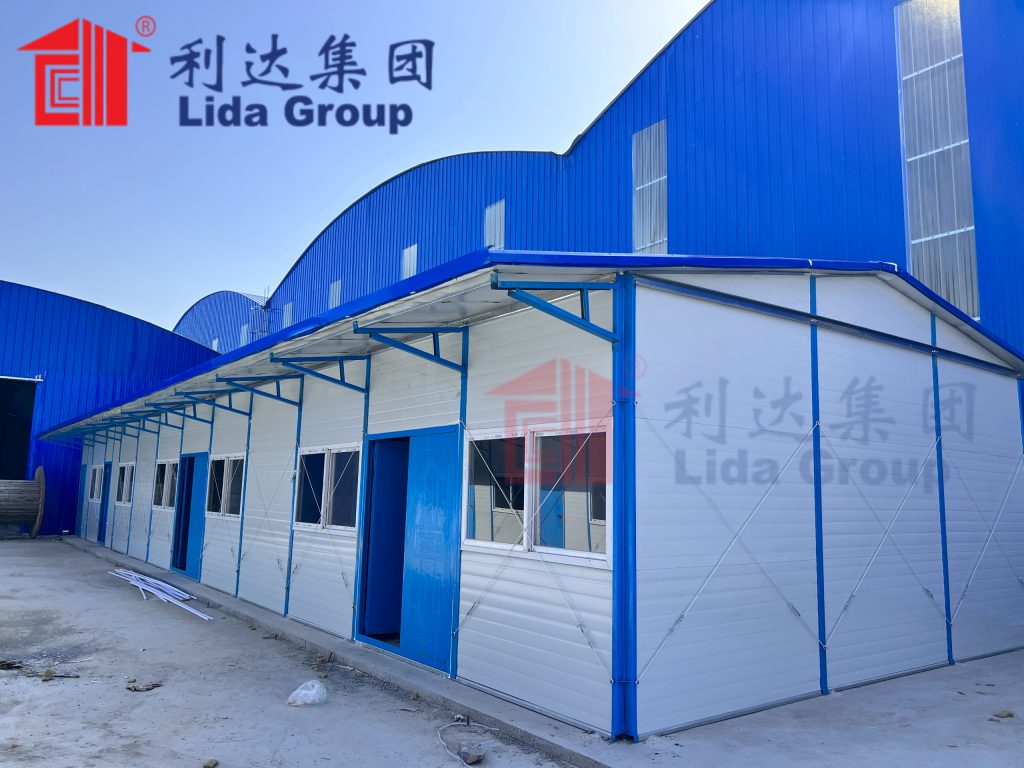
Lida’s prefab modules are not just structural components—they are fully integrated systems with pre-installed utilities, finishes, and fixtures. In the factory, modules receive:
- Structural systems (cold-formed steel or aluminum frames with corrosion-resistant coatings)
- Enclosure systems (insulated sandwich panels with thermal conductivity ≤0.038 W/(m·K))
- Mechanical systems (HVAC, plumbing, and electrical wiring)
- Interior finishes (flooring, wall panels, cabinetry, and fixtures)
- Exterior cladding (weather-resistant materials with custom colors and textures)
This full-system integration means that modules require only minimal on-site work—primarily connection to utilities and assembly. For example, Lida’s 文旅民宿 modules are shipped with fully furnished interiors, including beds, sofas, kitchens, and smart lighting, and can be operational within 3 hours of on-site placement.
Rapid Deployment Systems: From Factory to Occupancy in Days
Lida’s prefab houses are designed for ultra-fast on-site deployment, with innovative connection systems, lightweight materials, and minimal site requirements. These features enable projects to move from delivery to occupancy in a fraction of the time required for traditional construction.
Tool-Free Connection Mechanisms
Lida’s modules feature proprietary interlocking and bolted connection systems that eliminate the need for complex on-site welding or fabrication. The “four-in-one” modular connection system used in Lida’s container-based prefab houses allows modules to be joined with simple 卡扣 and bolts, reducing assembly time by 80%. For example, a 300㎡LGS Villa can be assembled by 8 workers in just 1.5 months—from foundation to fully furnished interior—compared to 6-8 months for a traditional brick-concrete villa. Emergency modules, such as disaster relief shelters, can be deployed even faster: a single 20㎡ shelter requires 2 workers and 2 hours to assemble, with no specialized tools needed.
Minimal Site Preparation
Unlike traditional construction, which requires extensive foundation work, Lida’s prefab houses can be installed on simple, cost-effective foundations—including concrete slabs, gravel beds, or adjustable piers. For remote or challenging sites (e.g., mountainous regions, disaster zones), Lida offers modules with integrated skids or 履带式 bases that allow for installation without permanent foundations. In a high-altitude geological exploration project, Lida’s modules were transported by helicopter and installed on gravel beds in 3 days, avoiding the need for expensive foundation construction in inaccessible areas.
Global Logistics Capability
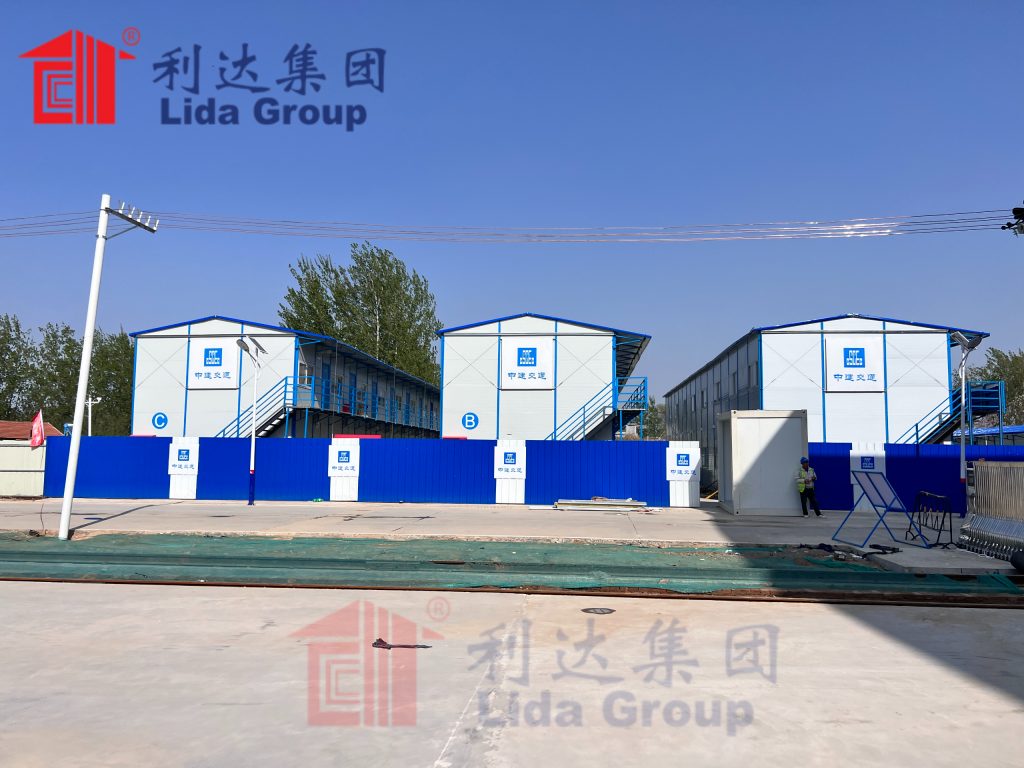
Lida’s 8 manufacturing bases (strategically located in Asia, Europe, and Africa) enable “500-kilometer radius 48-hour delivery,” ensuring that modules reach project sites quickly regardless of location. For international projects, modules are shipped in standard containers, with optimized packaging to reduce transportation costs and damage. The Indonesia 1,000-Person Modular Camp project, for example, involved shipping 250 modules from Lida’s Chinese factories to Jakarta, with on-site assembly completed in 30 days—half the time required for local construction.
Application Scenarios: Fast-Tracking Projects Across Industries
Lida Group’s prefab houses are versatile enough to accelerate projects in diverse sectors, addressing unique timeline challenges with tailored solutions. From emergency response (where every hour counts) to residential developments (where speed to market maximizes returns), Lida’s prefab systems deliver consistent time savings across use cases.
Emergency Response and Disaster Relief: 48-Hour Rapid Deployment
In emergency scenarios—natural disasters, pandemics, or humanitarian crises—speed is a matter of life and death. Lida’s prefab houses are designed to deploy within 48 hours, providing critical shelter, medical facilities, and support spaces when they are needed most.
Case Study: Qingdao Jiangshan Cabin Hospital
During the 2022 COVID-19 outbreak in Qingdao, Lida Group partnered with China State Construction Engineering Corporation (CSCEC) to build the Jiangshan Cabin Hospital—the largest comprehensive cabin hospital in Shandong Province. The project required 42,000㎡ of prefab space, including 500 wards (1,000 beds), 50 blood dialysis stations, and a full suite of medical equipment (mobile CT, DR, PCR labs). Despite extreme time pressure, harsh weather conditions, and logistical challenges (transportation restrictions, limited site access), Lida delivered and installed all modules in just 15 days—enabling the hospital to treat patients within 3 weeks of project initiation. The prefab approach eliminated 95% of on-site wet work, reducing construction waste by 80% and minimizing the risk of virus transmission during assembly.
Case Study: Disaster Relief Shelters for Flood Victims
In 2024, a major flood in Southeast Asia displaced over 2,000 people. Lida Group responded by deploying 300 emergency prefab shelters, each equipped with solar lighting, water purification systems, and insulation for tropical climates. The modules were transported by truck and boat to remote affected areas, with local volunteers (no specialized training required) assembling each shelter in 2 hours. Within 48 hours of the flood peak, all 300 shelters were operational, providing safe housing for displaced families—far faster than the 2-3 weeks required for traditional temporary shelters.
Residential Construction: From Talent Apartments to Luxury Villas
Residential projects—whether affordable housing, talent apartments, or luxury villas—face intense pressure to deliver quickly to meet market demand or policy deadlines. Lida’s prefab houses cut residential project timelines by 60%, enabling faster occupancy and revenue generation.
Case Study: Urban Talent Apartment Project
A major Chinese city needed to provide housing for 1,200 tech industry employees to support its innovation district development. Lida Group delivered 100 prefab apartment modules (24㎡ each), each featuring a bedroom, bathroom, kitchenette, and smart home system. The project included site preparation, module delivery, assembly, and interior finishing—all completed in 45 days. By contrast, a traditional brick-and-concrete apartment complex of the same size would have required 120 days. The prefab solution also reduced construction costs by 15%, thanks to lower labor and material waste expenses.
Case Study: Rural Luxury Villa Development
A developer in Eastern Europe sought to build 50 luxury Light Steel Structure villas (120-180㎡ each) in a scenic rural area, with strict deadlines to open for the tourist season. Lida’s prefab villas, featuring custom European-style exteriors and high-end interiors, were manufactured in a nearby factory and transported to the site. Each villa required just 10 days of on-site assembly (foundation to occupancy), with the entire development completed in 2 months—3 months faster than traditional construction. The villas met local building codes for seismic resistance (9 degrees) and energy efficiency, with insulation reducing heating costs by 35% compared to conventional homes.
Industrial and Infrastructure Camps: Supporting Fast-Track Projects
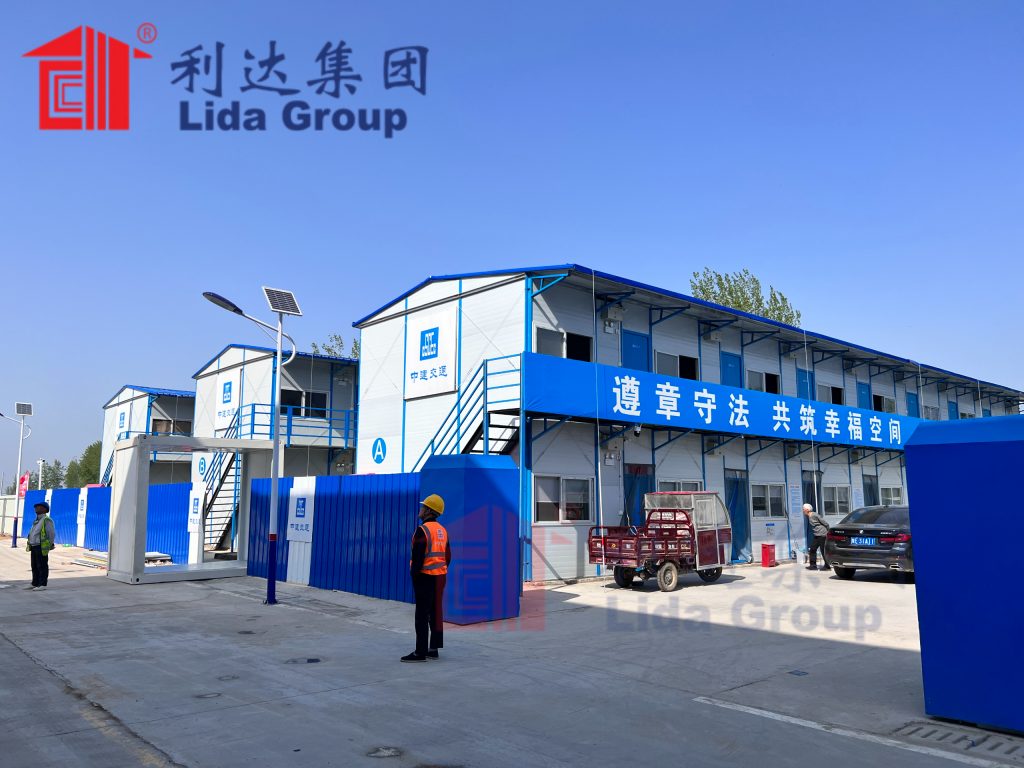
Industrial projects—mining, oil and gas, infrastructure construction—often require temporary housing and support facilities for workers in remote locations. Lida’s prefab camps enable these projects to start operations faster by providing rapid, durable, and functional living spaces.
Case Study: Indonesia 1,000-Person Modular Camp
A mining company in Indonesia needed to house 1,000 workers for a new gold mine development, with a tight timeline to meet production targets. Lida Group delivered a complete prefab camp, including 250 residential modules, 5 dining halls, 3 office buildings, and recreational facilities. The modules used a “four-in-one” connection system, allowing on-site assembly in 30 days. The camp featured air-conditioned dormitories, kitchen facilities, and water purification systems—critical for the tropical climate. By using Lida’s prefab solution, the mining company was able to start production 2 months earlier than planned, generating an additional $2 million in revenue.
Case Study: Saudi Arabian Oil Field Camp
For a major oil field project in Saudi Arabia’s desert region, Lida designed a prefab camp for 6,048 workers. The camp included 21 double-story residential buildings (40.89m×10.7m each), equipped with independent bathrooms, ventilation systems, and heat-resistant cladding. The modules were manufactured in Lida’s Middle East factory and transported to the site, with assembly completed in 45 days. The camp’s insulation and reflective exterior reduced indoor temperatures by 8-10℃ compared to traditional structures, ensuring worker comfort in 50℃+ heat. The rapid deployment allowed the oil field to begin drilling operations 6 weeks ahead of schedule.
Commercial and Culture and Tourism Projects: Speed to Market for Revenue Generation
Commercial and Culture and Tourism projects—pop-up stores, exhibition centers, resorts, and event venues—rely on fast deployment to capitalize on seasonal demand or time-sensitive opportunities. Lida’s prefab houses enable these projects to open faster, maximizing revenue potential.
Case Study: Qingdao Shanghe Demonstration Zone Commercial Complex
A developer in Qingdao needed to build a 15,000㎡ temporary commercial complex (restaurants, retail stores, event spaces) to support the Shanghe Demonstration Zone Ruyi Lake development. The project had to be completed during the Chinese New Year holiday, with a tight 2-week timeline. Lida delivered 100 prefab commercial modules, which were assembled on-site in 7 days. The modules featured glass curtain walls, custom branding, and fully functional interiors, with the complex opening on schedule. During the first month of operation, the complex generated $1.2 million in revenue—recovering 30% of the construction cost in just 30 days.
Case Study: Mountain Resort B&Bs Cluster
A tourism company in China wanted to build 10 “forest cabins” for a mountain resort, with the goal of opening before the summer holiday season. Lida’s prefab B&Bs modules were designed to blend with the natural environment, featuring wooden exteriors and large windows. The modules were transported to the remote mountain site by truck and assembled in 15 days. Each cabin included a bedroom, living area, kitchen, and outdoor deck, with solar panels providing 40% of the energy needs. The resort opened on time, welcoming 20,000 guests in the first month and achieving a 1.5-year investment payback period—6 months faster than traditional construction would have allowed.
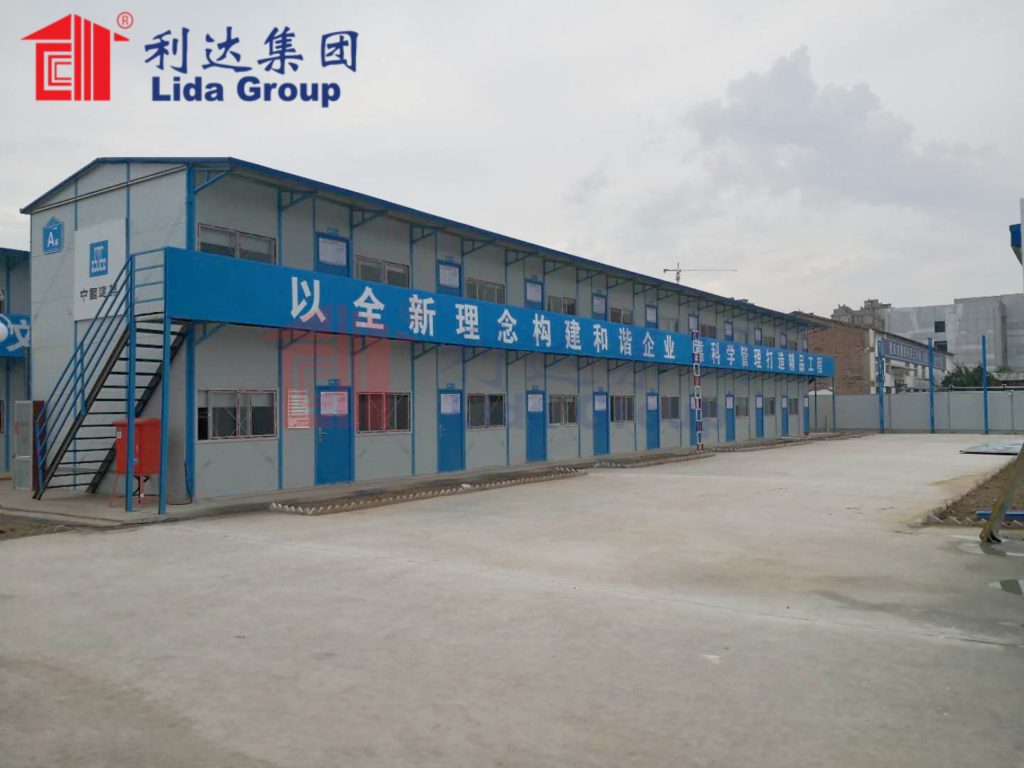
Performance Comparison: Lida Prefab vs. Traditional Construction
To quantify the fast-track advantages of Lida’s prefab houses, we compare them to traditional construction across six key performance metrics: project timeline, labor requirements, cost-effectiveness, quality control, weather resilience, and scalability. Data is derived from Lida’s project case studies, industry reports, and independent testing.
Project Timeline
Lida’s prefab houses deliver dramatic time savings across all project types:
|
Project Type
|
Lida Prefab Timeline
|
Traditional Construction Timeline
|
Time Savings
|
|
Emergency Shelter (300 units)
|
48 hours
|
2-3 weeks
|
85-90%
|
|
Residential Villa (300㎡)
|
1.5 months
|
6-8 months
|
75-80%
|
|
Industrial Camp (1,000 persons)
|
30 days
|
3 months
|
67%
|
|
Commercial Complex (15,000㎡)
|
14 days
|
3 months
|
85%
|
|
Hospital (42,000㎡)
|
15 days
|
6 months
|
92%
|
The time savings stem from parallel processing (factory production + site preparation), minimal on-site work, and standardized assembly. For example, Lida’s prefab houses eliminate the need for on-site bricklaying, plastering, and painting—tasks that account for 40% of traditional construction time.
Labor Requirements
Lida’s prefab houses require far fewer workers than traditional construction, reducing labor costs and shortages:
- Lida Prefab: A 1,000㎡ project requires 8-10 workers for on-site assembly, with no specialized skills needed.
- Traditional Construction: The same project requires 20-30 workers, including skilled tradespeople (masons, electricians, plumbers).
For the Indonesia 1,000-person camp, Lida’s prefab solution required just 20 on-site workers, compared to 60 for traditional construction—reducing labor costs by 40%. The reduced labor requirement is critical for remote projects or regions with labor shortages, where hiring and transporting workers can cause significant delays.
Cost-Effectiveness
While Lida’s prefab houses have a slightly higher initial module cost than traditional materials, their total project cost is significantly lower due to time and labor savings:
- Initial Module Cost: Lida’s prefab modules cost \(150-250 per square meter, compared to \)100-180 per square meter for traditional materials.
- Total Project Cost: Lida’s prefab projects cost \(200-300 per square meter (including design, production, transportation, and assembly), compared to \)250-350 per square meter for traditional construction.
For a 10,000㎡ residential project, the total cost savings with Lida’s prefab solution are \(500,000-\)5 million, depending on the location and project type. Additionally, the faster deployment enables earlier occupancy or revenue generation—for commercial projects, this can translate to hundreds of thousands of dollars in additional income.
Quality Control
Lida’s factory production ensures superior quality and consistency compared to traditional on-site construction:
- Precision: Factory automation achieves ±3mm tolerance for module dimensions, compared to ±20mm for traditional construction.
- Durability: Lida’s prefab houses have a service life of 50-99 years, compared to 30-50 years for traditional buildings.
- Safety: Lida’s prefab houses meet international standards for seismic resistance (9 degrees), wind resistance (1.5 kN/m²), and fire safety (Class A non-combustible materials).
Independent testing confirms that Lida’s prefab modules maintain structural integrity after 10,000 cycles of thermal expansion and contraction, ensuring durability in extreme climates.
Weather Resilience
Traditional construction is highly vulnerable to weather delays, which can add weeks or months to project timelines. Lida’s prefab houses minimize weather-related disruptions:
- Factory Production: 90% of work is completed indoors, unaffected by rain, snow, or extreme temperatures.
- Rapid On-Site Assembly: Even if weather delays on-site work, the short assembly time (days vs. weeks) reduces the impact.
In the Qingdao Jiangshan Cabin Hospital project, Lida’s team worked through 雨雪 and 大雾 conditions to complete assembly on time—something that would have been impossible with traditional construction, which requires dry conditions for concrete pouring and plastering.
Scalability
Lida’s modular design makes it easy to scale projects up or down, adapting to changing needs without delaying timelines:
- Expansion: Additional modules can be added to existing structures in days. For example, a mining camp initially designed for 500 workers can be expanded to 1,000 workers in 2 weeks by adding modules.
- Reduction: Modules can be disassembled and reused for other projects. A temporary event venue can be dismantled in 3 days, with modules transported to a new location for reassembly.
This scalability is particularly valuable for projects with uncertain demand or phased development plans, allowing clients to adjust their building footprint without sacrificing speed.
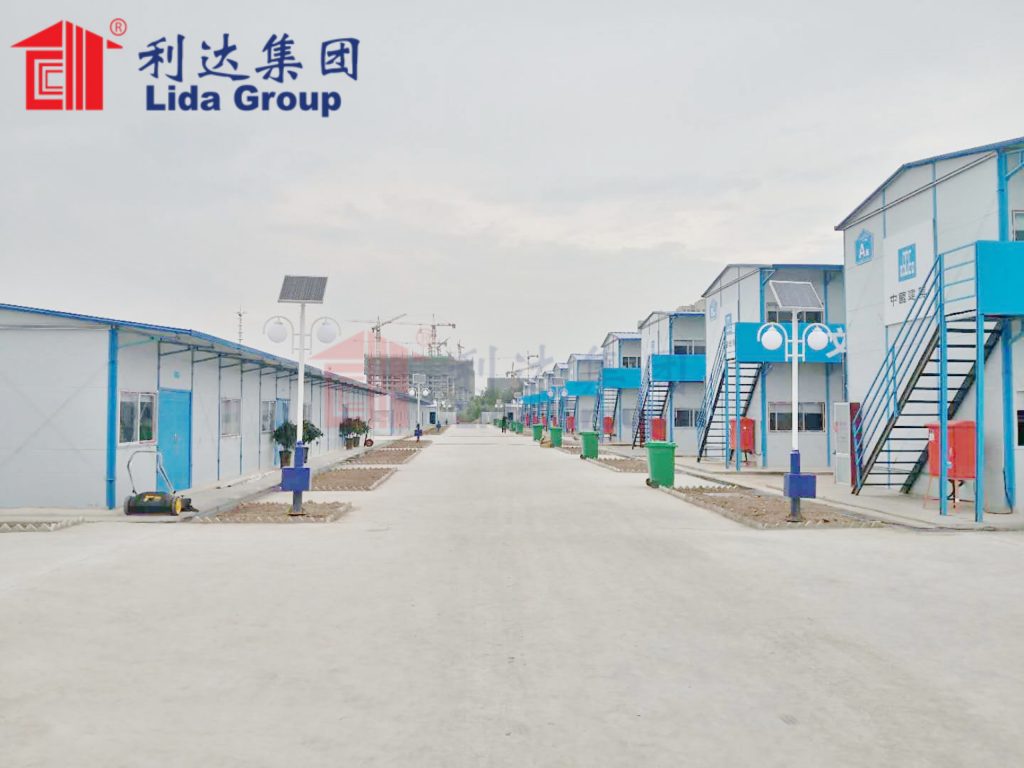
Sustainability: Fast-Track Construction Without Compromising the Planet
Lida Group’s prefab houses prove that fast-track construction and sustainability can go hand in hand. By integrating green materials, energy-efficient systems, and circular design principles, Lida’s prefab solutions reduce environmental impact while accelerating project delivery.
Low-Impact Construction
Lida’s prefab houses generate 95% less construction waste than traditional buildings—just 5kg of waste per square meter compared to 100kg for traditional construction. This waste reduction stems from factory precision manufacturing, which minimizes material scraps, and modular design, which eliminates over-ordering of materials. For example, the Qingdao Shanghe Demonstration Zone commercial complex project generated just 750kg of waste—compared to 15,000kg for a similar traditional project.
On-site environmental impact is also minimized: Lida’s prefab assembly requires no concrete pouring (for most projects), reduces noise pollution (55dB vs. 85dB for traditional construction), and cuts dust emissions by 60%. This makes Lida’s prefab houses ideal for urban or environmentally sensitive areas, where construction disruptions are tightly regulated.
Energy-Efficient Design
Lida’s prefab houses are engineered for maximum energy efficiency, reducing operational carbon emissions and long-term costs:
- Insulation: High-performance sandwich panels (rock wool, polyurethane) with thermal conductivity ≤0.038 W/(m·K) reduce heating and cooling needs by 35-40% compared to traditional buildings.
- Renewable Energy Integration: Modules are pre-wired for solar panels, wind turbines, and energy storage systems. Many of Lida’s commercial and residential projects generate 30-40% of their energy from renewable sources.
- Smart Energy Management: IoT sensors and automated systems monitor and optimize energy usage, reducing waste by 25%. For example, industrial camps use occupancy sensors to adjust lighting and HVAC in unoccupied modules.
Circular Economy Principles
Lida’s prefab houses are designed for reuse and recycling, extending their lifecycle and reducing resource consumption:
- Reusability: Modules can be disassembled and reused in multiple projects. A temporary construction camp can be relocated to a new site with minimal modification, saving 50% of the cost of building a new camp.
- Recyclability: 95% of Lida’s prefab materials (steel, aluminum, glass) are recyclable. At the end of their lifecycle, modules can be disassembled, and materials melted down or repurposed for new construction.
- Durability: With a service life of 50-99 years, Lida’s prefab houses reduce the need for frequent reconstruction, minimizing long-term environmental impact.
Lida’s commitment to sustainability is validated by international certifications, including LEED, BREEAM, and ISO14001. The company’s prefab houses have been used in numerous green building projects, including eco-resorts and net-zero energy developments.
One-Stop Service: Supporting Fast-Track Projects From Start to Finish
Lida Group’s fast-track capability extends beyond product design—it includes a comprehensive one-stop service that eliminates delays caused by fragmented supply chains and miscommunication. From initial design to post-occupancy support, Lida’s team of experts manages every aspect of the project, ensuring a seamless, accelerated process.

Customized Design and Engineering
Lida’s team of 200+ engineers and designers works closely with clients to develop tailored prefab solutions that meet their specific needs, timeline, and budget. Using BIM technology, the team creates 3D models and detailed construction plans, incorporating client feedback and ensuring compliance with local building codes. For international projects, Lida’s multilingual team navigates local regulations and standards, avoiding delays caused by compliance issues.
Global Manufacturing and Logistics
With 8 manufacturing bases worldwide, Lida can produce modules close to project sites, reducing transportation time and costs. The company’s logistics team manages all aspects of module delivery—from container shipping to on-site unloading—ensuring that modules arrive on time and in perfect condition. For emergency projects, Lida prioritizes production and shipping, with dedicated resources to meet tight deadlines.
On-Site Installation and Supervision
Lida provides certified installation teams (or trains local workers) to assemble modules quickly and correctly. Each project is assigned a dedicated site supervisor who oversees assembly, coordinates with subcontractors (if needed), and ensures that the project stays on schedule. For large-scale projects, Lida deploys multiple installation teams to work in parallel, further accelerating delivery.
Post-Occupancy Support and Maintenance
Lida’s commitment to fast-track projects doesn’t end with occupancy. The company offers a comprehensive warranty package: 5 years for overall systems and 20 years for structural components. Lida’s global service network provides 24/7 support, with remote troubleshooting and on-site repairs (72-hour response time for remote locations). Regular maintenance inspections are also provided to ensure the prefab house remains in optimal condition, reducing downtime for commercial and industrial clients.
Conclusion
In a construction industry where time is money and delays can derail success, Lida Group’s prefab houses offer a transformative solution to fast-track projects without compromising on quality, durability, or sustainability. By leveraging modular design, factory precision manufacturing, rapid deployment technologies, and one-stop service, Lida’s prefab houses cut project timelines by 60-80% compared to traditional construction—enabling emergency shelters to deploy in 48 hours, residential developments to open in months, and industrial projects to start production ahead of schedule.
The real-world impact of Lida’s fast-track solutions is undeniable: 1,000-person industrial camps completed in 30 days, 42,000㎡ hospitals operational in 15 days, and luxury villas ready for occupancy in 10 days. These projects not only save time but also reduce costs (15-40% lower total project costs), minimize environmental impact (95% less construction waste), and deliver superior quality (99-year service life, 9-degree seismic resistance).
Lida Group’s success stems from its holistic approach to fast-track construction: combining innovative technology with global manufacturing capabilities, localized service, and a commitment to sustainability. Whether you’re building emergency housing, residential developments, industrial camps, or commercial spaces, Lida’s prefab houses provide a flexible, reliable, and efficient solution that adapts to your timeline and needs.
As the construction industry continues to prioritize speed, efficiency, and sustainability, Lida Group is well-positioned to lead the way with its prefab house systems. For developers, contractors, and organizations seeking to accelerate their projects, reduce costs, and minimize risk, Lida Group is more than a supplier—it is a strategic partner that delivers on the promise of fast-track construction. With Lida’s prefab houses, the future of rapid, high-quality building is not just possible—it is here.
Choose Lida Group, and fast-track your project to success.
Related news
-
Customizable Prefab House Designs for Any Need
2025-12-09 15:25:17
-
Lida Group Simplifies Builds with Easy Install Sandwich Panels
2025-12-09 17:13:45
-
Efficient and Durable Temporary Mobile Building by Lida Group
2025-12-09 14:22:24
contact us
- Tel: +86-532-88966982
- Whatsapp: +86-13793209022
- E-mail: sales@lidajituan.com
