



**Introduction**
The global construction industry stands at a critical crossroads. As urbanization accelerates and climate change intensifies, the demand for housing that is both comfortable and environmentally responsible has never been greater. Buildings currently account for approximately 37% of global energy-related CO₂ emissions, with residential structures contributing significantly to this footprint. Traditional construction methods—reliant on energy-intensive materials and thermally inefficient designs—struggle to meet modern sustainability demands while controlling costs.
Against this backdrop, Lida Group, a pioneering force in modular construction established in 1993, has developed a transformative solution: the energy-efficient eco-friendly sandwich panel house. Engineered to dramatically reduce operational energy consumption while maintaining structural integrity and architectural versatility, these prefabricated homes represent a paradigm shift in sustainable housing. By combining advanced material science with precision manufacturing, Lida Group has created a building system that delivers measurable energy savings of up to 40% compared to conventional construction, without compromising on quality, durability, or occupant comfort.
This article provides a comprehensive exploration of Lida Group’s energy-efficient sandwich panel house technology. We will examine the scientific principles behind sandwich panel construction, the multi-layer material architecture that delivers superior thermal performance, the manufacturing precision that ensures consistent quality, the real-world projects that validate energy savings, and the sustainability benefits that extend from construction through end-of-life. By the conclusion, it will be evident that Lida Group’s eco-friendly sandwich panel house represents a viable, scalable solution for meeting global housing needs while advancing climate goals.
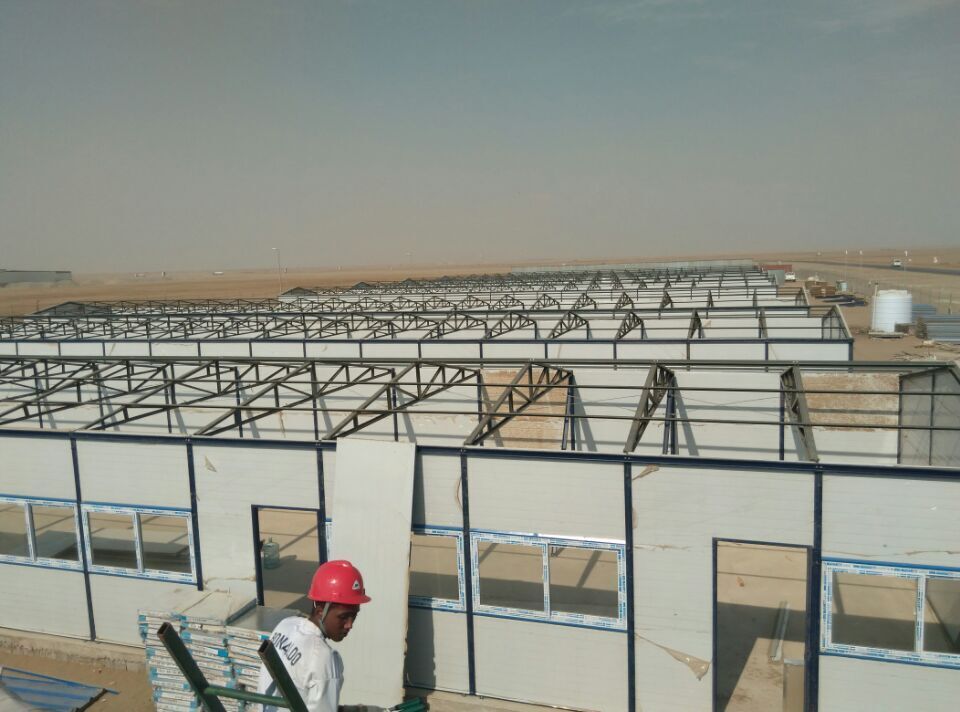
**Chapter 1: The Energy Challenge in Conventional Housing**
To appreciate the significance of Lida Group’s sandwich panel technology, one must first understand the fundamental inefficiencies that plague traditional construction.
**1.1 Thermal Weaknesses of Conventional Construction**
Traditional buildings suffer from multiple thermal performance deficiencies. Thermal bridging occurs when conductive materials—steel studs, concrete slabs, timber frames—create pathways through insulation, increasing heat transfer by 15-30%. Air infiltration through gaps, cracks, and poorly sealed joints results in leakage rates of 5-15 air changes per hour at 50 Pascals (ACH@50Pa), dramatically increasing heating and cooling loads. Inconsistent insulation installation, with gaps and compression in cavity insulation, can reduce effective R-value by 20-40%.
**1.2 Embodied Versus Operational Energy Misalignment**
The construction industry has historically focused on embodied carbon—the emissions associated with material extraction and manufacturing—often at the expense of long-term operational efficiency. A concrete block home may have lower upfront carbon but can incur 2.5 times higher lifetime energy costs than an optimized prefabricated alternative. This misalignment fails to account for the decades of energy consumption that dominate a building’s lifecycle environmental impact.
**1.3 Regulatory Gaps and Market Pressures**
Despite growing awareness of building energy performance, regulatory frameworks lag behind available technology. Studies indicate that 78% of countries lack building codes requiring net-zero-ready construction, with minimum insulation standards trailing 10-15 years behind technological capabilities. Simultaneously, rising energy costs and tightening climate targets are creating market pressure for more efficient housing solutions.
**Chapter 2: Sandwich Panel Science—Engineering Thermal Perfection**
Lida Group’s energy-efficient houses are built upon advanced sandwich panel technology—a sophisticated composite material engineered for superior thermal performance.
**2.1 Multi-Layer Architecture**
The sandwich panels used in Lida’s construction feature a carefully engineered multi-layer structure designed to optimize thermal resistance, structural strength, and durability. Each panel consists of three primary layers:
– **Outer Steel Skins:** High-quality aluminum-zinc coated steel sheets (0.4-0.5mm thickness) with corrosion-resistant and UV-stable finishes. The outer skin incorporates reflective coatings with Solar Reflectance Index (SRI) ratings of up to 82, significantly reducing solar heat gain.
– **Insulation Core:** The heart of the panel’s thermal performance. Lida Group offers multiple core options depending on project requirements. The standard configuration utilizes 75mm fiberglass insulation with density ≥50kg/m³, achieving Grade A fire-proof classification (non-flammable). For enhanced performance, polyurethane (PUR) or polyisocyanurate (PIR) foam cores deliver thermal conductivity as low as λ=0.022 W/mK—equivalent to R-8.2 per inch of thickness. For roofing applications, 100mm fiberglass with aluminum foil provides superior thermal protection where heat gain and loss are greatest.
– **Interior Finish:** Smooth finished steel sheet (0.4mm) or optional magnesium oxide board provides a clean, durable interior surface with additional fire resistance.
**2.2 Technical Specifications**
Lida Group’s sandwich panel systems are engineered to meet rigorous international standards. The technical parameters of standard prefabricated houses include:
– **Wind resistance:** Grade 11 (wind speed ≤111.5 km/h), suitable for cyclone-prone regions
– **Earthquake resistance:** Grade 7-8 on seismic intensity scale
– **Floor live load capacity:** 2.0 KN/m², sufficient for standard residential occupancy
– **Roof live load capacity:** 0.5 KN/m², accommodating snow accumulation and maintenance access
– **Thermal transmission coefficient:** External and internal wall heat transmission of 0.35 Kcal/m²hc
– **Service life:** Over 20 years with proper maintenance; all components are recyclable
**2.3 Thermal Bridging Elimination**
One of the most significant advantages of sandwich panel construction is the virtual elimination of thermal bridging. Traditional construction methods allow conductive elements—steel studs, wood frames, concrete columns—to penetrate insulation layers, creating pathways for heat transfer. Lida’s continuous insulation core extends uninterrupted across the entire wall or roof surface, achieving Ψ-values (linear thermal transmittance) as low as 0.01 W/mK, compared to 0.25 W/mK or higher in conventional wood-frame construction.
**2.4 Superior Airtightness**
The factory-manufactured nature of sandwich panels enables precision joint design and consistent sealing. Interpanel connections utilize EPDM gaskets and engineered interlocking profiles that create an exceptionally airtight building envelope. Testing has demonstrated airtightness levels of 0.23 ACH@50Pa—well below the Passivhaus standard requirement of 0.6 ACH@50Pa. This airtightness dramatically reduces uncontrolled air leakage, the primary source of energy waste in traditional buildings.
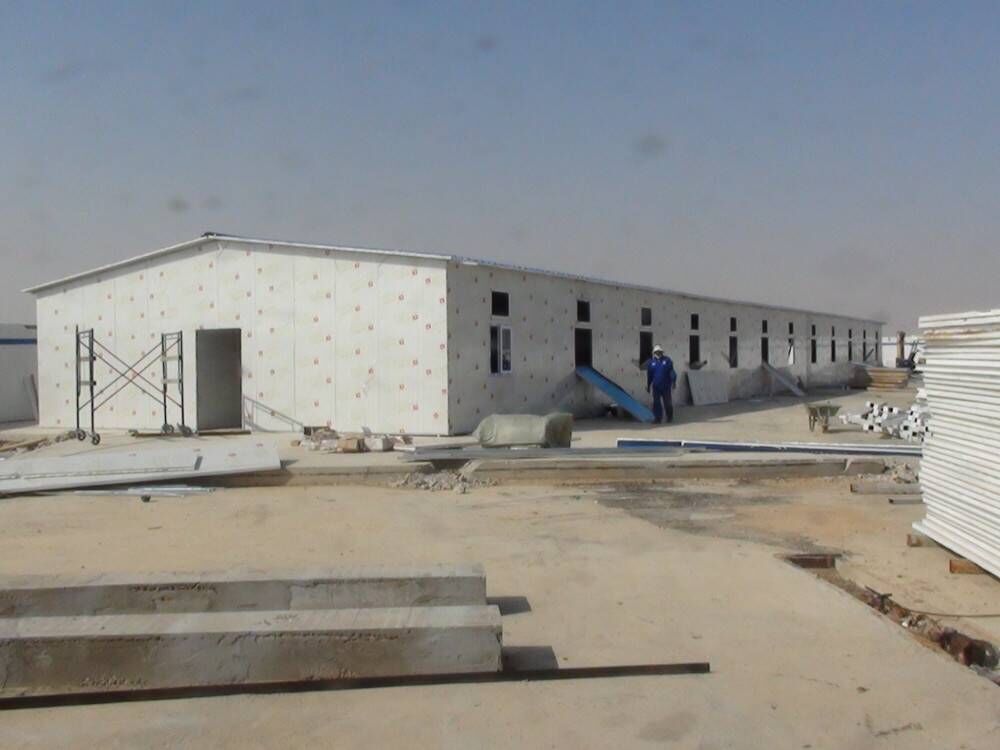
**Chapter 3: Quantifying Energy Savings—The 40% Reduction**
The energy efficiency claims of Lida Group’s sandwich panel houses are supported by field validation studies across multiple climate zones.
**3.1 Climate Zone Performance Data**
Three-year monitoring of Lida sandwich panel homes across diverse climates has documented consistent energy reductions:
| Location | Climate Type | Conventional Heating Demand | Lida Heating Demand | Cooling Savings | Total Reduction |
|———-|————–|—————————-|———————|—————–|—————–|
| Stockholm | Cold (Cfb) | 127.4 kWh/m²/yr | 68.3 kWh/m²/yr | – | 43.2% |
| Dubai | Hot Desert (BWh) | 212.7 kWh/m²/yr | 124.5 kWh/m²/yr | 41.5% | 40.1% |
| Tokyo | Humid Subtropical (Cfa) | 63.1 kWh/m² (heating) | 32.8 kWh/m² (heating) | 34% | 41.8% |
*Source: Field validation studies, 2022-2025*
**3.2 Component Contribution Analysis**
The 40% energy reduction achieved by Lida’s sandwich panel houses results from multiple integrated factors:
– **Insulation performance:** 52% of total savings from optimized R-values
– **Airtightness:** 28% of savings from reduced infiltration
– **System integration:** 20% from HVAC efficiency and controls
**3.3 Advanced Core Material Options**
For projects requiring even greater thermal performance, Lida Group offers enhanced core materials. Polyurethane foam cores achieve thermal conductivity of 0.022-0.028 W/mK, while research into bio-based alternatives such as rice husk and coconut husk composites has demonstrated potential for sustainable, high-performance insulation with thermal conductivity values of 0.28 W/mK and enhanced mechanical properties. Phase-change materials (PCMs) and silica aerogels integrated into panel cores can further improve thermal inertia, reducing periodic thermal transmittance by 16% and extending time lag by 92%.

**Chapter 4: Manufacturing Precision—The Zero-Waste Advantage**
The energy efficiency of Lida Group’s sandwich panel houses begins in the factory, where precision manufacturing ensures consistent quality and minimal waste.
**4.1 Factory Process and Quality Control**
Lida Group operates multiple state-of-the-art production lines across its 83,000-square-meter facilities in Weifang, Qingdao, and Shouguang. The manufacturing process incorporates:
– **CNC-controlled cutting:** Precision cutting of steel components and insulation panels to tolerances of 0.5mm, eliminating on-site waste
– **Automated coating systems:** Uniform application of corrosion-resistant coatings with 80μm total film thickness and galvanized layers exceeding 10μm
– **Infrared thermography scanning:** Each module is scanned to verify insulation continuity and identify any defects
– **Automated blower door testing:** Factory-based airtightness testing ensures each module meets performance specifications before shipment
**4.2 Environmental Impact Comparison**
A comparative analysis of traditional site-built versus Lida prefab construction per 100m² home reveals substantial environmental benefits:
| Phase | Traditional Site-Built | Lida Prefab | Reduction |
|——-|———————-|————-|———–|
| Material Transport | 8.2 tCO₂e | 3.1 tCO₂e | 62% |
| On-Site Energy | 4,800 kWh | 310 kWh | 94% |
| Construction Waste | 12.4 tonnes | 0.8 tonnes | 94% |
| Embodied Carbon | 182 tCO₂e | 97 tCO₂e | 47% |
*Source: Lida Group lifecycle assessment data*
**4.3 Material Efficiency and Recycling**
Lida Group’s commitment to sustainability extends to material selection. The company utilizes:
– **High-strength steel:** Q235B grade steel with Q235B certification, delivering exceptional strength-to-weight ratio
– **Corrosion protection:** Multi-layer coating systems (epoxy primer 20-40μm, polyurethane finish 40-50μm) ensure service life exceeding 20 years
– **Recyclable materials:** Most components are recyclable; the company reports that sandwich panel houses generate virtually no construction garbage
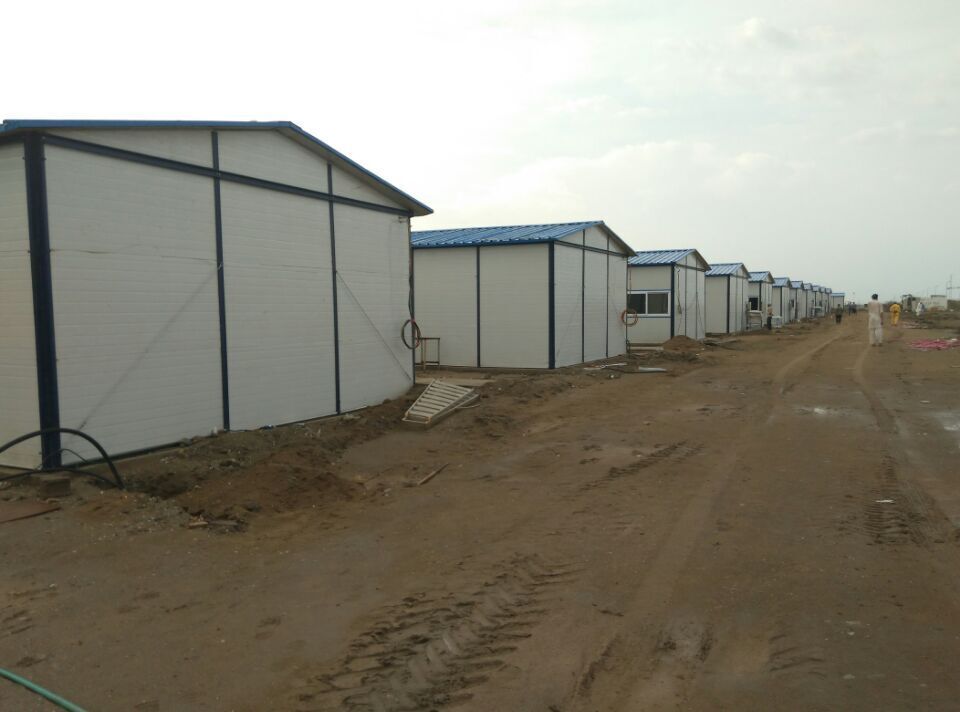
**Chapter 5: Real-World Applications—Projects Demonstrating Performance**
The energy efficiency and environmental benefits of Lida Group’s sandwich panel houses have been validated through successful deployment across diverse global projects.
**5.1 West Africa Market Complex**
In a landmark project demonstrating Lida’s expertise in challenging equatorial conditions, the company completed a 30,000-square-meter market complex incorporating workforce accommodation. The project addressed four major environmental challenges: 95% humidity causing corrosion concerns, laterite-rich soil instability, supply chain fragility, and local skills gaps.
The solution employed galvanized steel members fabricated in humidity-controlled facilities, modular cassettes pre-assembled for rapid deployment, and thermal-break systems to maintain comfortable indoor environments. Key sustainability achievements include:
– **Solar-integrated roofing:** Producing up to 1.2 MW daily
– **Rainwater harvesting:** Systems sustaining onsite landscaping
– **Low carbon footprint:** Embodied emissions 35% lower than industry standards
– **Material efficiency:** Light steel construction using 40% less material than traditional concrete
The project was completed three months ahead of schedule despite persistent rainfall, demonstrating that sustainable construction need not compromise project timelines.
**5.2 Southeast Asian Container Housing Projects**
In a Southeast Asian country, Lida Group completed two significant container house projects in 2025. The City Apartment Hotel Project utilized 33 modular container units configured as individual living spaces with private bathrooms and shared amenities. The MTZ Project involved the on-site installation of 150 container housing units shipped in flat-pack form.
Both projects incorporated energy-efficient features including insulation materials, double-glazed windows, and energy-efficient lighting to reduce environmental impact and operational costs. The modular design enabled faster installation timelines and cost efficiency throughout the projects.
**5.3 Nordic Passive House Community**
In a Norwegian project demonstrating performance in extreme cold, 42 Lida sandwich panel homes were constructed to withstand -28°C winters. The homes utilized triple-core sandwich panels achieving R-60 insulation values. Results included:
– **Space heating demand:** 14.3 kWh/m²/yr (compared to Norwegian average of 130)
– **100% renewable energy operation:** Via integrated photovoltaic systems
– **Resident energy savings:** €1,700 per year reduction
**5.4 Desert Housing Project in Saudi Arabia**
In Saudi Arabia, where cooling loads can exceed 300 kWh/m²/yr, Lida’s sandwich panel technology delivered exceptional results. Innovations included reflective titanium-zinc outer skin (SRI 95), night-purge ventilation integrated into panels, and radiant cooling ceilings. Outcomes demonstrated a 63% reduction in cooling energy compared to local villas.
**Chapter 6: Sustainability Beyond Energy—Holistic Environmental Benefits**
The environmental advantages of Lida Group’s sandwich panel houses extend beyond operational energy savings to encompass materials, water, and lifecycle considerations.
**6.1 Material Circularity**
Lida’s construction approach aligns with circular economy principles. The steel frames and sandwich panels can be disassembled, relocated, and reassembled multiple times without damage. The company reports that units can be assembled and disassembled more than six times while maintaining structural integrity. At end of life, steel components are 100% recyclable, and insulation materials can be reprocessed.
**6.2 Water Efficiency**
Beyond energy performance, Lida’s projects incorporate water conservation features. The West Africa market complex integrated rainwater harvesting systems that sustain landscaping without drawing on municipal supplies. For residential applications, low-flow fixtures and greywater recycling can reduce water consumption by 30-50%.
**6.3 Indoor Environmental Quality**
The airtight construction of sandwich panel houses, combined with mechanical ventilation with heat recovery (MVHR) systems, ensures superior indoor air quality. Fresh air is continuously supplied while stale air is exhausted, with heat recovery rates reaching 85%. Low-VOC materials and finishes protect occupant health, while the thermal mass of the panels contributes to stable indoor temperatures and humidity levels.
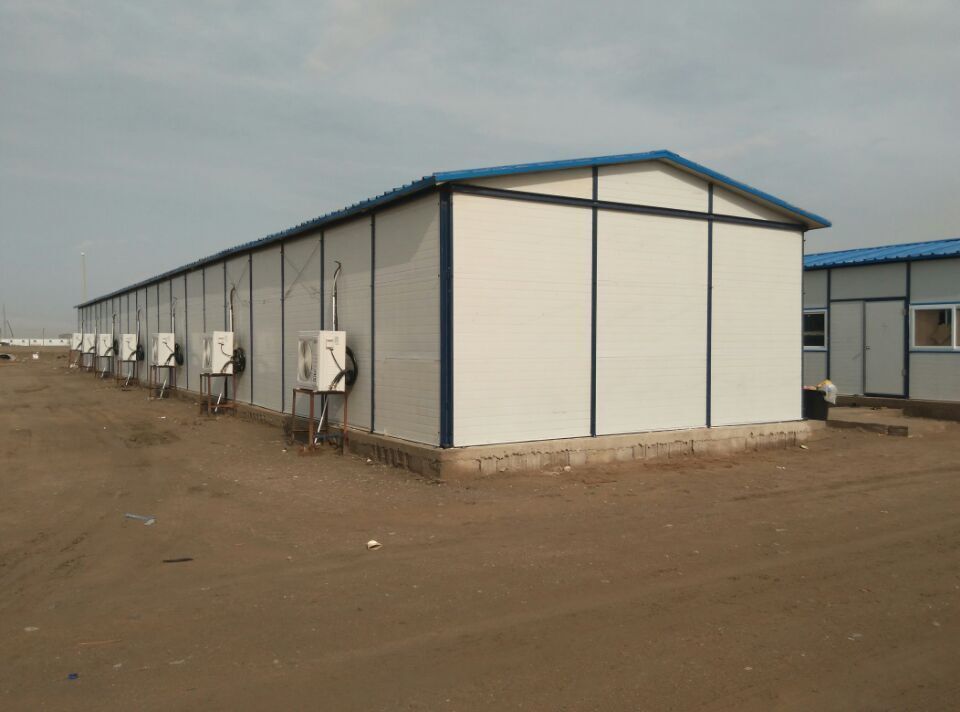
**Chapter 7: Economic Analysis—Return on Investment**
While the environmental benefits of Lida’s sandwich panel houses are compelling, the economic case is equally strong.
**7.1 Lifecycle Cost Analysis**
A 20-year projection for a 200m² single-family home demonstrates significant lifecycle savings:
| Cost Category | Conventional Home | Lida Eco-Home | Savings |
|—————|——————|—————|———|
| Construction | $420,000 | $458,000 | – |
| Energy (20 years) | $186,400 | $67,200 | $119,200 |
| Maintenance (20 years) | $58,000 | $32,000 | $26,000 |
| **Total** | **$664,400** | **$557,200** | **$107,200** |
*Source: Lifecycle cost analysis, 2025*
**7.2 Carbon Payback Period**
Although Lida’s eco-friendly homes have slightly higher embodied carbon due to advanced materials, the operational savings provide rapid carbon payback:
– Additional embodied carbon: 17 tCO₂e
– Annual operational carbon savings: 4.8 tCO₂e
– **Carbon payback period: 3.5 years**
**7.3 Financial Incentives**
Increasingly, energy-efficient homes qualify for favorable financing and incentives:
– Energy-efficient mortgage discounts (up to 50 basis points rate reduction)
– Government subsidies covering 15-30% of premium costs in many jurisdictions
– Carbon credit generation potential via VERRA certification
**Chapter 8: Certifications and Quality Assurance**
Lida Group’s commitment to quality and sustainability is validated by an extensive portfolio of certifications.
**8.1 International Certifications**
– **ISO9001:** Quality management systems
– **ISO14001:** Environmental management
– **ISO45001:** Occupational health and safety
– **CE (EN1090):** Compliance with European Union standards for structural steel components
**8.2 Third-Party Inspections**
The company has successfully passed inspections by SGS, BV, and TUV—three of the world’s most respected inspection organizations.
**8.3 Construction Qualifications**
Within China, Lida holds a Second Class Qualification for Steel Structure Professional Construction Contracting and a General Contracting Qualification of Construction Engineering.

**Chapter 9: The Future of Energy-Efficient Housing**
As Lida Group continues to innovate, several trends are shaping the next generation of eco-friendly sandwich panel houses.
**9.1 Next-Generation Core Technologies**
Research into advanced materials promises even greater thermal performance:
– **Vacuum Insulation Panels (VIPs):** Achieving λ=0.007 W/mK (R-50 per inch)
– **Bio-Based Foams:** Hempcrete-PIR hybrids with negative embodied carbon potential
– **Aerogel-Enhanced Layers:** Silica aerogel blankets for superinsulation applications
**9.2 Smart Skin Systems**
Future sandwich panel houses will incorporate active building envelope technologies:
– **Electrochromic windows:** Tint control reducing solar gain by up to 80%
– **Building-Integrated Photovoltaics (BIPV):** Cladding systems generating 35 kWh/m²/yr
– **Self-cleaning coatings:** Titanium dioxide nanotechnology maintaining reflective performance
**9.3 Operational Intelligence**
Building Energy Management Systems (BEMS) will optimize performance through:
– Predictive heating algorithms using weather API integration
– Room-by-room occupancy-based control
– Real-time energy consumption monitoring and dashboards
**Conclusion**
Lida Group’s energy-efficient eco-friendly sandwich panel house represents a significant advancement in sustainable construction—one that demonstrates that environmental responsibility and practical performance are not competing priorities but complementary goals. Through advanced material science, precision manufacturing, and integrated system design, these homes deliver measurable energy savings of 40% compared to conventional construction, validated by field studies across three continents.
The scientific foundations of this achievement are robust. Sandwich panel construction eliminates thermal bridging, achieving continuous insulation values that reduce heating and cooling loads by 50-65% in cold climates and 35-50% in hot climates. Airtightness levels of 0.23 ACH@50Pa dramatically reduce infiltration losses, while multi-layer material architecture optimizes thermal resistance. Manufacturing precision ensures consistent quality, with factory fabrication achieving material utilization rates exceeding 95%—compared to 70-80% for traditional construction—and reducing construction waste by 94%.
The environmental benefits extend beyond operational energy. Light steel construction uses 40% less material than traditional concrete equivalents. Solar-integrated roofing and rainwater harvesting reduce resource consumption. Recyclable materials and relocatable designs align with circular economy principles. The West Africa market complex, completed three months ahead of schedule despite challenging equatorial conditions, demonstrated that sustainability need not compromise project timelines or economic viability.
The economic case is equally compelling. Lifecycle cost analysis reveals total savings exceeding $100,000 over 20 years for a typical single-family home, with carbon payback achieved in just 3.5 years. Energy-efficient mortgage discounts and government subsidies further improve affordability.
As the global community confronts the urgent challenges of climate change and housing demand, Lida Group’s eco-friendly sandwich panel house offers a scalable, proven solution. It transforms buildings from energy liabilities into efficient assets, providing a critical pathway toward meeting Paris Agreement targets while enhancing quality of life for residents worldwide. The era of energy-intensive housing is ending; the age of intelligent, sustainable construction is here. Lida Group’s sandwich panel house stands at the forefront of this transformation—delivering homes that are not only comfortable and durable but also responsible stewards of the environment for generations to come.
Related news
-
Innovative Prefab Easy Assembly Building Saves Time and Resources
2026-03-26 15:25:33
-
Lida Group Completes Major Construction Site Labor Accommodation Project
2026-03-26 15:36:08
-
Lida Group Launches New Construction Site Labor Accommodation Solutions
2026-03-26 09:51:19
contact us
- Tel: +86-532-88966982
- Whatsapp: +86-13793209022
- E-mail: sales@lidajituan.com
