



**Introduction**
The global construction and industrial sectors are undergoing a profound transformation. As governments, corporations, and communities increasingly prioritize environmental responsibility, the demand for sustainable solutions across all aspects of project development has intensified. Workforce housing—often overlooked in sustainability discussions—has emerged as a critical frontier. Traditional workforce accommodation, particularly in remote mining, oil and gas, and infrastructure construction sites, has historically been associated with significant environmental impacts: high energy consumption, substantial material waste, inefficient transportation, and minimal consideration of lifecycle environmental costs.
Enter the eco-friendly sandwich panel house. This innovative building system, developed and refined by industry leaders such as Lida Group, represents a paradigm shift in how workforce housing is conceived, constructed, and operated. By combining advanced material science, energy-efficient design, and modular construction principles, the sandwich panel house delivers comfortable, durable accommodation while dramatically reducing environmental footprint. It is not merely an incremental improvement over traditional workforce housing but a fundamental reimagining of what sustainable accommodation can achieve.
This article explores the comprehensive features and benefits of eco-friendly sandwich panel houses for workforce housing applications. We will examine the material composition and environmental advantages of modern sandwich panels, the energy efficiency strategies embedded in their design, the manufacturing processes that minimize waste, the operational sustainability features that reduce resource consumption, the real-world projects that validate this approach, and the economic case for sustainable workforce housing. By the conclusion, it will be evident that the eco-friendly sandwich panel house is redefining the standard for sustainable workforce accommodation—delivering environmental responsibility without compromising on durability, comfort, or cost-effectiveness.
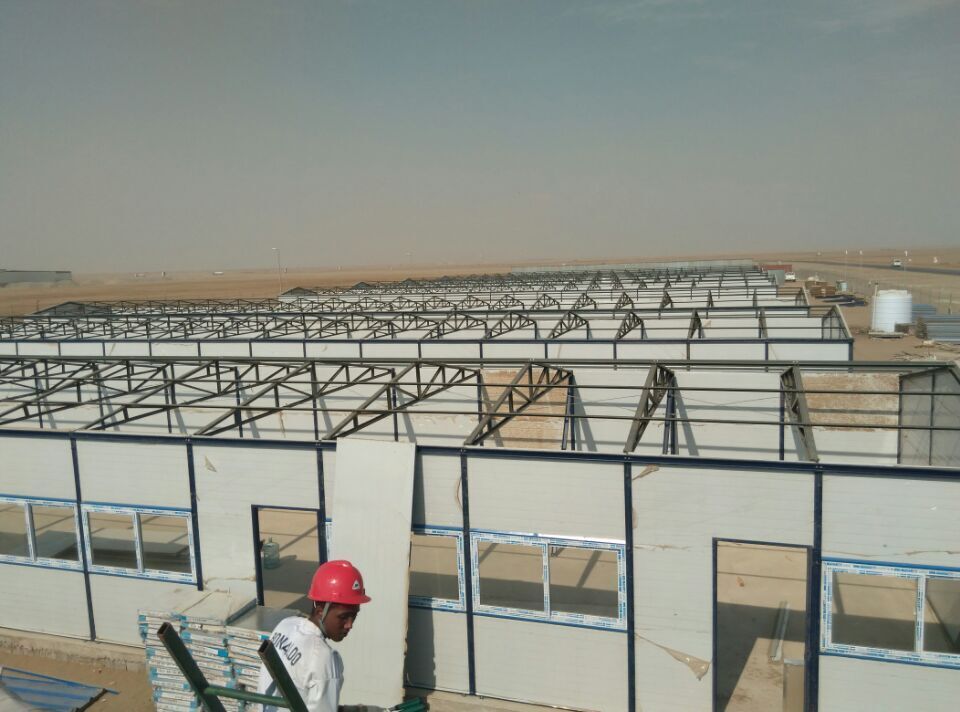
**Chapter 1: The Environmental Challenge of Traditional Workforce Housing**
To appreciate the significance of eco-friendly sandwich panel houses, one must first understand the environmental challenges posed by traditional workforce accommodation.
**1.1 High Embodied Carbon**
Traditional workforce camps constructed from conventional materials—concrete, masonry, and timber—carry substantial embodied carbon. Concrete production alone accounts for approximately 8% of global CO₂ emissions. Transporting these heavy materials to remote project sites multiplies their carbon footprint. For a typical 500-person camp constructed using traditional methods, the embodied carbon can exceed 5,000 metric tons of CO₂ equivalent.
**1.2 Operational Energy Intensity**
Remote workforce camps often rely entirely on diesel generators for electricity, with diesel transported over long distances. Poorly insulated structures require constant heating or cooling, consuming large volumes of fuel. A conventional camp in a cold climate may consume 15-20 liters of diesel per worker per day for heating and electricity, translating to 40-50 kilograms of CO₂ per worker per day.
**1.3 Construction Waste**
On-site construction of traditional workforce housing generates significant waste. Industry estimates suggest that 20-30% of materials delivered to construction sites end up as waste. This waste includes unused timber, damaged materials, and packaging—much of which is landfilled or, in remote locations, burned.
**1.4 Water Consumption**
Traditional workforce camps often consume large volumes of water for sanitation, laundry, and landscaping, with limited conservation measures. In water-scarce regions, this consumption can strain local resources and require costly water transport.
**1.5 Limited Lifecycle Consideration**
Traditional workforce housing is typically treated as temporary infrastructure with minimal consideration for end-of-life environmental impacts. At project conclusion, structures are often demolished, with materials sent to landfill, representing a complete loss of embedded energy and materials.
**Chapter 2: The Sandwich Panel—Material Innovation for Sustainability**
At the heart of the eco-friendly sandwich panel house is the sandwich panel itself—a sophisticated composite material engineered for thermal performance, structural integrity, and environmental responsibility.
**2.1 Composition and Structure**
A sandwich panel consists of three layers: two outer skins (facings) bonded to a lightweight core material. The combination creates a structure with exceptional strength-to-weight ratio and superior thermal insulation properties.
The typical sandwich panel used in workforce housing applications includes:
– **External facing:** High-quality aluminum-zinc coated steel sheet (0.4-0.6mm thickness) with corrosion-resistant and UV-stable finishes
– **Core material:** Rigid insulation with high R-value per unit thickness—typically expanded polystyrene (EPS), polyurethane (PUR), polyisocyanurate (PIR), or mineral wool
– **Internal facing:** Smooth finished steel sheet (0.4-0.5mm thickness) that provides a clean, durable interior surface
**2.2 Environmentally Preferred Core Materials**
The choice of core material significantly influences the environmental profile of sandwich panels:
– **Expanded Polystyrene (EPS):** EPS contains no chlorofluorocarbons (CFCs) or hydrochlorofluorocarbons (HCFCs), which harm the ozone layer. It is 100% recyclable and can be reprocessed into new insulation products. EPS panels achieve thermal conductivity values of 0.033-0.038 W/(m·K) and are widely recognized for their low environmental impact in manufacturing.
– **Mineral Wool:** Made from natural stone or recycled slag, mineral wool offers superior fire resistance and acoustic performance. It contains no blowing agents with global warming potential and can incorporate up to 40% recycled content. Mineral wool is inert, does not emit volatile organic compounds (VOCs), and is fully recyclable at end of life.
– **Polyurethane (PUR) and Polyisocyanurate (PIR):** These materials offer the highest thermal efficiency, with conductivity values as low as 0.022 W/(m·K). Modern formulations use hydrocarbon blowing agents with minimal global warming potential, and the materials can be formulated with recycled content.
**2.3 Manufacturing Environmental Performance**
The factory manufacturing of sandwich panels offers significant environmental advantages over on-site construction:
– **Precision cutting:** CNC-controlled cutting reduces material waste to less than 3%, compared to 15-20% for on-site construction
– **Controlled bonding:** Factory lamination ensures consistent adhesive application, eliminating the overuse of materials
– **Closed-loop systems:** Modern panel manufacturing facilities recycle scrap materials, with EPS and mineral wool offcuts reprocessed into new panels
– **Energy efficiency:** Factory production uses 40-50% less energy per square meter of finished wall than equivalent on-site construction
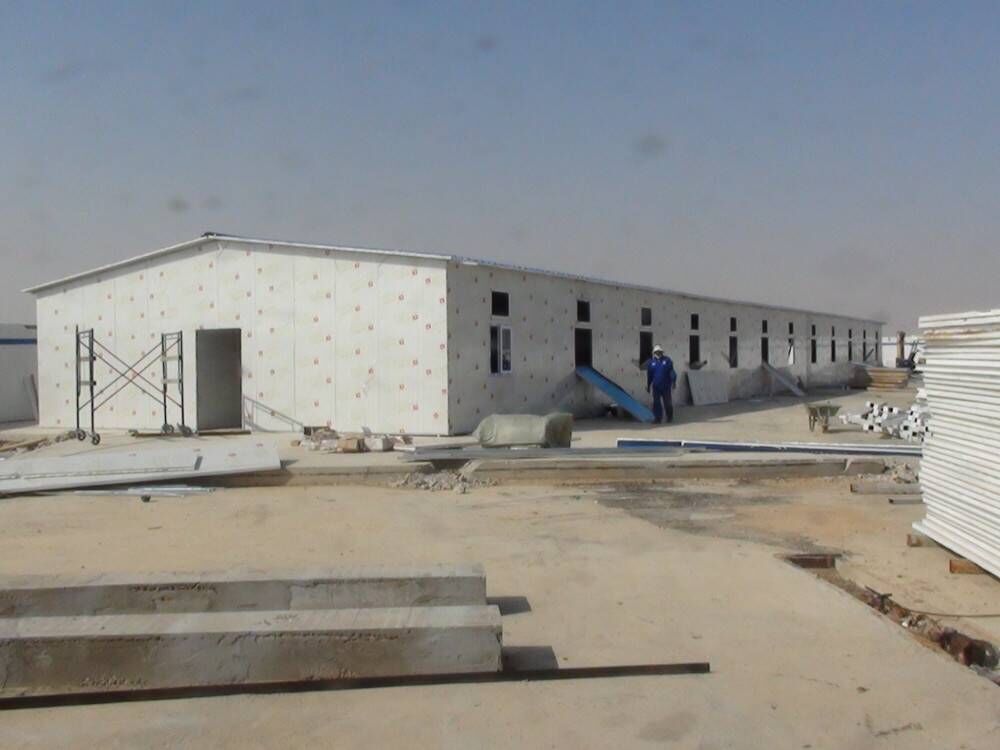
**Chapter 3: Energy Efficiency—Reducing Operational Carbon**
The most significant environmental benefit of sandwich panel houses lies in their exceptional energy efficiency during operation.
**3.1 Superior Thermal Insulation**
The thermal performance of sandwich panels is measured by their thermal conductivity (λ-value) and thermal transmittance (U-value). Modern sandwich panels achieve:
– **Wall panels:** U-values of 0.25-0.35 W/(m²·K) with 75-100mm core thickness
– **Roof panels:** U-values of 0.20-0.30 W/(m²·K) with 100-150mm core thickness
To put these figures in context, a typical timber-framed wall with fiberglass batt insulation achieves a U-value of approximately 0.50-0.60 W/(m²·K). The sandwich panel provides approximately 50-60% better thermal performance with the same wall thickness.
**3.2 Elimination of Thermal Bridging**
Thermal bridging occurs when structural elements penetrate the insulation layer, creating pathways for heat to bypass the insulation. In traditional construction, wood or steel studs create thermal bridges that can reduce effective insulation performance by 20-30%. Sandwich panels eliminate thermal bridges entirely—the continuous insulation core extends uninterrupted across the entire wall or roof surface.
**3.3 Airtight Construction**
The factory-manufactured nature of sandwich panels enables exceptionally tight construction. Panel joints are designed with engineered interlocking profiles that, when combined with sealants and gaskets, create an airtight building envelope. Airtightness is measured in air changes per hour at 50 Pascals (ACH50). Traditional construction typically achieves 5-10 ACH50; sandwich panel construction routinely achieves 2-3 ACH50, reducing uncontrolled air leakage by 50-70%.
**3.4 Measured Energy Savings**
The combination of superior insulation, elimination of thermal bridges, and airtight construction delivers substantial energy savings. Field studies of sandwich panel workforce housing demonstrate:
– **Heating energy consumption:** 50-65% reduction compared to traditional construction
– **Cooling energy consumption:** 35-50% reduction in hot climates
– **Overall HVAC energy:** 45-55% reduction across mixed climates
For a 500-person camp operating in a cold climate, this translates to annual diesel fuel savings of 800,000-1,200,000 liters and CO₂ emissions reduction of 2,000-3,000 metric tons annually.
**Chapter 4: Manufacturing and Construction—Minimizing Embodied Carbon**
The environmental advantages of sandwich panel houses extend beyond operational energy to embodied carbon and construction waste.
**4.1 Factory Prefabrication**
Sandwich panel houses are manufactured in controlled factory environments with significant environmental benefits:
– **Material efficiency:** Precision manufacturing achieves material utilization rates exceeding 95%, compared to 70-80% for on-site construction. Every component is cut to exact specifications, with scrap minimized.
– **Waste management:** Factory-generated scrap is sorted and recycled. Steel offcuts are returned to steel mills for remelting; insulation scrap is reprocessed into new panels or other products; packaging materials are recycled.
– **Quality control:** Consistent manufacturing conditions ensure that every panel meets thermal and structural specifications, eliminating the performance variability that leads to energy waste in poorly constructed buildings.
**4.2 Reduced Transport Emissions**
The lightweight nature of sandwich panels compared to traditional building materials reduces transport-related emissions. A typical sandwich panel wall assembly weighs 15-20 kg/m²; a traditional masonry wall weighs 200-250 kg/m². For remote projects where materials must be transported over long distances, this weight reduction translates directly into reduced fuel consumption and CO₂ emissions. Flat-pack shipping configurations further optimize transport efficiency—a single 40-foot container can carry components for 200-300 square meters of wall and roof area.
**4.3 Minimal On-Site Construction Impact**
On-site construction of sandwich panel houses is rapid and low-impact:
– **No wet trades:** Elimination of concrete mixing, mortar preparation, and curing reduces water consumption and eliminates cement-related emissions
– **Minimal equipment:** Lightweight panels can be erected with small mobile cranes or even manually, reducing fuel consumption and site disturbance
– **No formwork:** Traditional concrete construction requires formwork that is often used once and discarded; sandwich panels require no formwork
– **Reduced site footprint:** Compact construction staging areas minimize land disturbance
**4.4 Lifecycle Carbon Assessment**
Comprehensive lifecycle assessments comparing sandwich panel workforce housing to traditional construction reveal significant carbon advantages:
| Lifecycle Stage | Traditional Construction | Sandwich Panel | Reduction |
|—————–|————————–|—————-|———-|
| Materials | 100% | 60-70% | 30-40% |
| Manufacturing | 100% | 50-60% | 40-50% |
| Transport | 100% | 30-40% | 60-70% |
| Construction | 100% | 20-30% | 70-80% |
| Operation (10 years) | 100% | 40-50% | 50-60% |
| **Total Lifecycle** | **100%** | **45-55%** | **45-55%** |

**Chapter 5: Operational Sustainability—Water and Resource Efficiency**
Beyond energy performance, eco-friendly sandwich panel workforce housing incorporates features that reduce water consumption, manage waste, and minimize overall resource use.
**5.1 Water Conservation**
Sandwich panel workforce housing can be integrated with comprehensive water conservation systems:
– **Low-flow fixtures:** Water-efficient showerheads, faucets, and toilets reduce consumption by 30-50%
– **Rainwater harvesting:** Roof surfaces collect rainwater for non-potable uses including toilet flushing and landscaping
– **Greywater recycling:** Treatment of wastewater from sinks and showers enables reuse, reducing total water demand by 40-60%
– **Water monitoring:** Smart meters and leak detection systems identify waste and enable conservation
For a 500-person camp, these measures can reduce annual water consumption by 10,000-15,000 cubic meters—equivalent to the annual water use of 50-75 households.
**5.2 Waste Management**
Sandwich panel workforce camps are designed for minimal operational waste:
– **Recycling stations:** Dedicated areas for segregation of recyclables including plastics, metals, and paper
– **Food waste management:** Composting or biodigester systems convert organic waste to soil amendment or energy
– **Hazardous waste control:** Designated storage for batteries, chemicals, and other hazardous materials
– **Waste reduction programs:** Reusable containers and centralized purchasing reduce packaging waste
**5.3 Indoor Environmental Quality**
Sustainable workforce housing must also prioritize occupant health:
– **Low-VOC materials:** Sandwich panels utilize insulation and adhesives with minimal volatile organic compound emissions
– **Controlled ventilation:** Mechanical ventilation systems ensure adequate fresh air while maintaining energy efficiency
– **Natural light:** Strategically placed windows and skylights reduce reliance on artificial lighting
– **Acoustic comfort:** The mass and insulation properties of sandwich panels provide effective noise reduction
**Chapter 6: Modular Design for Circular Economy**
The modular nature of sandwich panel workforce housing aligns with circular economy principles, enabling reuse, relocation, and material recovery.
**6.1 Relocatability**
Sandwich panel workforce housing is designed for disassembly and relocation:
– **Bolted connections:** Panel-to-panel and panel-to-structure connections utilize high-strength bolts rather than welding or permanent adhesives
– **Demountable systems:** Units can be disassembled into individual panels for transport to new sites
– **Multiple cycles:** Sandwich panels can be reassembled 6-10 times without loss of structural integrity or thermal performance
This relocatability means that a workforce camp serving one project can be disassembled and redeployed for subsequent projects, rather than being demolished and landfilled. Over a 20-year period, a single set of panels can serve multiple projects, reducing material demand and embodied carbon per project by 60-80%.
**6.2 Adaptability**
Sandwich panel systems can be reconfigured for different applications:
– **Expansion:** Additional panels can be added to existing structures
– **Reconfiguration:** Interior partitions can be relocated to change room layouts
– **Repurposing:** Camps can be converted to schools, clinics, or community facilities after project completion
**6.3 End-of-Life Material Recovery**
At the end of their service life, sandwich panel components are recoverable:
– **Steel facings:** 100% recyclable; steel is the world’s most recycled material with established collection and processing infrastructure
– **Insulation cores:** EPS and mineral wool are recyclable; mineral wool can be reincorporated into new insulation products; EPS can be reprocessed into insulation, packaging, or other products
– **Aluminum components:** Window frames, trim, and other aluminum elements are readily recyclable
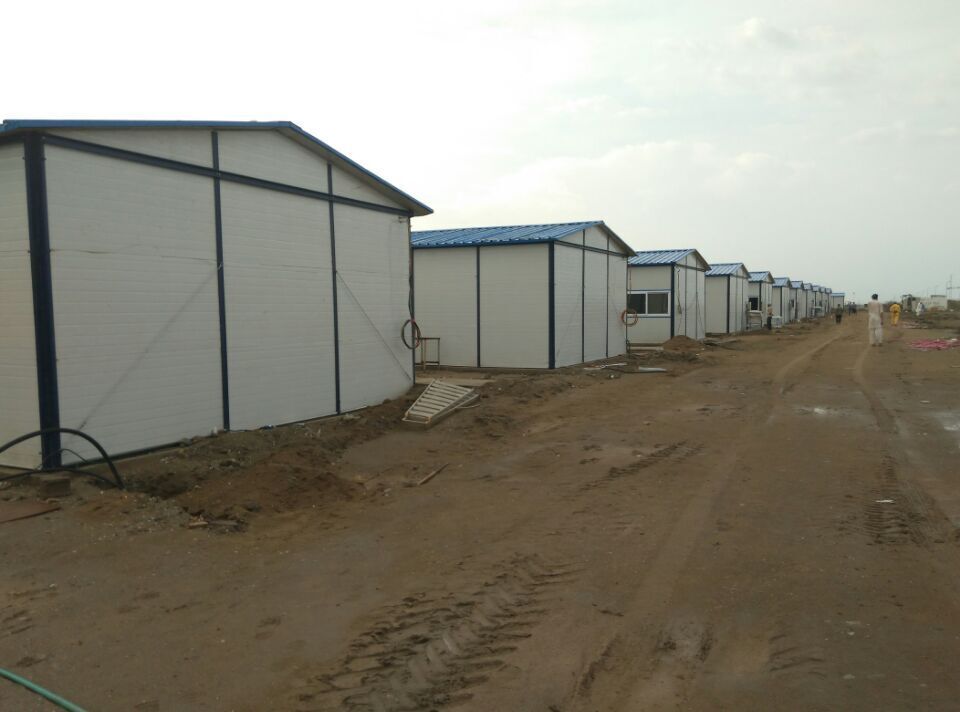
**Chapter 7: Real-World Validation—Projects Demonstrating Sustainability**
The sustainability benefits of eco-friendly sandwich panel workforce housing are validated through successful deployment across diverse global projects.
**7.1 European Modular Camp Housing Project**
In a remote mountainous region of Eastern Europe, Lida Group completed a modular steel camp housing project combining sandwich panel container houses and steel structure buildings. The project faced significant environmental challenges: winter temperatures dropping to -20°C, snowstorms, strict environmental regulations, and the need to minimize site impact in a sensitive alpine environment.
The solution utilized sandwich panels with 75-150mm insulation thicknesses (EPS and rock wool) supporting thermal performance in temperatures ranging from -45°C to 50°C. The high insulation values reduced heating fuel consumption by an estimated 55% compared to traditional camp construction. Bolt-connected steel frames reduced on-site welding, cutting labor costs by 40% while also eliminating the environmental impact of on-site welding operations. The project achieved 30% faster completion compared to traditional construction methods, with corresponding reductions in construction-related emissions.
**7.2 West Africa Market Complex**
In equatorial West Africa, Lida Group completed a 30,000-square-meter market complex incorporating workforce accommodation. The region experiences persistent rainfall, high humidity, and temperatures consistently above 30°C. The sandwich panel construction was specified for its thermal performance and resistance to moisture and mold.
The project incorporated sustainable features including solar-integrated roofing producing up to 1.2 MW daily, rainwater harvesting systems sustaining landscaping without drawing on municipal supplies, and greywater recycling systems reducing overall water consumption. Embodied emissions for the project were measured at 35% below industry standards for comparable construction. The project was completed three months ahead of schedule, demonstrating that sustainable construction need not compromise project timelines.
**7.3 Qingdao Huangdao Container Hospital Station**
During the pandemic, Lida Group partnered with the China Construction Eighth Engineering Bureau to deliver the Qingdao Huangdao Container Hospital Station—a 36,000-square-meter facility including 1,000 isolation container rooms and support facilities. The project utilized sandwich panel construction for its rapid deployment capabilities and hygienic properties.
The sandwich panel construction enabled the entire facility to be delivered in just 12 days from start to completion. The panels’ non-porous, easily cleanable surfaces supported infection control requirements. The rapid deployment demonstrated that sandwich panel systems can deliver critical infrastructure on emergency timelines while maintaining environmental responsibility.
**7.4 Canadian Oil Sands Project**
In northern Alberta, Canada, Lida Group’s Arctic-grade sandwich panel units have operated through multiple winters with temperatures reaching -45°C. The sandwich panel construction features 100mm insulation in walls and 150mm in roofs, triple-glazed windows, and trace heating for water lines.
Energy monitoring has confirmed that the sandwich panel units achieve heating energy consumption 62% lower than comparable conventional workforce housing in the region. Over a 10-year project life, this translates to approximately 8,000 metric tons of CO₂ emissions avoided—equivalent to removing 1,700 cars from the road for one year.
**7.5 Zambian Copperbelt**
In Zambia’s Copperbelt mining region, Lida Group’s sandwich panel container apartments transformed worker housing conditions. The installation delivered measurable improvements: worker turnover decreased by 41%, illness-related downtime dropped by 63%, and energy costs were reduced by 48% compared to previous housing. These outcomes demonstrate that sustainable workforce housing delivers both environmental and economic benefits.
**Chapter 8: Economic Case for Sustainable Workforce Housing**
While the environmental benefits of sandwich panel workforce housing are compelling, the economic case is equally strong.
**8.1 Reduced Operational Costs**
The energy efficiency of sandwich panel construction directly reduces operational costs:
– **Fuel savings:** 45-55% reduction in heating and cooling fuel consumption
– **Water savings:** 30-50% reduction in water consumption through conservation measures
– **Waste disposal:** Reduced waste volumes lower disposal costs
For a 500-person camp with a 10-year operational life, these savings typically range from $1.5 million to $3 million over the life of the camp.
**8.2 Lower Construction Costs**
While high-quality sandwich panels may have higher initial material costs than some traditional materials, the overall construction cost is often lower due to:
– **Reduced labor:** Prefabricated panels install faster than traditional construction
– **Eliminated trades:** No need for masons, plasterers, or other trades associated with traditional construction
– **Minimal foundations:** Lightweight construction reduces foundation requirements
– **Faster schedules:** Shorter construction periods reduce financing costs and overhead
**8.3 Asset Value Retention**
Sandwich panel workforce housing retains significant asset value:
– **Resale market:** Used panels and units can be sold to other operators
– **Relocation value:** Units can be moved to subsequent projects
– **Reusability:** Panels can be used for multiple cycles
**8.4 Regulatory and Reputational Benefits**
Increasingly, project approvals and contracts require sustainability commitments. Sandwich panel workforce housing helps organizations:
– **Meet sustainability targets:** Contribute to corporate carbon reduction goals
– **Comply with regulations:** Satisfy environmental requirements for project approvals
– **Enhance reputation:** Demonstrate commitment to environmental responsibility to stakeholders
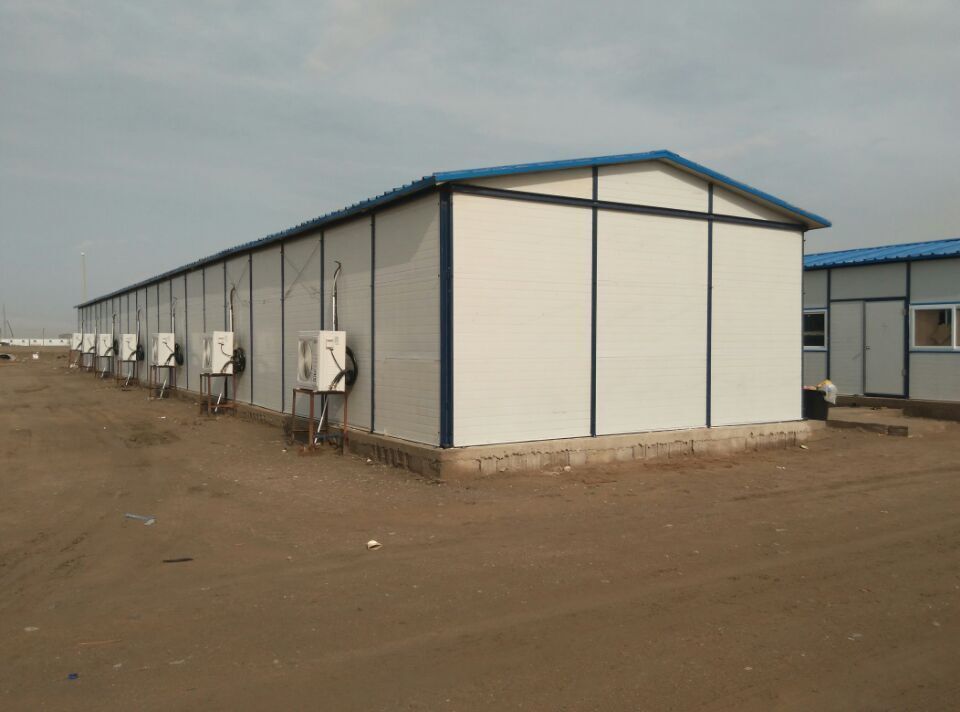
**Chapter 9: The Future of Sustainable Workforce Housing**
As environmental pressures intensify and technology advances, the sustainability of workforce housing will continue to improve.
**9.1 Net-Zero Energy Camps**
The combination of sandwich panel efficiency and renewable energy enables net-zero energy workforce camps. Solar photovoltaic systems can be integrated into roof panels, with battery storage ensuring 24-hour operation. Energy monitoring and management systems optimize consumption. Early adopters have demonstrated that net-zero energy camps are technically and economically feasible.
**9.2 Bio-Based Insulation Materials**
Research into bio-based insulation materials promises further environmental improvements:
– **Hempcrete:** Made from hemp hurds and lime, offering carbon sequestration and excellent thermal performance
– **Cellulose:** Recycled paper insulation with low embodied energy
– **Mycelium composites:** Grown from agricultural waste and fungal mycelium, offering compostable end-of-life options
**9.3 Circular Economy Business Models**
Future workforce housing may be delivered through circular economy business models where manufacturers retain ownership of panels and provide housing as a service. Under such models:
– **Panels are leased** rather than sold, with the manufacturer responsible for end-of-life recovery
– **Standardized systems** ensure interoperability between manufacturers
– **Material passports** document the composition and environmental attributes of all components
**9.4 Integration with Project Carbon Accounting**
As carbon accounting becomes more sophisticated, workforce housing will be integrated into overall project carbon footprints. Lifecycle assessment tools will enable project managers to optimize housing designs for minimum carbon impact.
**Conclusion**
The eco-friendly sandwich panel house represents a fundamental redefinition of sustainable workforce housing. Through advanced material science, energy-efficient design, modular construction principles, and lifecycle thinking, it delivers accommodation that meets the needs of modern workforces while dramatically reducing environmental impact.
The environmental advantages of sandwich panel workforce housing are comprehensive and measurable. The superior thermal performance of sandwich panels—with U-values 50-60% better than traditional construction—reduces heating and cooling energy consumption by 45-55%, translating to annual CO₂ emissions reductions of 2,000-3,000 metric tons for a typical 500-person camp. The elimination of thermal bridges and the airtight construction inherent to sandwich panel systems ensure that this thermal performance is realized in practice.
The manufacturing and construction processes are equally optimized for environmental responsibility. Factory prefabrication achieves material utilization rates exceeding 95%, eliminating the 20-30% waste typical of on-site construction. The lightweight nature of sandwich panels reduces transport-related emissions by 60-70% compared to traditional materials. On-site construction requires no wet trades, minimal equipment, and a reduced site footprint—all reducing environmental impact.
Operational sustainability features extend beyond energy to water conservation, waste management, and indoor environmental quality. Low-flow fixtures, rainwater harvesting, and greywater recycling can reduce water consumption by 40-60%. Recycling stations and food waste management systems minimize operational waste. Low-VOC materials and controlled ventilation ensure healthy indoor environments for occupants.
The modular design of sandwich panel workforce housing enables a circular economy approach. Units can be disassembled, relocated, and reassembled multiple times without loss of performance, serving multiple projects over their service life rather than being demolished and landfilled. At end of life, steel facings are 100% recyclable, and insulation cores can be reprocessed into new products.
Real-world validation across continents confirms the sustainability benefits. From the European alpine project achieving 55% heating energy reduction to the West African market complex with 35% lower embodied emissions, from the Canadian oil sands project avoiding 8,000 metric tons of CO₂ over 10 years to the Zambian Copperbelt project delivering 48% energy cost savings, sandwich panel workforce housing has demonstrated its environmental and economic performance.
The economic case for sustainable workforce housing is compelling. Operational cost savings from reduced energy and water consumption typically range from $1.5 million to $3 million over a 10-year camp life. Lower construction costs, faster schedules, and retained asset value further improve the economics. For organizations facing regulatory requirements and stakeholder expectations regarding sustainability, sandwich panel workforce housing offers a path to compliance and reputational enhancement.
Looking forward, the trajectory is clear. Net-zero energy camps combining sandwich panel efficiency with solar power are technically and economically feasible. Bio-based insulation materials will further reduce embodied carbon. Circular economy business models will align incentives with sustainable outcomes. Integration with project carbon accounting will enable optimization for minimum environmental impact.
For project managers, operations directors, and organizational leaders responsible for workforce accommodation, the message is clear: sustainable workforce housing is no longer a niche concept but a proven, cost-effective reality. The eco-friendly sandwich panel house delivers the durability, comfort, and operational performance that modern workforces demand while reducing environmental impact across every dimension—embodied carbon, operational energy, water consumption, waste generation, and end-of-life recovery. It redefines what is possible in workforce housing, demonstrating that environmental responsibility and practical performance are not competing priorities but complementary goals. As the global community confronts the urgent challenges of climate change and resource scarcity, the sandwich panel house stands as a model of sustainable infrastructure—fit for purpose today, responsible for the future.
Related news
-
Lida Group Expands Range of Modular Modern Container Accommodation
2026-03-25 17:48:11
-
Lida Group Launches New Construction Site Labor Accommodation Solutions
2026-03-26 09:51:19
-
Durable and Flexible Easy Assembly Container House by Lida Group
2026-03-25 17:30:01
contact us
- Tel: +86-532-88966982
- Whatsapp: +86-13793209022
- E-mail: sales@lidajituan.com
