



Durable and Secure Temporary Container Building by Lida Group
2025-Nov-24 15:34:10
By Admin
Introduction: The Evolution of Temporary Container Buildings in Modern Construction
In an era defined by rapid urbanization, climate volatility, and the need for flexible infrastructure, temporary container buildings have emerged as a transformative solution across industries. From emergency housing in disaster zones to modular offices for tech startups, these structures blend portability with functionality, redefining what “temporary” means in construction. Among the global leaders pioneering this shift is Lida Group, a China-based manufacturer founded in 1993 that has evolved from a container house innovator into a worldwide provider of engineered steel structures, prefab homes, and complex modular solutions. What sets Lida Group apart is its unwavering commitment to two core principles: durability that withstands extreme conditions and security that protects occupants, equipment, and assets. This article explores the engineering innovations, material science, and real-world applications that make Lida Group’s temporary container buildings a benchmark for reliability in the modular construction industry.
Temporary container buildings were once dismissed as makeshift structures, limited to basic storage or short-term shelter. However, advances in manufacturing and design have elevated them to sophisticated, multi-functional spaces that rival traditional construction in performance while offering unparalleled flexibility. Lida Group has been at the forefront of this evolution, recognizing that “temporary” does not equate to “disposable.” Instead, the company’s structures are engineered for repeated assembly, relocation, and long-term use—often with a service life of 15-20 years or more. This durability is paired with rigorous security measures, addressing concerns ranging from structural integrity in seismic zones to protection against theft and fire. As industries from mining to retail, disaster relief to corporate campuses increasingly adopt modular solutions, Lida Group’s focus on durability and security has positioned it as a trusted partner for projects in over 100 countries, from the permafrost of Siberia to the bustling cities of the Middle East.
Company Overview: Lida Group’s Legacy of Innovation and Certification
To understand the quality of Lida Group’s temporary container buildings, it is essential to examine the company’s foundation and commitment to global standards. Founded nearly three decades ago, Lida Group has grown from a regional manufacturer to a global leader with ISO-certified factories, a testament to its adherence to rigorous quality management systems. The company holds ISO 9001:2015 certification, which ensures consistent production processes, product reliability, and continuous improvement—critical factors in delivering durable and secure modular structures. Additionally, Lida’s products meet international certifications such as CE and TUV, validating their compliance with safety and performance standards across Europe and beyond.
Lida Group’s product portfolio encompasses a wide range of temporary container buildings, including flat pack modules, foldable units, multi-storey complexes, and customized solutions for specific industries. The company’s manufacturing capacity is impressive, with a supply ability of 2000 sets per month and a delivery time of 25-30 days, enabling rapid deployment for urgent projects. What distinguishes Lida from competitors is its integrated approach: from design and engineering to manufacturing, logistics, and on-site installation, the company offers turnkey solutions that streamline the construction process. This vertical integration ensures quality control at every stage, eliminating the inconsistencies that often plague modular projects handled by multiple contractors.
Central to Lida Group’s success is its focus on research and development (R&D). The company invests heavily in innovative materials and engineering techniques to enhance durability and security, particularly for extreme environments. For example, its arctic-grade container buildings, designed for mining camps in Siberia, incorporate specialized steel and insulation to withstand temperatures as low as -50°C. Similarly, its hurricane-resistant units deployed in the Philippines feature reinforced frames and wind-resistant designs rated for Grade 12 winds. This commitment to R&D has allowed Lida to adapt its products to diverse climates and use cases, from desert construction sites to coastal disaster relief operations.
Durability: Engineering for Longevity and Extreme Conditions
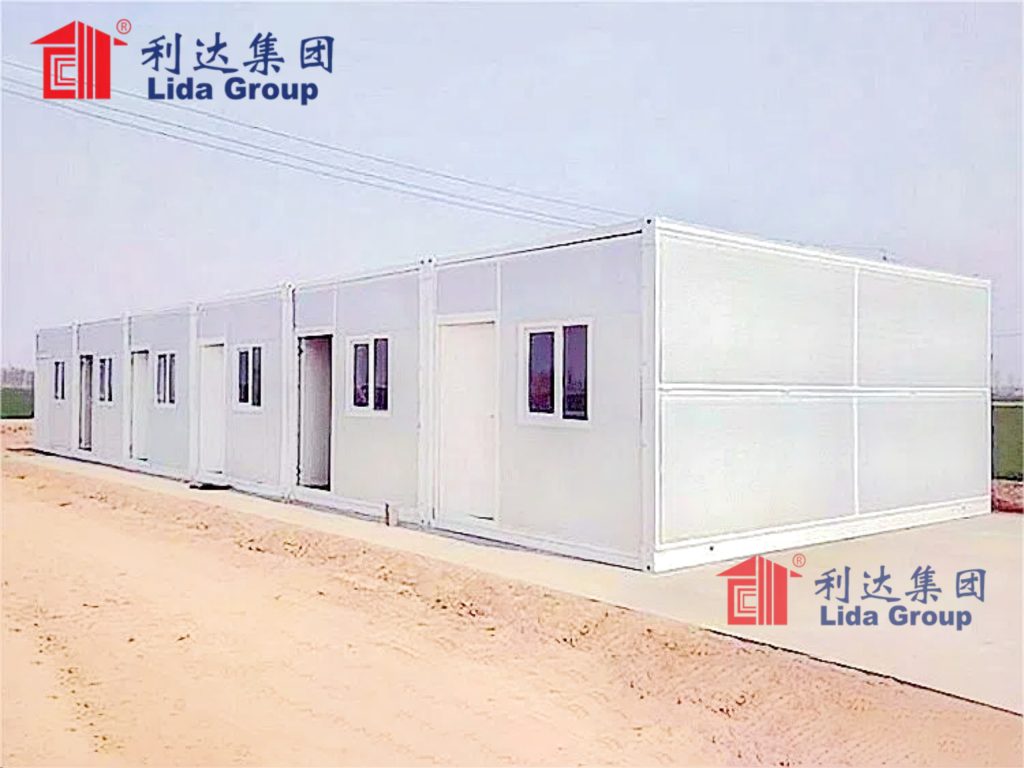
Durability is the cornerstone of Lida Group’s temporary container buildings, and it is achieved through a combination of high-quality materials, precision engineering, and rigorous testing. Unlike conventional temporary structures that degrade quickly under harsh conditions, Lida’s containers are built to withstand the elements, repeated assembly, and heavy use—making them a cost-effective long-term investment.
Material Innovations for Enhanced Durability
Lida Group’s commitment to durability begins with material selection. The company uses premium-grade steel for the structural frames of its container buildings, including nickel-enriched S355J2W steel, which maintains impact resistance at temperatures as low as -60°C. This steel is triple-galvanized to prevent corrosion, a common failure point in modular structures exposed to moisture, saltwater, or industrial chemicals. The galvanization process creates a protective layer that resists rust and degradation, extending the structure’s service life significantly. In addition to steel frames, Lida’s container buildings feature composite wall systems with aerogel-enhanced panels that achieve R-50 insulation values, reducing heat loss by 63% compared to conventional builds. These panels not only improve energy efficiency but also enhance structural stability by minimizing thermal stress.
For roofing and cladding, Lida offers two high-performance options inspired by industry-leading designs: a 12.5 oz rip-stop fabric cover and an exclusive Armor Shield cover. The rip-stop fabric is made from 100% recycled materials and features a special weave that prevents tears from spreading, while allowing natural light to filter through—reducing the need for artificial lighting during the day. This cover comes with a 20-year warranty, a testament to its durability. The Armor Shield cover, designed for extreme conditions, has a seven-layer structure that provides superior strength and resistance to abrasion, UV radiation, and harsh weather. It carries an industry-leading 30-year warranty, making it ideal for permanent or long-term temporary structures. Both covers are paired with galvanized steel frames that come with a 50-year warranty, ensuring the structure’s longevity.
The flooring systems of Lida’s container buildings are equally robust. They feature 18mm cement silicon calcium boards with a density of 1.75-1.95 g/cm³, rated for A1 class fire resistance and high load capacity. The floors are covered with PVC leather with a 0.07mm wear-resistant layer, supported by industrial felt for cushioning, sound insulation, and shock absorption. High-density polyurethane foam sealant is used to completely seal the flooring system, preventing water infiltration, moisture buildup, and noise transmission. This attention to detail ensures that the floors can withstand heavy foot traffic, equipment, and furniture without warping or deteriorating.
Structural Engineering for Stability and Longevity
Beyond materials, Lida Group’s container buildings are engineered for structural stability, even in the most challenging environments. The company’s multi-storey container complexes address the unique challenges of vertical modular construction, including structural overload, wind and seismic vulnerability, and differential settlement. Each level is designed to distribute dead and live loads (people, furniture, snow, wind) evenly across the lower containers and foundations, preventing buckling or weld failure. Lida’s engineers use advanced finite element analysis to simulate load conditions, ensuring that the structures meet or exceed international building codes.
For wind and seismic resistance, Lida’s container buildings feature robust bracing systems, moment connections, and tie-downs that minimize sway and prevent overturning. The foldable container units, for example, have a wind resistance rating of Grade 12, making them suitable for coastal areas and regions prone to hurricanes. In seismic zones, the structures incorporate flexible connection systems that absorb seismic forces, reducing the risk of collapse. Lida’s mining camp solutions in Chile and Siberia also feature vibration-damped floors that isolate the harmonics of crushing equipment, preventing structural fatigue over time.
Foundation design is another critical aspect of Lida’s durability engineering. The company’s container buildings use boltless screw foundations that can be installed in 90 minutes, even in remote or inaccessible locations. These foundations are tailored to site-specific soil conditions, including permafrost, sand, and clay, to prevent differential settlement. In permafrost regions, Lida’s foundations are designed to accommodate thawing and freezing cycles, ensuring that the structure remains stable as the ground shifts. This attention to foundation design eliminates a common failure point in temporary structures, extending their service life and reducing maintenance costs.

Testing and Quality Assurance
Lida Group’s commitment to durability is validated through rigorous testing and quality assurance processes. The company’s ISO-certified factories implement strict quality control measures, from raw material inspection to final product testing. Each container building undergoes a series of tests, including cryogenic testing for arctic-grade units, wind tunnel testing for wind resistance, and fire resistance testing to ensure compliance with DIN 4102 A2 class standards.
For example, Lida’s nickel-enriched steel frames are subjected to cryogenic testing that simulates decades of polar winters, verifying their impact resistance at -60°C. The welding joints are inspected using non-destructive testing methods, such as ultrasonic and radiographic testing, to detect hidden defects that could compromise structural integrity. The fabric covers are tested for tear resistance, UV stability, and water penetration, ensuring that they can withstand prolonged exposure to the elements. These tests are not just one-time checks; Lida conducts continuous quality audits and product improvement based on field feedback, ensuring that its container buildings remain at the forefront of durability.
Security: Protecting Occupants, Assets, and Data
Security is inseparable from durability in Lida Group’s temporary container buildings. The company recognizes that temporary structures are often used to house valuable equipment, sensitive data, or vulnerable populations—making security a non-negotiable feature. Lida’s security measures address four key areas: structural security, fire safety, access control, and environmental security.
Structural Security: Preventing Unauthorized Access and Intrusion
Lida’s container buildings are designed to prevent unauthorized access, with robust locking systems and reinforced entry points. Each shipping container module can be locked at the end of the day, protecting valuable tools, equipment, and assets. The container shells are made from thick-gauge steel that resists cutting, prying, and forced entry, while the doors feature heavy-duty hinges and deadbolt locks. For high-security applications, such as data centers or military installations, Lida offers optional security upgrades, including bullet-resistant glass, reinforced steel panels, and biometric access control systems.
The structural design also contributes to security by eliminating weak points. The containers have no internal support beams, maximizing usable space while reducing potential entry points. The walls and roofs are seamless, with no gaps or cavities that could be exploited by intruders. Lida’s flat pack and foldable units also feature interlocking panels that are difficult to disassemble without specialized tools, preventing theft or vandalism when the structure is unoccupied.
Fire Safety: Minimizing Risk and Maximizing Protection
Fire safety is a top priority for Lida Group, especially in multi-storey container complexes and occupied spaces. The company’s container buildings are designed to prevent fire spread and provide safe egress, with fire-resistant materials and compartmentalization. The walls and roofs use 50mm silicon rock boards that meet A1 class fire protection standards, preventing the spread of flames and smoke. The flooring systems are also rated for A1 class fire resistance, reducing the risk of fire spreading from one level to another.
Lida’s container buildings address the unique fire risks of modular construction, such as narrow cavities between stacked units that can act as chimneys. The company uses high-density polyurethane foam sealant to fill all gaps and cavities, eliminating fire spread pathways. The doors and windows feature thermal-break aluminum frames with double or triple glazing, which not only improve energy efficiency but also resist fire penetration. For added safety, Lida offers optional fire suppression systems, including sprinklers and smoke detectors, that can be integrated into the structure during manufacturing.

Environmental Security: Protecting Against Extreme Conditions
Environmental security is another critical aspect of Lida’s design, ensuring that the structure remains safe and habitable even in extreme weather conditions. The company’s container buildings are engineered to withstand hurricanes, typhoons, earthquakes, and extreme temperatures, protecting occupants from harm. For example, the units deployed in the Philippines after a typhoon featured hurricane-resistant frames and hermetic seals that prevented water infiltration, while the arctic-grade units in Siberia maintain habitable conditions despite -50°C temperatures.
Lida’s container buildings also address environmental hazards such as corrosion, dust, and chemical exposure. The triple-galvanized steel frames resist corrosion from saltwater, industrial chemicals, and abrasive dust, while the fluoropolymer-lined laboratories in mining camps resist chemical exposure. Positive-pressure ventilation systems maintain ISO Class 8 air cleanliness, excluding abrasive dust from instrumentation and reducing respiratory incidents for occupants. These features ensure that the structure remains safe and functional, even in harsh or hazardous environments.
Applications: Versatile Solutions for Diverse Industries
Lida Group’s temporary container buildings are versatile enough to meet the needs of diverse industries, from disaster relief to luxury housing. The company’s modular designs can be customized to fit specific applications, with options for expandability, portability, and specialized features. Below are some of the key applications where Lida’s durable and secure container buildings have made a significant impact.
Disaster Relief and Emergency Housing
In the aftermath of natural disasters such as typhoons, earthquakes, and floods, rapid deployment of safe and durable housing is critical. Lida Group has established itself as a leader in emergency housing solutions, delivering flat pack container buildings to disaster zones worldwide. For example, after a typhoon struck the Philippines, Lida deployed 200 flat pack container houses within 3 weeks. These units featured built-in sanitation systems, hurricane-resistant frames, and A1 class fire protection, providing immediate shelter for displaced families. The flat pack design allowed for easy transportation—10 units can be loaded into one 40HQ shipping container—enabling rapid deployment to remote areas.
Lida’s emergency housing units are designed to be self-sufficient, with options for solar panels, water filtration systems, and thermal insulation that maintains comfortable temperatures without electricity. The structures are easy to assemble, with no specialized tools required, allowing local communities to set up shelters quickly. Their durability ensures that they can be used for long-term temporary housing, providing stability for displaced populations until permanent homes are rebuilt.
Mining and Resource Extraction
Mining operations in remote areas face unique challenges, including extreme weather, harsh terrain, and the need for rapid deployment. Lida Group’s container buildings are ideal for mining camps, offering durable, secure, and comfortable living and working spaces. The company’s arctic-grade mining camp solutions in Siberia’s Udachny diamond mine withstand -50°C temperatures, with nickel-enriched steel frames and aerogel insulation that maintain habitable conditions. The camps feature vibration-damped floors, positive-pressure ventilation, and fluoropolymer-lined laboratories, ensuring the safety and comfort of workers.
Lida’s mining camp units are also designed for portability and scalability. The helicopter-transportable 20ft modular units can be installed in roadless locations within 8 hours, while permanent camp complexes can be expanded as operations grow. The structures are resistant to corrosion, dust, and chemical exposure, reducing maintenance costs and ensuring operational continuity. For mining companies operating in remote or extreme environments, Lida’s container buildings provide a reliable and cost-effective solution that minimizes downtime and maximizes worker safety.
Commercial and Retail Spaces
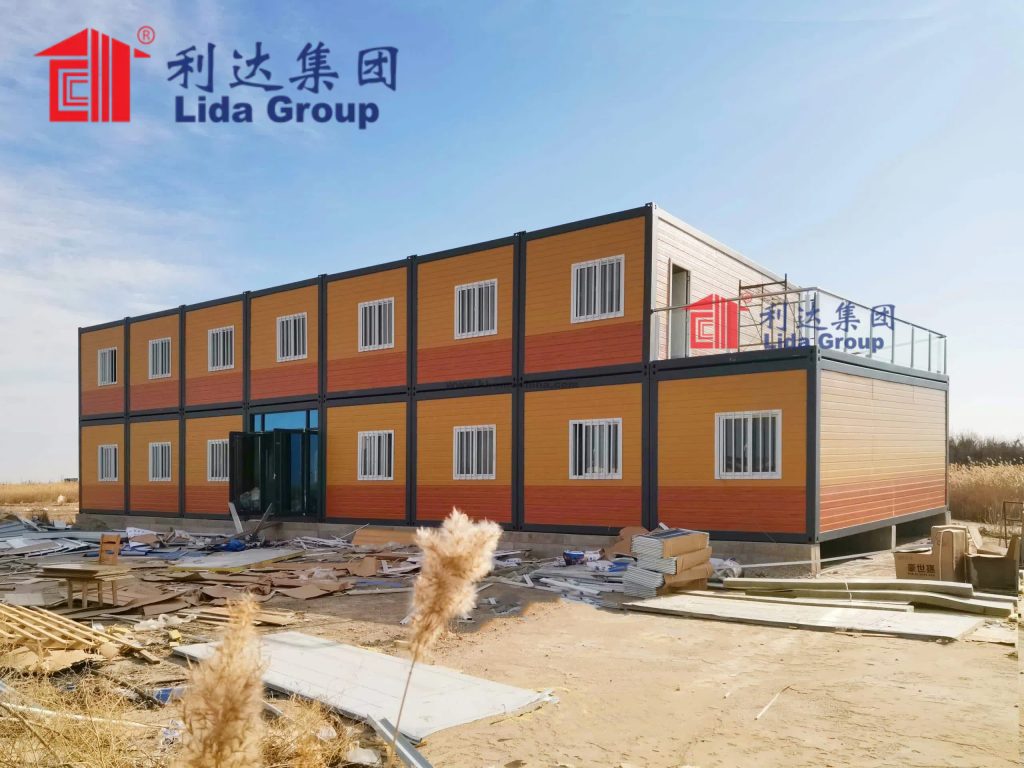
Temporary retail spaces, pop-up malls, and event venues require flexibility, speed of deployment, and aesthetic appeal. Lida Group’s flat pack and modular container buildings have been used to create innovative commercial spaces, such as the Dubai pop-up mall project. This project showcased how flat pack modules can be transformed into retail spaces within days, with customizable layouts, large windows, and modern finishes. The structures are durable enough to withstand heavy foot traffic and outdoor conditions, while their modular design allows for easy reconfiguration or relocation.
Lida’s commercial container buildings offer several advantages over traditional retail spaces, including lower construction costs, faster deployment, and reduced environmental impact. The company’s hybrid approach combines flat pack ease with modular precision, allowing clients to create unique and functional spaces that reflect their brand. For tech startups and small businesses, Lida’s office container complexes provide scalable workspace with soundproof meeting pods, rooftop gardens, and energy-efficient systems. The Berlin tech startup project, for example, delivered 20 modular units assembled in 4 weeks, providing a flexible and collaborative workspace for the company’s growing team.
Residential and Luxury Housing
Container buildings are no longer limited to basic shelter—Lida Group has expanded into luxury residential solutions, blending durability, security, and design excellence. The company’s expandable container house in Sweden, for example, was designed as a sustainable lakeside retreat, featuring sliding glass walls, geothermal heating, and a modern interior. The expandable design allows the house to grow with the family, from a 1-bedroom unit to a 3-story home, while the steel structure and composite insulation ensure durability and energy efficiency.
Lida’s luxury container homes are customizable, with options for high-end finishes, smart home systems, and eco-friendly features such as solar panels and rainwater harvesting. The structures are built to the same high standards as commercial projects, with triple-galvanized steel frames, fire-resistant materials, and wind-resistant designs. For homeowners seeking a unique, sustainable, and secure living space, Lida’s container homes offer an alternative to traditional construction that is both cost-effective and environmentally friendly.
Technical Specifications: Detailed Engineering for Performance
Lida Group’s temporary container buildings are backed by detailed technical specifications that ensure consistent performance and quality. The company provides comprehensive technical data for each product line, including dimensions, load capacity, insulation values, and fire resistance ratings. Below are the key technical specifications for Lida’s foldable container house, one of its most popular temporary solutions:
Dimensions and Weight
- Size Options: GP 20ft, GP 40ft, HQ 40ft
- Folded Dimensions (20ft unit): 2438mm × 2591mm × 600mm
- Unfolded Dimensions (20ft unit): 6058mm × 2438mm × 2591mm
- Weight (20ft unit): Approx. 2200kg
Structural Performance
- Wind Resistance: Grade 12 (up to 117km/h)
- Seismic Resistance: Up to 8 degrees (MSK scale)
- Wall Permitted Loading: 0.6 kN/m²
- Ceiling Permitted Live Loading: 0.5 kN/m²
- Service Life: 15-20 years
Thermal and Acoustic Insulation
- Wall Thermal Conductivity (k-value): 0.442 W/(m·K)
- Ceiling Thermal Conductivity (k-value): 0.55 W/(m²·K)
- Insulation Material: 50mm silicon rock board (80kg/m³), A1 class fire protection
- Sound Insulation: ≥40dB (airborne sound)
Fire Resistance
- Fire Rating: DIN 4102 A2 class (non-combustible)
- Flooring: A1 class fireproof cement silicon calcium board
- Walls/Roofs: A1 class fireproof silicon rock board
Materials and Construction
- Frame Material: Triple-galvanized square tube (100mm × 50mm × 2.8mm)
- Exterior Wall: Double-sided 4mm high galvanizing purification plate with 50mm silicon rock core
- Roof Material: 6mm × 2870mm × 950mm × 50mm double-sided 4mm EPS board with galvanized coiling machine (mechanical interlocking)
- Flooring: 18mm cement silicon calcium board + PVC floor leather + industrial felt + polyurethane foam sealant
- Doors/Windows: Thermal-break aluminum frames with double glazing
These technical specifications demonstrate Lida Group’s commitment to precision engineering and performance. The company’s container buildings meet or exceed international standards, ensuring that they can be used in diverse applications and climates. For custom projects, Lida’s engineering team works with clients to adjust specifications, such as increasing insulation values for extreme cold or enhancing security features for high-risk environments.
Environmental Sustainability: Durability as a Sustainable Choice
In addition to durability and security, Lida Group’s temporary container buildings are designed with environmental sustainability in mind. The company recognizes that modular construction offers significant environmental benefits compared to traditional building methods, including reduced waste, lower energy consumption, and the ability to repurpose materials.
One of the key sustainability advantages of Lida’s container buildings is the use of recycled materials. The company’s fabric covers are made from 100% recycled materials, while the steel frames are manufactured from recycled steel where possible. By repurposing shipping containers and using recycled materials, Lida reduces the environmental impact of its products, minimizing the need for virgin resources.
Lida’s container buildings also offer energy efficiency benefits, thanks to their advanced insulation systems. The aerogel-enhanced panels and double-glazed windows reduce heat loss in cold climates and heat gain in warm climates, lowering energy consumption for heating and cooling. The natural light transmission of the fabric covers further reduces the need for artificial lighting, cutting energy use during the day. For clients seeking to maximize sustainability, Lida offers optional solar panels and energy-efficient HVAC systems that can make the structures self-sufficient.
The modular design of Lida’s container buildings also contributes to sustainability by reducing construction waste. Traditional construction generates significant amounts of waste, from excess materials to demolition debris. In contrast, Lida’s structures are manufactured in factories with precise quality control, minimizing material waste. The flat pack and foldable designs also reduce transportation emissions, as multiple units can be loaded into a single shipping container, reducing the number of trips required.
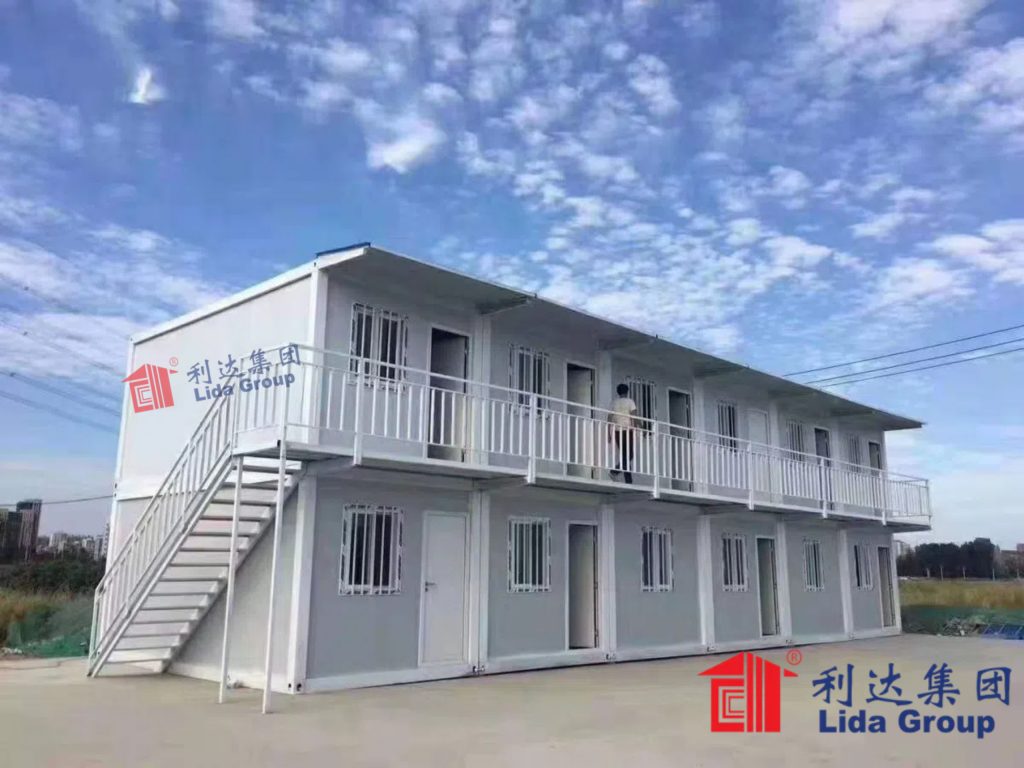
Finally, Lida’s container buildings are designed for reuse and relocation, extending their lifecycle and reducing the need for new construction. The structures can be disassembled and rebuilt elsewhere, making them ideal for temporary projects or applications where mobility is required. For example, a mining camp can be relocated to a new site once operations are complete, or an emergency shelter can be repurposed as a community center after disaster recovery. This reuse reduces the environmental impact of the structure over its lifetime, making it a sustainable choice for forward-thinking clients.
Case Studies: Real-World Success Stories
To illustrate the durability and security of Lida Group’s temporary container buildings, let’s examine three real-world case studies that showcase the company’s solutions in diverse environments and applications.
Case Study 1: Arctic Mining Camp in Siberia
Challenge: A mining company operating in Siberia’s Udachny diamond mine needed durable, secure, and habitable housing for workers in extreme conditions (-50°C temperatures, hurricane-force winds, and permafrost). Traditional structures had failed due to thermal stress, corrosion, and differential settlement.
Solution: Lida Group delivered arctic-grade container buildings with nickel-enriched S355J2W steel frames, cryogenic welding, and aerogel-enhanced insulation (R-50). The units featured boltless screw foundations designed for permafrost, vibration-damped floors, and positive-pressure ventilation systems. The roofs used Armor Shield covers with a 30-year warranty, and the walls were sealed with triple magnetic gaskets to prevent wind-driven snow infiltration.
Results: The mining camp has operated continuously for 5 years without structural issues, maintaining habitable conditions even in -50°C temperatures. The structures have withstood hurricane-force winds and permafrost thawing cycles, with no corrosion or settlement. Worker safety has improved significantly, with a 63% reduction in respiratory incidents due to the positive-pressure ventilation system. The client estimates that the durability of Lida’s structures has reduced maintenance costs by 40% compared to traditional buildings.
Case Study 2: Emergency Housing in the Philippines
Challenge: After a powerful typhoon struck the Philippines, the government needed 200 temporary shelters for displaced families. The shelters had to be deployed quickly, withstand future typhoons, and provide basic sanitation and fire safety.
Solution: Lida Group supplied flat pack container houses with Grade 12 wind resistance, A1 class fire protection, and built-in sanitation systems. The units were shipped in 20 40HQ containers (10 units per container) and assembled by local workers in 3 weeks. The structures featured reinforced steel frames, hermetic seals to prevent water infiltration, and solar-powered lighting.
Results: The shelters provided immediate housing for 1,000 displaced people, with no structural damage during subsequent storms. The flat pack design allowed for rapid deployment, and the durable materials have withstood the tropical climate for 3 years with minimal maintenance. The government has since ordered additional units for other disaster-prone regions, citing Lida’s reliability and speed of delivery.
Case Study 3: Luxury Lakeside Retreat in Sweden
Challenge: A private client sought a sustainable, expandable, and secure lakeside home that blended modern design with off-grid functionality. The home needed to withstand cold winters, provide energy efficiency, and offer flexible living space.
Solution: Lida Group designed an expandable container house with sliding glass walls, geothermal heating, and a modular layout. The structure used triple-galvanized steel frames, 50mm silicon rock insulation, and a green roof system. The expandable design allowed the client to start with a 1-bedroom unit and add two additional levels over time. The home featured smart home systems, rainwater harvesting, and solar panels for self-sufficiency.
Results: The home has been occupied for 2 years, with no structural issues and energy bills 50% lower than comparable traditional homes. The expandable design has allowed the client to adapt the space to their growing family, and the durable materials have withstood harsh Swedish winters. The home has been featured in architectural magazines for its innovative design and sustainability, demonstrating that container buildings can be both functional and luxurious.
Conclusion: Lida Group’s Leadership in Durable and Secure Temporary Container Buildings
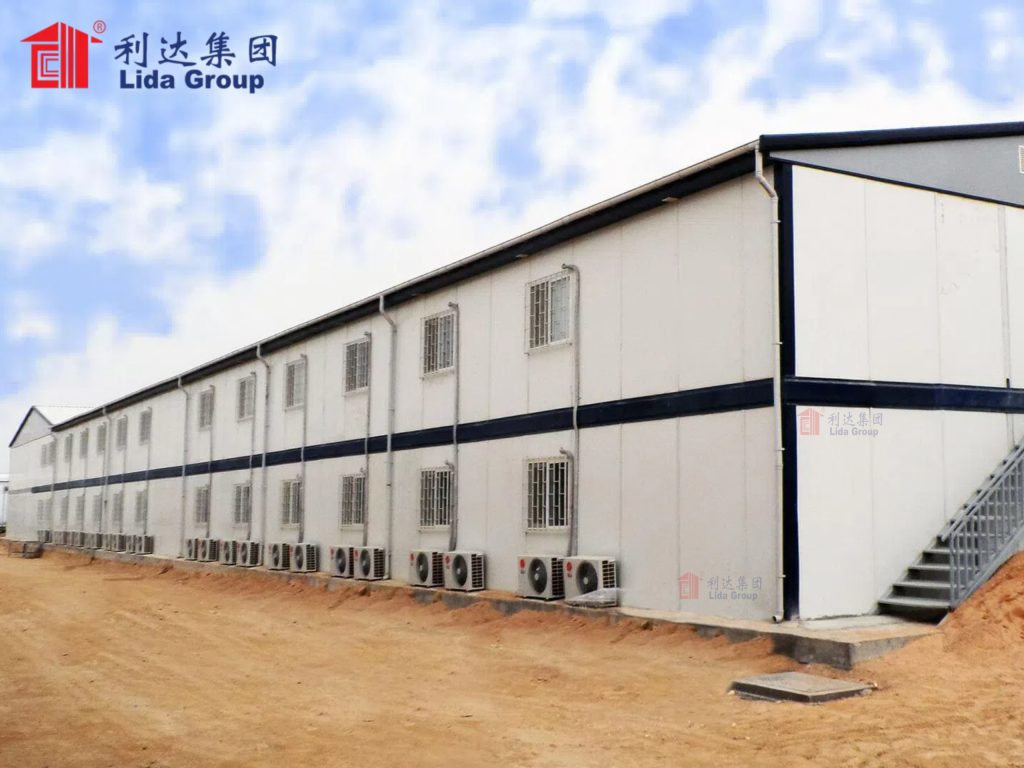
Lida Group’s temporary container buildings represent the pinnacle of durability, security, and versatility in modular construction. For nearly three decades, the company has pioneered innovations in material science, structural engineering, and sustainable design, delivering solutions that meet the needs of diverse industries and environments. From arctic mining camps to luxury lakeside homes, Lida’s container buildings have proven their ability to withstand extreme conditions, protect occupants and assets, and provide long-term value.
The key to Lida’s success lies in its unwavering commitment to quality and innovation. The company’s ISO-certified factories, rigorous testing processes, and adherence to international standards ensure that every container building meets the highest levels of durability and security. By using premium materials such as nickel-enriched steel, aerogel insulation, and fire-resistant composites, Lida creates structures that last 15-20 years or more—far exceeding the lifespan of conventional temporary buildings.
Lida’s container buildings also offer significant advantages in terms of flexibility and sustainability. The flat pack and foldable designs allow for rapid deployment and relocation, making them ideal for emergency housing, mining camps, and pop-up retail spaces. The use of recycled materials, energy-efficient systems, and modular construction reduces environmental impact, making Lida’s solutions a sustainable choice for clients seeking to minimize their carbon footprint.
As the demand for temporary and modular construction continues to grow, Lida Group is well-positioned to lead the industry. The company’s global presence, manufacturing capacity, and commitment to R&D ensure that it can adapt to emerging trends and meet the evolving needs of clients worldwide. Whether it’s a disaster relief project requiring rapid deployment, a mining camp in an extreme environment, or a luxury home seeking sustainability and design excellence, Lida Group’s durable and secure temporary container buildings offer a reliable, cost-effective, and innovative solution.
In a world where flexibility, durability, and security are more important than ever, Lida Group’s temporary container buildings stand as a testament to the power of modular construction. By combining engineering excellence with a focus on client needs, the company has redefined what temporary structures can be—proving that “temporary” does not have to mean “compromised.” For businesses, governments, and individuals seeking a reliable and versatile building solution, Lida Group is the partner of choice for durable, secure, and sustainable temporary container buildings.
Related news
-
Explore the Versatility of Our Prefab Mobile Container House
2025-11-14 16:27:27
-
Lida Group's Temporary Container Building Aids Emergency Housing
2025-11-21 16:25:37
-
Achieve Sustainability with Cost-Effective Prefab Construction
2025-11-21 16:36:15
contact us
- Tel: +86-532-88966982
- Whatsapp: +86-13793209022
- E-mail: sales@lidajituan.com
