



Discover Our Versatile and Temporary Mobile Building Solutions
2025-Dec-10 16:50:59
By Admin
Introduction: Redefining Flexibility in Modern Construction
In an era marked by rapid urbanization, evolving business needs, and increasing demands for rapid response to emergencies, the limitations of traditional construction have become increasingly prominent. Conventional brick-and-mortar buildings require lengthy construction periods, substantial capital investment, and offer little flexibility for relocation or modification. In contrast, temporary mobile building solutions have emerged as a transformative alternative, combining modular design, efficient deployment, and cost-effectiveness to meet diverse spatial needs across industries. From construction site dormitories and emergency shelters to temporary offices and tourism facilities, these innovative structures are redefining how we create and utilize space.
Temporary mobile buildings, encompassing modular container homes, prefabricated panel structures, and portable tents, are characterized by their factory-prefabricated components, quick on-site assembly, and adaptability to various environments. According to industry research, the global modular construction market is projected to grow at a CAGR of 6.5% through 2030, driven by the need for sustainable, time-efficient, and cost-effective building solutions. This article explores the core technologies, versatile applications, performance advantages, and safety standards of our temporary mobile building solutions, demonstrating how they address modern challenges while delivering long-term value.
Core Technologies: The Foundation of Versatility and Reliability
Modular Design Systems
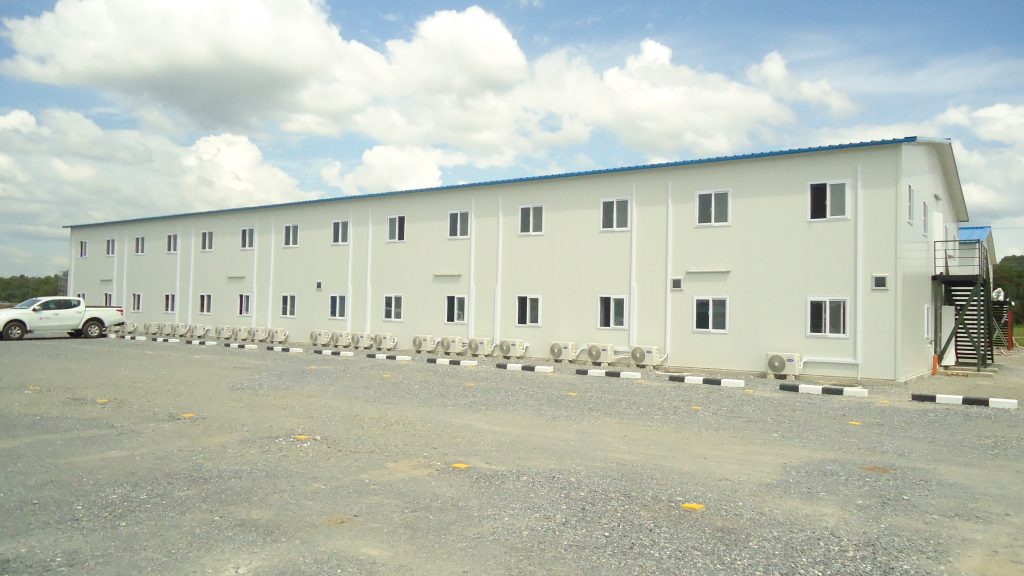
At the heart of our mobile building solutions lies modular design, a revolutionary approach that divides structures into standardized, prefabricated units (modules) manufactured in controlled factory environments. These modules—complete with structural frames, insulation, electrical wiring, and interior finishes—are then transported to the site for assembly, minimizing on-site construction work. Our modular systems offer two primary structural configurations to suit different needs:
- Wall-Bearing Modular Systems: Ideal for residential and small-office applications, these modules feature load-bearing walls constructed from steel frames and composite panels. Each module functions as an independent unit with four enclosing walls, allowing for easy stacking and combination to form multi-story buildings. For example, our standard residential module (6055mm×2435mm×2820mm) can be assembled into dormitories, apartments, or staff quarters, with a design lifespan of 30 years and resistance to 8-degree seismic activity . The walls, composed of 50mm or 75mm rock wool or polyurethane sandwich panels, provide excellent thermal insulation and soundproofing, ensuring comfortable living conditions.
- Corner-Column Supported Modular Systems: Designed for large open spaces such as offices, classrooms, and healthcare facilities, these modules use reinforced corner columns to bear structural loads, eliminating the need for internal load-bearing walls. This configuration allows for flexible interior layouts and the creation of open-plan spaces by combining multiple modules. The frame, fabricated from Q345B galvanized steel with a thickness of 3mm and a zinc coating of 100g/㎡, offers exceptional durability and corrosion resistance . Our corner-column modules can span up to 18 meters without internal supports, maximizing space utilization for commercial and public use .
Advanced Material Innovations
Material selection is critical to the performance, sustainability, and cost-effectiveness of temporary mobile buildings. We utilize a range of high-performance materials tailored to specific applications, ensuring optimal balance between strength, insulation, and environmental responsibility:
- Structural Materials: The primary structural frames are made from high-strength steel (Q235, Q345, or Q355 grades) and 6082-T6 aluminum alloy, offering a superior strength-to-weight ratio. Steel components undergo hot-dip galvanization or fluorocarbon coating to enhance corrosion resistance, extending the service life even in harsh environments such as coastal areas with high humidity . Aluminum alloy, valued for its lightweight and recyclability, is used in portable tent structures, enabling easy transportation and rapid deployment .
- Insulation and Cladding Materials: Sandwich panels are the cornerstone of our building envelopes, combining structural integrity with thermal and acoustic insulation. Common core materials include rock wool (fire-resistant, non-toxic) and polyurethane (high thermal efficiency, water-resistant), with panel thickness ranging from 50mm to 75mm . Exterior cladding options include color-coated steel sheets (available in various hues for aesthetic customization) and PVC membranes (for tent structures), both offering weather resistance and durability . Interior finishes feature E0-grade environmental panels and PVC flooring, ensuring low formaldehyde emissions and compliance with indoor air quality standards .
- Specialty Materials: For specialized applications, we offer composite materials such as fiberglass-reinforced plastic (FRP) for chemical resistance and waterproofing, and treated wood for aesthetically pleasing, eco-friendly interiors . These materials expand the versatility of our solutions, enabling use in demanding environments such as industrial workshops and outdoor tourism facilities.
Rapid Assembly and Deployment Mechanisms
One of the most significant advantages of our mobile building solutions is their speed of assembly, which drastically reduces project timelines compared to traditional construction. Our modular systems leverage standardized connections and pre-integrated components to streamline on-site work:
- Modular Building Assembly: A team of skilled workers can assemble a 1000㎡ modular building in 1-2 weeks, compared to 2-3 months for a conventional brick structure . Large-scale projects benefit from even greater efficiency: our portable tent structures, for instance, can cover 10,000㎡ in just 5 days using modular frames and pre-cut PVC membranes . The assembly process requires no heavy machinery, as modules are lightweight enough for manual handling or small cranes, reducing site disruption and equipment costs.
- Connection Technologies: Modules are joined using 8.8-grade high-strength bolts or precision welding, ensuring structural stability and load transfer between units . These connections are designed for quick installation while meeting strict safety standards, with shear and bending capacity verified through rigorous testing. For temporary applications, our bolted connections allow for easy disassembly, enabling relocation or reuse of modules.
Versatile Applications: Adapting to Diverse Industry Needs
Our temporary mobile building solutions are engineered to meet the unique requirements of multiple sectors, offering customized designs that balance functionality, efficiency, and cost. Below are key application areas demonstrating their versatility:
Construction and Infrastructure Projects
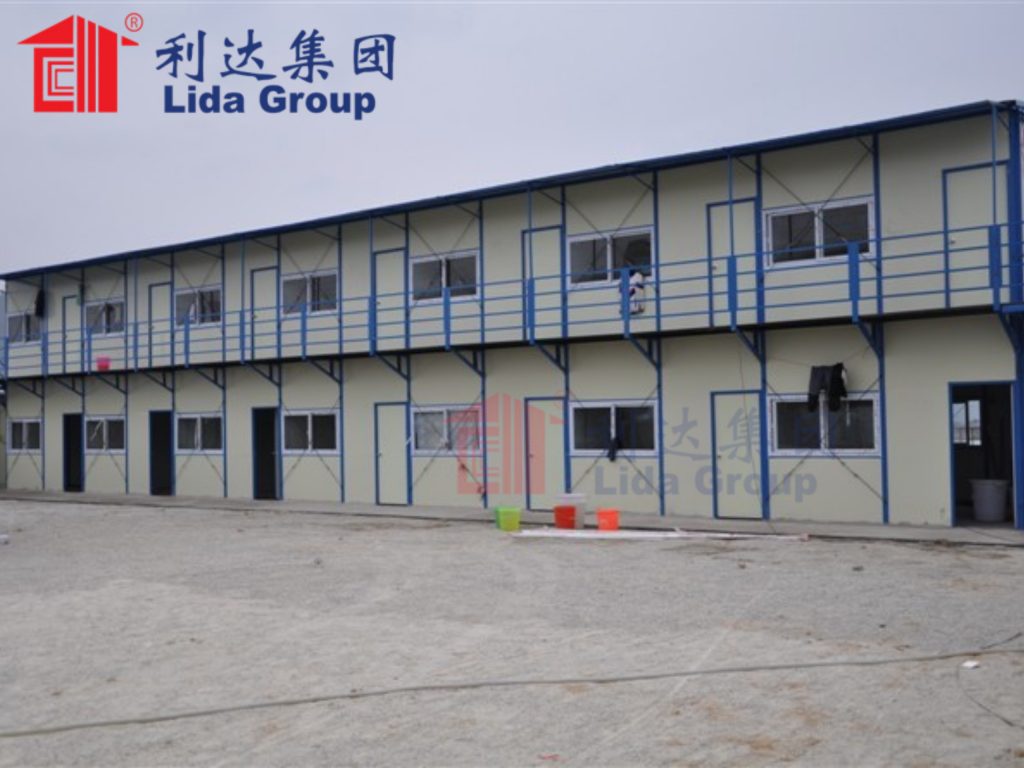
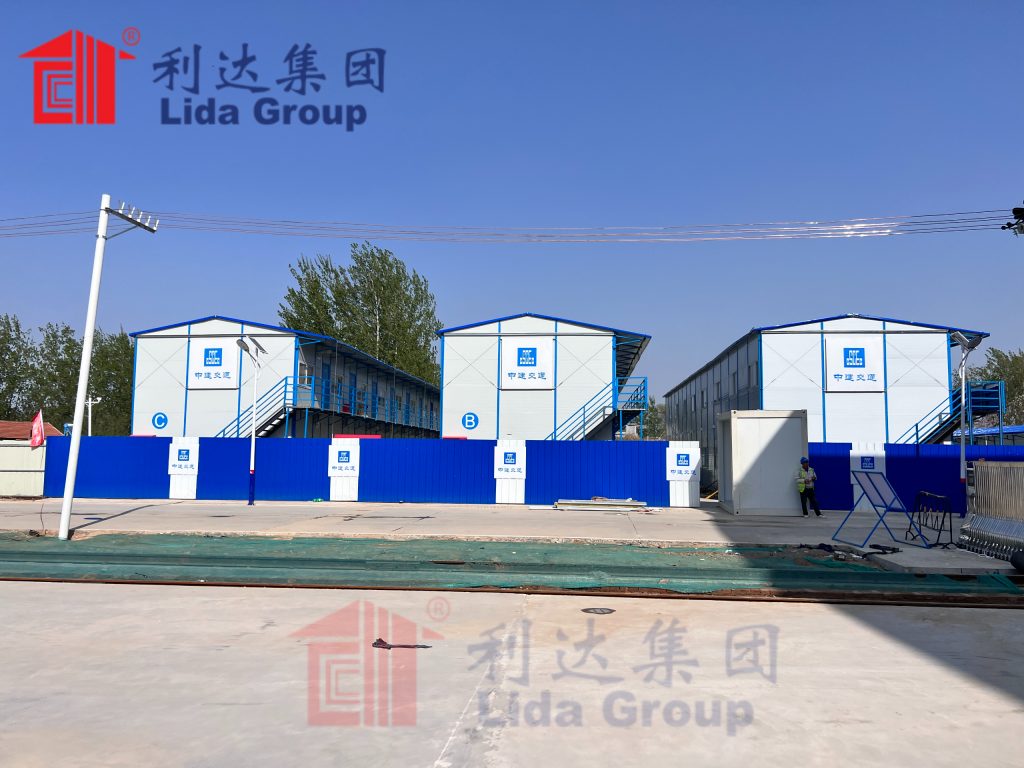
The construction industry is a primary beneficiary of mobile building solutions, which address the need for temporary on-site facilities. Our products serve as dormitories, offices, canteens, and storage warehouses for construction teams, providing comfortable and safe living/working spaces without delaying project timelines. Key features for this sector include:
- Rapid Deployment: A 50-person dormitory can be fully operational within 7 days, ensuring construction teams have immediate accommodation upon site mobilization .
- Durability: Structures withstand harsh construction site conditions, with wind resistance up to 12 levels and waterproof roofing systems (SBS membranes with 15-year service life) .
- Cost Efficiency: Compared to traditional on-site construction, our solutions reduce material costs by 30-50% and labor costs by 40-60%, as demonstrated by a 1000㎡ construction office project that saved $150,000 in total costs .
Emergency Response and Disaster Relief
In crisis situations such as natural disasters or public health emergencies, rapid access to safe shelter and functional facilities is critical. Our mobile buildings serve as emergency shelters, field hospitals, command centers, and temporary schools, with the following advantages:
- Quick Mobilization: Lightweight modules can be transported via trucks, ships, or aircraft and assembled within 24 hours, providing immediate relief to affected populations .
- Safety and Hygiene: Structures meet fire safety standards (Class B1 fire resistance) and are equipped with ventilation systems, ensuring a healthy environment for displaced persons or medical personnel .
- Adaptability: Customizable layouts support diverse emergency needs, from 4㎡ per person sleeping quarters to fully equipped medical units with examination rooms and storage for supplies . During the COVID-19 pandemic, our temporary testing stations were deployed in 20+ cities, processing over 5,000 tests daily per unit.
Commercial and Tourism Industries
Businesses and tourism operators increasingly rely on mobile buildings to address seasonal demand, temporary events, or flexible expansion needs. Applications include:
- Temporary Retail and Exhibition Spaces: Modular pop-up shops, exhibition halls, and event pavilions offer customizable designs to match brand aesthetics, with quick assembly for short-term events (e.g., trade shows, festivals) .
- Tourism Facilities: In scenic areas and rural tourism destinations, our eco-friendly cabins, glamping tents, and visitor centers blend with natural surroundings while providing modern amenities. These structures use sustainable materials (recycled steel, FSC-certified wood) and can be relocated to minimize environmental impact .
- Temporary Workshops and Warehouses: For businesses with fluctuating inventory or production needs, our portable industrial tents (spanning up to 80 meters) provide flexible storage space with insulation to protect goods from temperature extremes .
Education and Healthcare
In regions with limited infrastructure or urgent capacity needs, our mobile buildings offer reliable solutions for schools and healthcare facilities:
- Temporary Classrooms: Modular school buildings can be configured to accommodate 20-40 students per classroom, with soundproof walls, natural lighting (window area ≥1/7 of wall space), and HVAC systems to support learning . In rural areas of developing countries, our classrooms have reduced school overcrowding by 30% while meeting local education standards.
- Mobile Clinics and Hospitals: Equipped with medical gas systems, electrical outlets, and sterile finishes, our healthcare modules serve as rural clinics, emergency wards, or specialized treatment centers. The corner-column design allows for open-plan treatment areas, while the modular nature enables expansion as demand grows .
Industrial and Overseas Camps
For industrial projects (mining, oil and gas) and overseas construction camps, our mobile buildings provide durable, self-contained living and working environments:
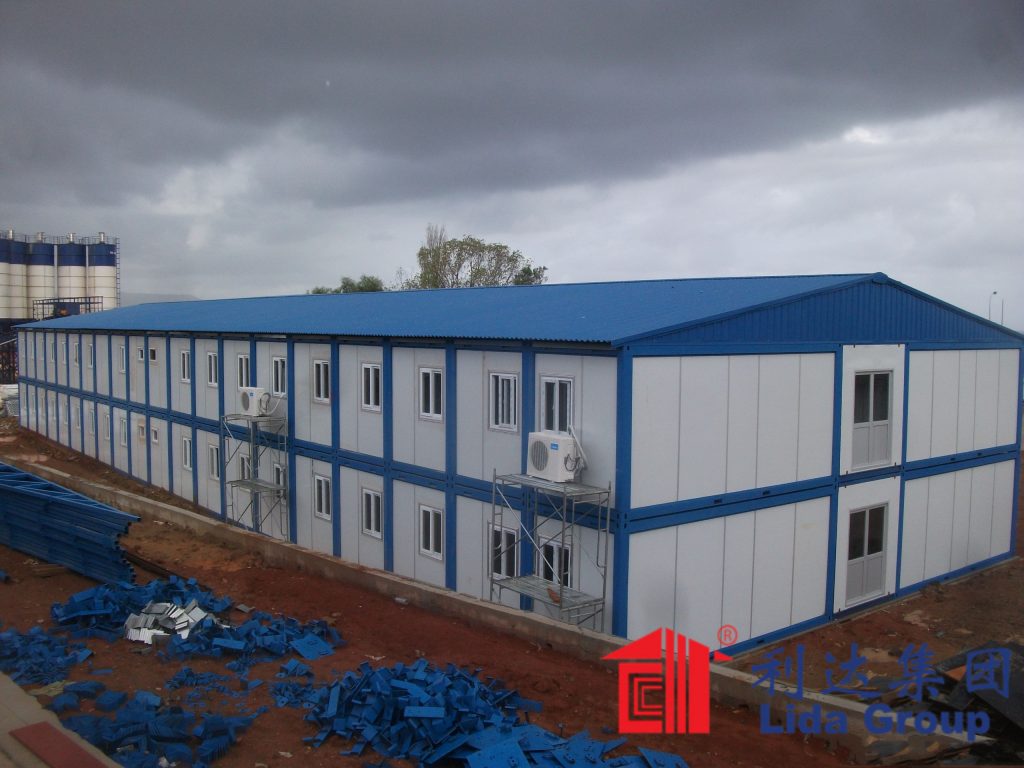
- Overseas Camps: Our ZM-series modular buildings, designed for long-distance transportation, feature compact packaging (reducing shipping costs by 40%) and corrosion-resistant frames to withstand harsh climates . Camps include dormitories, kitchens, recreation rooms, and offices, supporting 50-500 personnel with minimal on-site infrastructure.
- Temporary Industrial Facilities: Fire-resistant and explosion-proof modules are used as control rooms, workshops, and storage for hazardous materials, complying with international safety standards (e.g., ATEX for explosive environments) .
Core Advantages: Why Choose Our Temporary Mobile Building Solutions
Cost Efficiency: Saving Time and Resources
Our mobile building solutions deliver significant cost savings compared to traditional construction, spanning material procurement, construction, and long-term operation:
- Material Costs: By using lightweight, standardized materials (e.g., steel frames, sandwich panels) and leveraging economies of scale in factory production, we reduce material costs by 30-50% . For example, a 50㎡ mobile office costs \(20,000-\)30,000, compared to \(40,000-\)60,000 for a conventional brick structure .
- Construction Costs: Modular assembly requires 60-80% fewer on-site workers and eliminates the need for expensive formwork, concrete pouring, and lengthy curing times . Labor costs for a 1000㎡ project are typically \(100,000-\)150,000, versus \(300,000-\)400,000 for traditional construction .
- Operational and Maintenance Costs: Superior insulation (thermal conductivity ≤0.04W/(m·K)) reduces energy consumption for heating and cooling by 40-60%, translating to annual savings of \(2,000-\)3,000 for a 100㎡ building . The modular design also simplifies maintenance, with replaceable components and minimal need for structural repairs over the service life.
- Reuse Value: With a material recycling rate of 60-80%, our buildings can be disassembled and relocated multiple times, reducing the cost of new construction for future projects . A single module can be reused up to 10 times, providing a total cost of ownership 70% lower than traditional buildings.
Flexibility and Adaptability
The modular nature of our solutions enables unparalleled flexibility to meet changing needs:
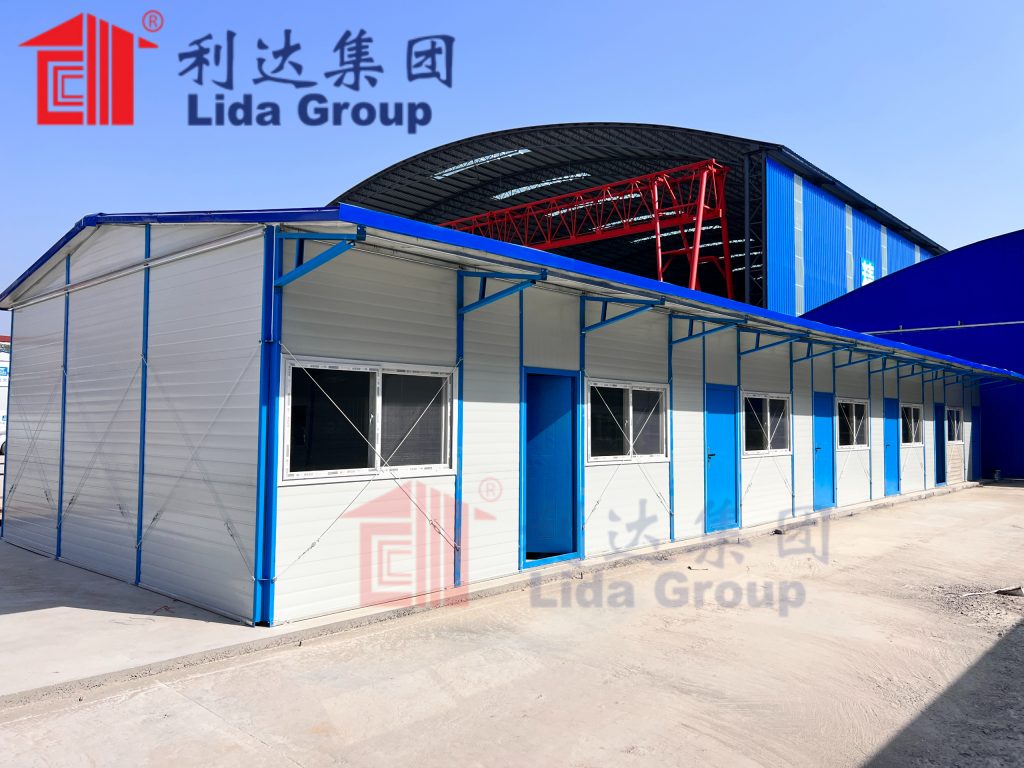
- Customization: We offer tailor-made designs for size, layout, and functionality, from compact 10㎡ guard booths to 10,000㎡ industrial warehouses. Clients can choose from various finishes, fixtures, and optional features (e.g., solar panels, rainwater collection systems) .
- Scalability: Buildings can be easily expanded by adding modules, allowing businesses to grow their space incrementally without disrupting operations. For example, a 200㎡ office can be expanded to 400㎡ in 3 days by adding adjacent modules .
- Mobility: Most of our structures are fully portable, with options for wheeled bases or crane-mountable modules. This mobility is ideal for temporary projects, emergency response, or businesses that require relocation (e.g., construction companies, event organizers) .
Environmental Sustainability
In line with global efforts to reduce carbon emissions and promote green construction, our mobile building solutions prioritize sustainability:
- Reduced Carbon Footprint: Factory production minimizes construction waste by 70-80% compared to traditional building methods, as offcuts and scrap are recycled in the factory . The use of lightweight materials also reduces transportation-related emissions by 30-40%.
- Energy Efficiency: High-performance insulation, energy-efficient windows, and optional solar photovoltaic systems (conversion rate ≥18%) reduce reliance on fossil fuels . Our buildings meet LEED Silver or higher certification standards, with some models achieving net-zero energy consumption.
- Sustainable Materials: We prioritize recyclable and low-emission materials, such as galvanized steel (100% recyclable), E0-grade wood, and water-based paints (formaldehyde emission ≤0.05mg/m³) . At the end of their service life, over 90% of building components can be recycled or repurposed, minimizing landfill waste.
Safety and Reliability
Our mobile buildings adhere to strict international safety standards, ensuring structural integrity and occupant protection:
- Structural Safety: All designs undergo rigorous engineering analysis to withstand extreme weather conditions, including wind speeds up to 108km/h (30m/s), snow loads of 0.7kN/㎡, and seismic activity up to 8 degrees . Frame connections are tested for shear and bending strength, with load-bearing capacity verified by third-party laboratories .
- Fire Safety: Structures meet fire resistance ratings of ≥0.5 hours, with non-combustible insulation (rock wool) and fire-rated doors/windows . Each unit is equipped with fire extinguishers, smoke detectors, and emergency lighting, complying with NFPA and local fire codes .
- Health and Safety: Low-VOC (volatile organic compound) materials and adequate ventilation ensure indoor air quality meets WHO standards, protecting occupants from respiratory issues . For industrial applications, we offer explosion-proof and chemical-resistant designs to mitigate workplace hazards .
Technical Standards and Compliance
To ensure the quality and reliability of our solutions, we adhere to a comprehensive set of international and local standards, including:
- Structural Standards: Compliance with ISO 14001 (environmental management), ISO 9001 (quality management), and local building codes (e.g., GB 50017 for steel structures in China, AISC 360 for the United States) .
- Fire Safety Standards: Conformity to NFPA 101 (Life Safety Code), GB 50016 (Chinese Code for Fire Protection Design of Buildings), and EN 13501 (European fire classification) .
- Environmental Standards: Compliance with LEED, BREEAM, and GB/T 50378 (Chinese Green Building Assessment Standard), with a focus on energy efficiency and sustainable materials .
- Health Standards: Meeting GB/T 18883 (Indoor Air Quality Standard) and EPA standards for low-emission materials .
All our products undergo third-party testing and certification before delivery, with detailed quality control reports provided to clients. We also offer comprehensive after-sales service, including regular inspections, maintenance support, and technical training for facility managers .
Future Trends: Innovations Shaping the Mobile Building Industry
As technology advances and market demands evolve, our temporary mobile building solutions continue to innovate, with the following key trends driving development:
- Smart Integration: The integration of Internet of Things (IoT) technology enables remote monitoring of building systems, including temperature, humidity, energy consumption, and structural health. Smart sensors can detect maintenance issues (e.g., water leaks, structural stress) and alert managers in real time, reducing downtime and improving safety .
- Advanced Materials: Ongoing research into new materials, such as self-healing composites and phase-change insulation, will further enhance energy efficiency and durability. We are also exploring the use of 3D-printed components to reduce production time and enable more complex designs .
- Modular Hybrid Systems: Combining modular buildings with traditional construction (e.g., concrete cores for high-rises, steel frames for large spans) will expand applications to mid-rise buildings (up to 12 stories) and complex structures . This hybrid approach balances the speed of modular construction with the stability of traditional methods.
- Increased Customization: Advances in digital design and manufacturing will enable greater customization at lower costs, allowing clients to create unique spaces that reflect their brand identity or functional needs. Virtual reality (VR) previews will also become standard, enabling clients to visualize their building before production .
Conclusion
Temporary mobile building solutions represent a paradigm shift in modern construction, offering a versatile, cost-effective, and sustainable alternative to traditional brick-and-mortar structures. Our products, built on modular design, advanced materials, and rigorous safety standards, deliver exceptional value across a wide range of applications—from construction sites and emergency shelters to commercial spaces and healthcare facilities.
The core advantages of our solutions—rapid deployment, cost efficiency, flexibility, and environmental sustainability—address the most pressing challenges of today’s dynamic market. By choosing our temporary mobile buildings, clients not only save time and resources but also contribute to a more sustainable future through reduced carbon emissions, minimal waste, and energy-efficient operations.
As the industry evolves, we remain committed to innovation, continuously improving our products to meet emerging needs and exceed client expectations. Whether you require a temporary office for a construction project, an emergency shelter for disaster relief, or a flexible retail space for a seasonal event, our versatile mobile building solutions are designed to adapt to your unique requirements, providing reliable, high-quality space whenever and wherever you need it.
In a world where speed, flexibility, and sustainability are paramount, our temporary mobile building solutions are more than just structures—they are enablers of progress, supporting businesses, communities, and individuals in achieving their goals efficiently and responsibly.
Related news
-
Lida Group Redefines Easy Install Sandwich Panel Construction
2025-12-10 14:06:54
-
Fast-Track Your Project with a Prefab House from Lida Group
2025-12-10 09:57:51
-
The Future of Temporary Mobile Building is Here
2025-12-10 13:49:05
contact us
- Tel: +86-532-88966982
- Whatsapp: +86-13793209022
- E-mail: sales@lidajituan.com
