



Customizable Prefab Mobile Container House Solutions from Lida Group
2025-Nov-24 17:02:44
By Admin
In an era defined by rapid urbanization, climate change, and the need for flexible infrastructure, prefabricated mobile container houses have emerged as a transformative solution across industries. These modular structures combine durability, sustainability, and adaptability, addressing the evolving needs of residential, commercial, industrial, and offshore applications. At the forefront of this innovation stands Lida Group, a China-based manufacturer with a global reputation for delivering customizable, high-performance container house solutions. With decades of expertise in modular construction, Lida Group has redefined the standards for prefab container homes, offering tailored designs that balance functionality, safety, and environmental responsibility. This article explores the full spectrum of Lida Group’s customizable prefab mobile container house solutions, from product specifications and customization capabilities to real-world applications, technical innovations, and sustainability commitments.
1. Introduction to Lida Group: A Leader in Modular Construction
Founded with a vision to revolutionize the construction industry through modular technology, Lida Group has established itself as a trusted supplier of container houses and modular buildings worldwide. Headquartered in Shandong, China, the company boasts state-of-the-art production facilities, intelligent manufacturing lines, and a team of senior designers and engineers dedicated to pushing the boundaries of what container-based structures can achieve. Lida Group’s core philosophy—“survive by quality, develop by reputation”—is reflected in every aspect of its operations, from rigorous quality control measures to customer-centric design processes.
With a production capacity of up to 800 units per month for standard prefab container houses and 600 units per month for detachable models, Lida Group meets the demands of large-scale projects across continents. The company’s products have earned ISO 9000 certification, adhering to international quality standards, and have been deployed in diverse environments—from the typhoon-prone waters of the South China Sea to the zero-emission requirements of the North Sea offshore platforms. What sets Lida Group apart is its unwavering commitment to customization: recognizing that no two projects are the same, the company offers end-to-end tailored solutions that align with clients’ unique requirements, whether for temporary housing, permanent residences, commercial spaces, or specialized industrial applications.
2. Core Product Lines: Versatile Foundations for Customization
Lida Group’s product portfolio is built on three primary container house systems, each designed to serve distinct needs while maintaining the flexibility to be customized extensively. These core lines—flat pack container houses, welding container houses, and modified shipping container houses—form the backbone of the company’s solutions, offering varying levels of portability, durability, and adaptability.
2.1 Flat Pack Container Houses
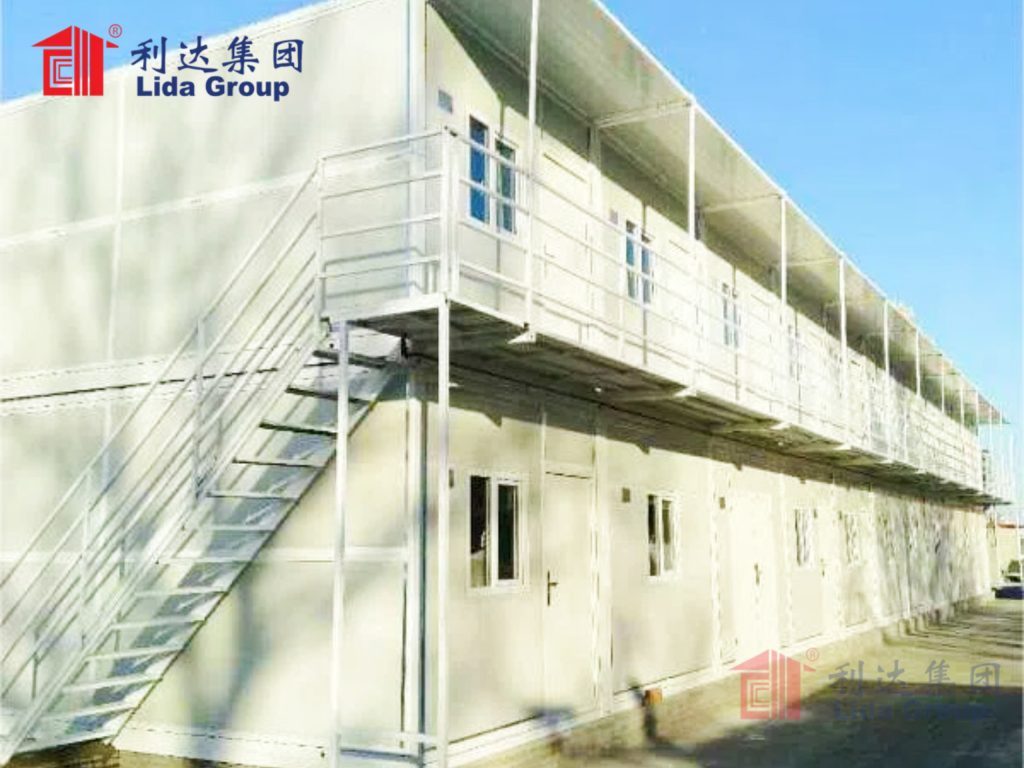
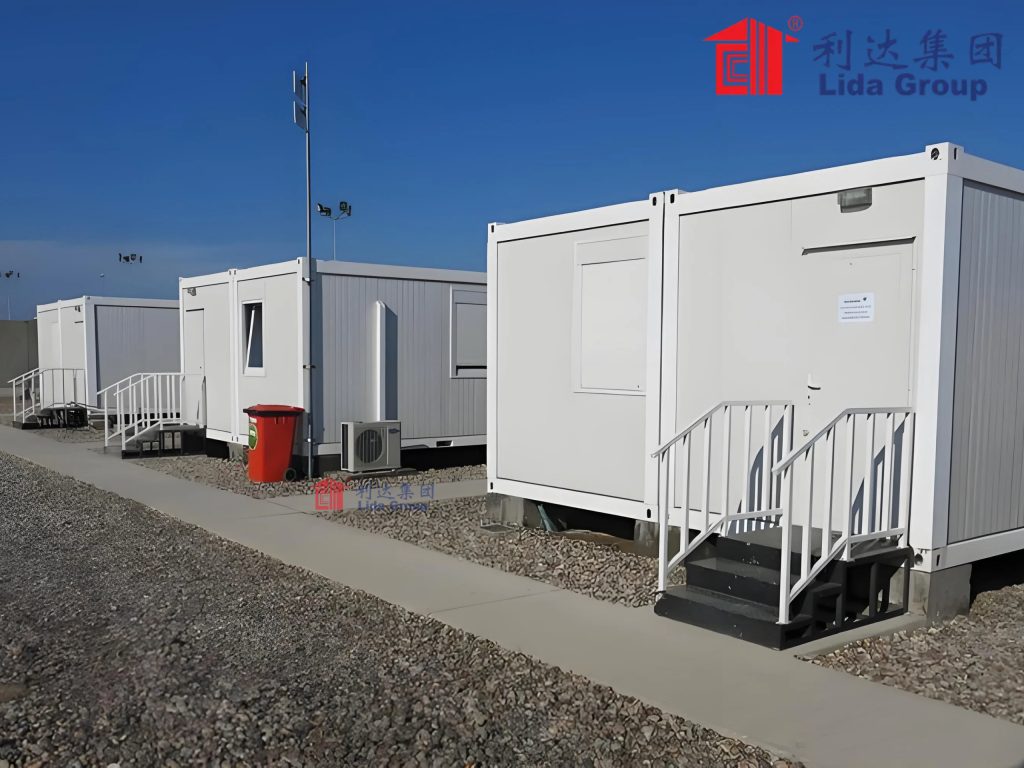
The flat pack container house is Lida Group’s most versatile offering, designed for easy transportation, rapid installation, and reusability. Ideal for construction sites, mining camps, disaster relief efforts, and temporary offices, these units are prefabricated in the factory as individual components (roofing frames, corner pillars, floor frames) and shipped in flat-pack kits to minimize transport costs. Each kit can be assembled on-site with minimal tools and no specialized construction skills, supported by supervisor guidance, instructional videos, and detailed manuals provided by Lida Group.
Key specifications of Lida’s flat pack container houses include:
- Standard Sizes: 20 ft (6055 * 2435 * 2896 mm) and 40 ft (12192 * 2435 * 2896 mm), with optional width modifications up to 2990 mm.
- Structural Integrity: Steel frame construction with ASTM A588 corrosion-resistant steel (for offshore applications) or cold-formed steel, ensuring a service life of up to 20 years.
- Safety Features: Fireproof rating of 3 hours (Grade 4 fire resistance) and earthquake resistance up to Grade 8, with wind load capacity of 0.6 kN/m² (enhanced to withstand 250 km/h winds for typhoon-prone regions).
- Insulation & Comfort: 75mm fiber glass sandwich panels (density ≥ 50 kg/m³) for walls, roofs, and floors, providing excellent thermal insulation (R-value 5.2 per inch), moisture resistance, and sound reduction. Interior and exterior cladding options include 0.4 mm aluminum-zinc color steel sheets with PE finishing coats, available in customizable colors such as white, gray, and brown.
- Transport Efficiency: 4 units of 20 ft flat pack houses can be packed into one 40 ft high cube shipping container, reducing logistics costs by up to 60% compared to fully assembled units.
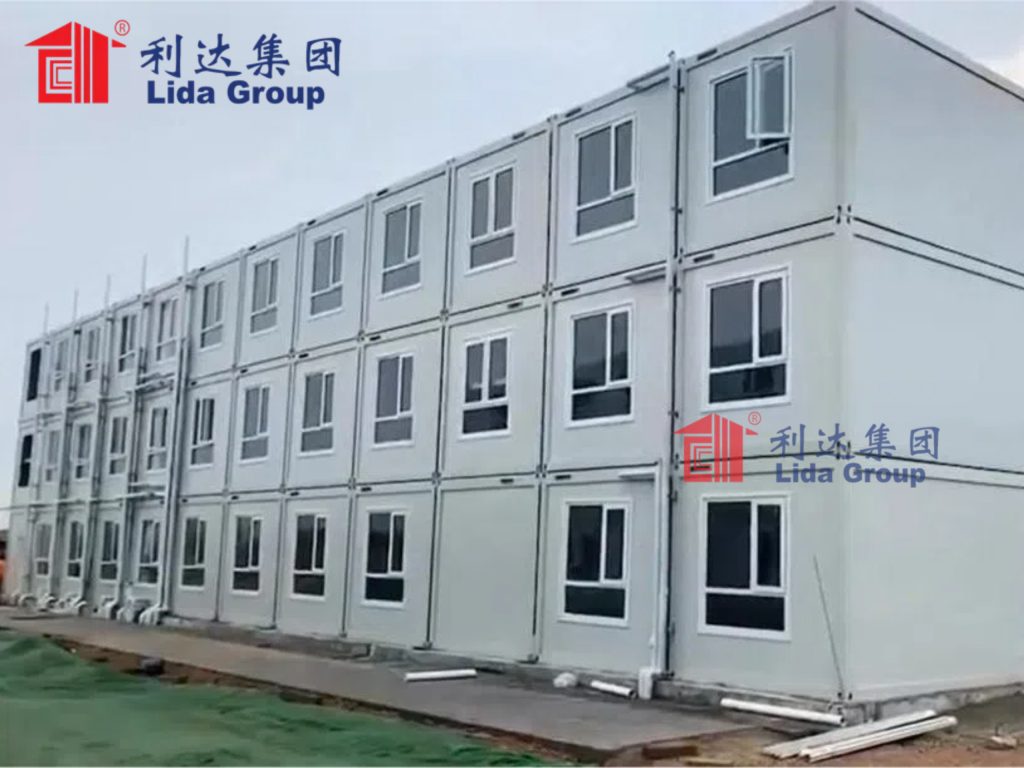
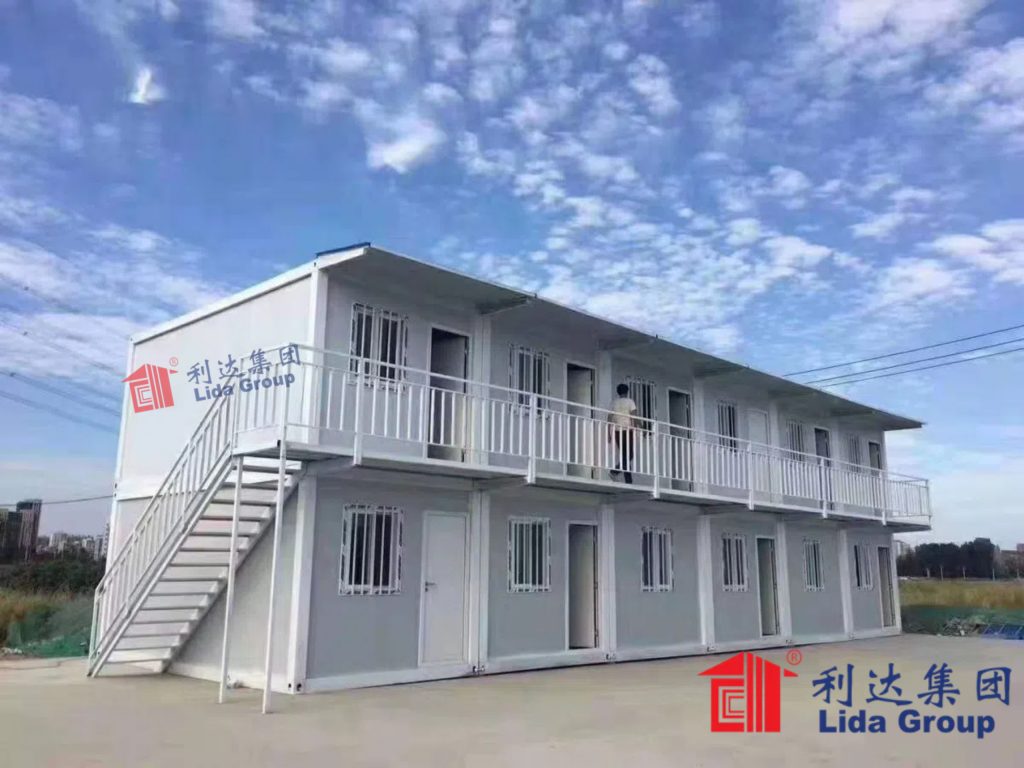
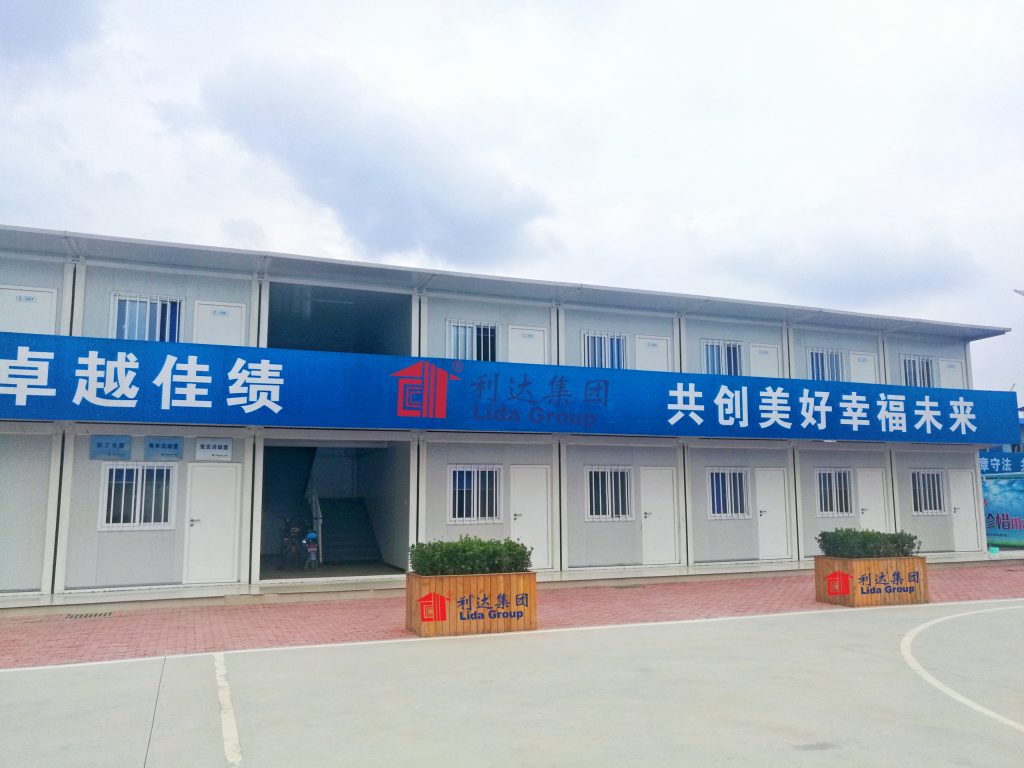
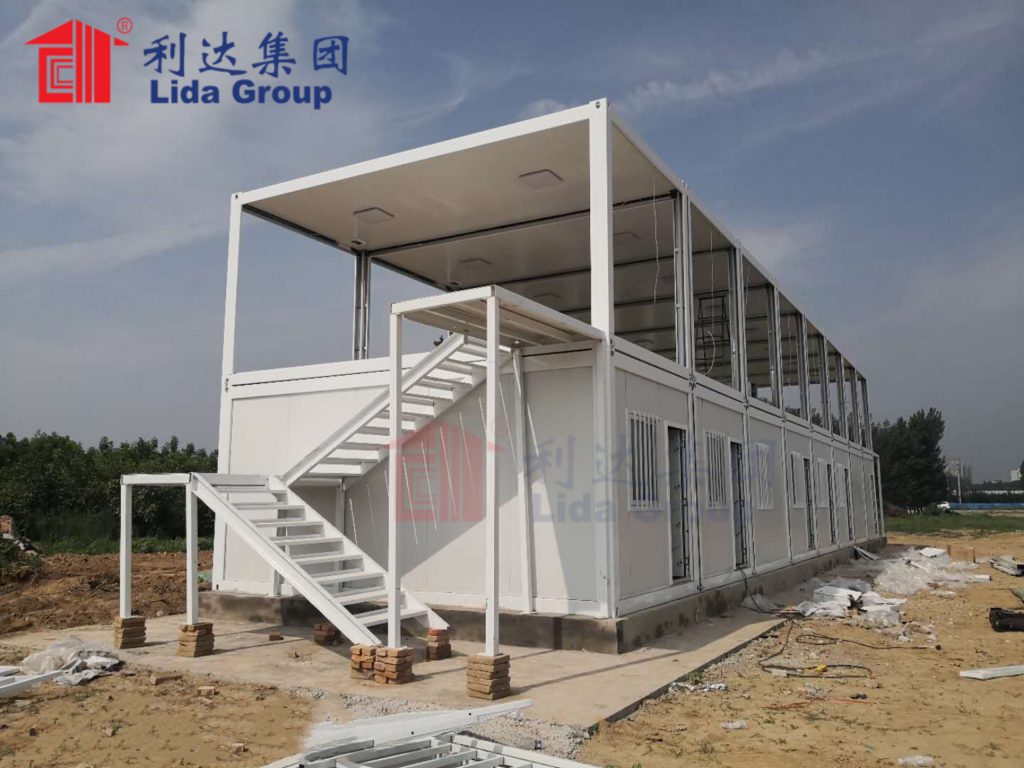
The flat pack design excels in customization, as units can be combined horizontally or vertically to create larger spaces—from 2-story residential complexes to multi-unit office blocks. Lida Group’s engineers work with clients to design layouts that include bedrooms, bathrooms, kitchens, living areas, and storage spaces, all integrated seamlessly into the modular structure.
2.2 Welding Container Houses
For applications requiring enhanced durability and permanent or long-term use, Lida Group offers welding container houses. These units feature a fully welded steel frame, providing superior structural stability compared to flat pack models, making them suitable for permanent residences, commercial buildings (e.g., cafes, pop-up shops), and industrial facilities such as workshops and warehouses. Unlike flat pack units, welding container houses are partially assembled in the factory, with welded joints ensuring resistance to extreme weather conditions and heavy use.
Key features of welding container houses include:
- Structural Design: Fully welded steel frame with sandblasting, epoxy primer, and vinyl acrylic finish for corrosion resistance, extending the service life to over 20 years.
- Customization Flexibility: Modular combinations up to 3 stories, with customizable floor plans, window/door placements, and exterior finishes (e.g., wood cladding, stone veneer, or custom paint).
- Interior Comfort: 100mm thickness fiber glass insulation (optional upgrade to seaweed-based bio-insulation for eco-friendly projects) and 18mm bamboo wood flooring with 1.5mm PVC floor leather, creating a comfortable living or working environment.
- Utility Integration: Pre-installed electrical systems (110-220V, 50-60Hz) with double-tube fluorescent lights, distribution boards, and sockets, as well as plumbing connections for kitchens and bathrooms.
2.3 Modified Shipping Container Houses
Lida Group’s modified shipping container houses repurpose retired ISO shipping containers, aligning with the company’s sustainability goals while delivering robust performance. These units are ideal for clients seeking a balance between environmental responsibility and durability, as they divert up to 12 tons of steel from landfills per unit. Modified shipping containers are customized through cutting, welding, and retrofitting to include windows, doors, insulation, and interior finishes, transforming standard cargo containers into functional living or working spaces.
Key advantages of modified shipping container houses include:
- Circular Economy: 90% reuse of retired shipping containers, reducing carbon emissions by 60% compared to traditional construction.
- Durability: Built to withstand harsh marine environments, with corrosion-resistant steel and watertight seals, making them suitable for coastal regions and offshore applications.
- Rapid Deployment: Pre-modified in the factory, with installation times as short as 48 hours for single units, ideal for emergency housing and temporary projects.
- Design Versatility: Customizable exteriors (e.g., vertical gardens, custom paint, or cladding) and interiors (open-concept layouts, built-in furniture, and smart home features).

3. Customization Capabilities: Tailoring Solutions to Every Need
Lida Group’s true strength lies in its ability to customize every aspect of its container houses, ensuring that each project meets the unique requirements of clients across industries. The customization process is collaborative and comprehensive, covering design, materials, functionality, and performance, guided by the company’s team of expert designers and engineers.
3.1 Design & Layout Customization
The design phase begins with a detailed consultation to understand the client’s vision, requirements, and constraints. Lida Group’s designers use state-of-the-art 3D modeling software to create visualizations of the proposed structure, allowing clients to review and modify layouts, dimensions, and aesthetics before production begins. Key design customization options include:
- Layout Configuration: Custom floor plans for residential, commercial, or industrial use, including bedrooms, bathrooms, kitchens, offices, meeting rooms, storage areas, and specialized spaces (e.g., prayer rooms, recreation areas, or control rooms for industrial applications).
- Multi-Unit Combinations: Horizontal and vertical integration of container units to create larger structures—from 2-unit duplexes to 8-story offshore crew quarters (as deployed for CNOOC in the South China Sea).
- Architectural Features: Custom window and door placements (e.g., floor-to-ceiling windows, sliding doors, or blast-resistant hatches), rooftop decks, balconies, and awnings for enhanced functionality and aesthetics.
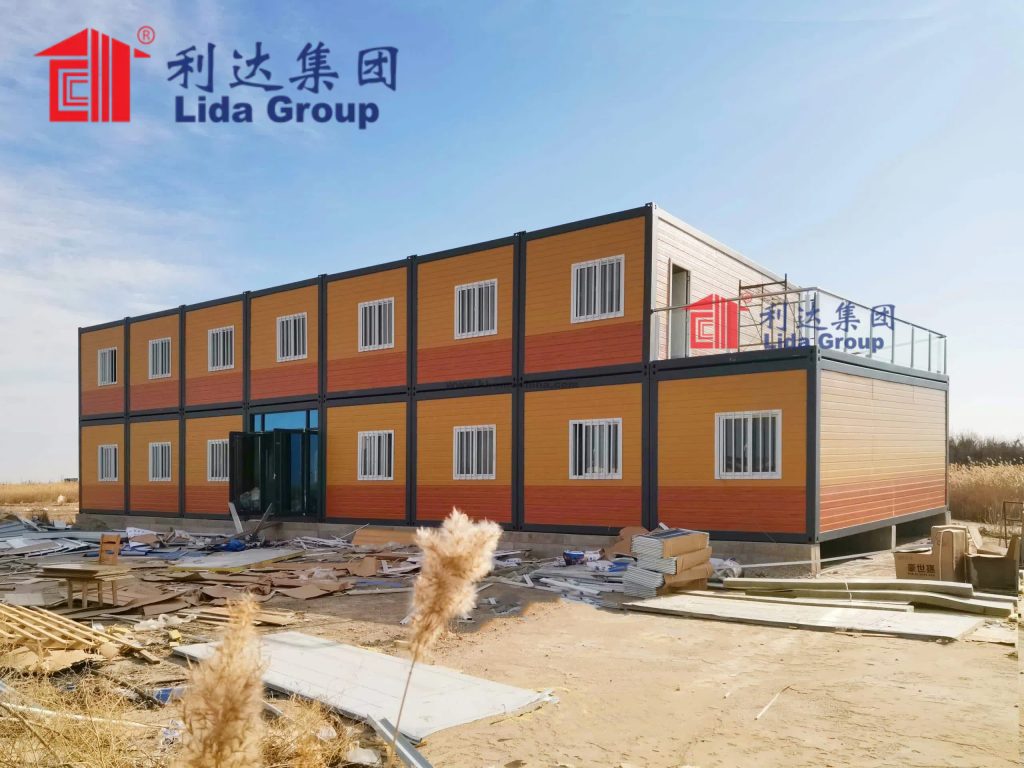
- Exterior Aesthetics: A wide range of cladding materials (recycled aluminum, wood, stone, or fiber cement), custom paint colors, and textures to match the surrounding environment or brand identity. For example, commercial clients can incorporate logos or branding into the exterior design of pop-up shops or kiosks.
3.2 Material & Component Customization
Lida Group offers extensive options for materials and components, allowing clients to prioritize durability, sustainability, energy efficiency, or cost-effectiveness based on their needs. Key customization choices include:
- Structural Materials: Corrosion-resistant ASTM A588 steel for offshore or coastal projects, recycled steel for eco-friendly initiatives, or standard cold-formed steel for general use.
- Insulation: 75mm fiber glass (standard), 100mm EPS foam, or bio-based seaweed insulation (R-value 5.2 per inch) for enhanced thermal performance and sustainability. For extreme climates, Lida Group offers upgraded insulation to maintain internal temperatures between -30°C and 50°C.
- Roofing Systems: Flat roofs with organized internal water drainage (standard), sloped aerodynamic roofs (for typhoon-prone regions, reducing wind load by 40%), or Solar Skin™ roofs with thin-film PV panels (180W/m²) for zero-emission projects.
- Flooring & Interiors: 18mm bamboo wood, PVC floor leather, or industrial-grade steel flooring; custom countertops (granite, quartz, or recycled materials); and interior wall finishes (paint, wood paneling, or drywall).
- Windows & Doors: PVC sliding windows, aluminum alloy casement windows, or blast-resistant steel windows; sandwich panel doors, glass doors, or security doors with biometric locks.
3.3 Functional & Specialized Customization
Lida Group’s container houses can be tailored to meet specialized functional requirements, from offshore energy infrastructure to disaster relief housing. Key specialized customization options include:
- Offshore & Industrial Features: Blast-resistant walls (10mm armor steel, API RP 2FB compliant), watertight bulkheads (rated for 15m wave submersion), EMI-shielded control rooms, and helicopter-evacuation-ready rooftop pads (as deployed for Shell USA in the Gulf of Mexico).
- Energy Efficiency: Solar PV integration, hydrogen fuel cell backup power (200 kW), AI energy managers, and passive cooling systems (reflective roofing, cross-ventilation) to achieve net-zero energy status.
- Water Conservation: Rainwater harvesting systems (1,000-gallon storage tanks), greywater recycling, and low-flow fixtures (reducing water usage by 40%).
- Accessibility: Wheelchair ramps, wide doorways, and accessible bathrooms for residential or commercial projects catering to individuals with disabilities.
- Disaster Relief: Rapid-deployment units with foldable designs, emergency shelters with built-in first-aid stations, and flood-resistant foundations for post-disaster housing.
4. Quality Assurance & Certification: Building Trust Through Compliance
Lida Group’s commitment to quality is underpinned by rigorous testing, international certifications, and adherence to industry standards. Every container house undergoes multiple quality control checks during production, from material inspection to structural testing, ensuring compliance with global safety and performance benchmarks.
4.1 Key Certifications
- ISO 9000: Quality management system certification, ensuring consistent production processes and product quality.
- DNV GL-OS-C 301: Offshore certification for container buildings used in oil and gas projects, verifying compliance with offshore safety and environmental standards.
- EU Taxonomy Compliance: First offshore container building certified under the EU Taxonomy for Sustainable Activities, validating net-zero emissions and circular economy practices.
- Fire & Safety Certifications: Grade 4 fire resistance (3-hour fireproof rating) and compliance with ASTM E119 fire testing standards.
- Structural Certifications: Compliance with AISC (American Institute of Steel Construction) standards for steel framing and ISO 1496-1 for shipping container modifications.
4.2 Quality Control Processes
Lida Group’s quality assurance system encompasses every stage of production:
- Material Sourcing: Only high-grade steel, insulation, and finishes from certified suppliers are used, with incoming material inspections to ensure compliance with specifications.
- Factory Production: Automated cutting and welding processes (AI-guided precision cutting) minimize material waste (to and ensure consistent component quality.
- Structural Testing: Load testing (floor live load: 2.0 kN/m²; roof live load: 0.5 kN/m²), wind tunnel testing for typhoon-resistant designs, and blast testing for industrial units.
- Pre-Shipment Inspection: Each unit undergoes a comprehensive inspection for structural integrity, insulation performance, waterproofing, and utility functionality before shipment.
- On-Site Quality Assurance: Supervisor-led installation oversight and post-installation inspections to ensure the final structure meets design specifications and safety standards.
5. Real-World Applications: Case Studies of Custom Solutions
Lida Group’s customizable container house solutions have been deployed in diverse projects worldwide, demonstrating their versatility, durability, and performance in challenging environments. Below are three standout case studies that highlight the company’s ability to deliver tailored solutions for complex client needs.
5.1 Case Study 1: Typhoon-Proof Drilling Crew Quarters (South China Sea)
Client: CNOOC (China National Offshore Oil Corporation)
Challenge: Provide safe accommodation for 200 workers on a semi-submersible rig in the South China Sea, where annual typhoons bring winds of up to 250 km/h. The client required a solution that could withstand Category 5 storms, reduce crew rotation costs, and ensure worker safety during extreme weather.
Lida Group’s Custom Solution:
- Structural Design: 8-story stackable flat pack container house units with ASTM A588 corrosion-resistant steel frames and interlocking foundation anchors to secure units to the rig deck.
- Typhoon Defense: Aerodynamic sloped roofs (reducing wind load by 40%) and reinforced corner pillars to distribute wind pressure evenly.
- Safety Features: Watertight bulkheads rated for 15m wave submersion, emergency evacuation routes, and helicopter-evacuation-ready rooftop pads.
- Interior Customization: 200 single-occupancy rooms with en-suite bathrooms, communal kitchens, and recreation areas, designed to maximize space efficiency and crew comfort.
Results:
- The units survived Super Typhoon Saola (2023) unscathed, while adjacent non-Lida modules sustained $6 million in damage.
- Crew rotation costs were reduced by 33% due to increased onboard safety and comfort, minimizing the need for frequent worker transfers.
- The solution achieved DNV GL-OS-C 301 offshore certification, meeting the highest safety standards for offshore energy infrastructure.
5.2 Case Study 2: Zero-Emission Offshore Offices (North Sea)
Client: Equinor (Norway)
Challenge: Reduce carbon emissions by 50% on aging North Sea oil platforms to comply with the EU’s Offshore Safety Directive 2025. The client required a net-zero energy office solution that could integrate with existing platform infrastructure and use circular materials.
Lida Group’s Custom Solution:
- Energy System: Hybrid office containers with Solar Skin™ roofs (thin-film PV panels generating 180W/m²) and 200 kW hydrogen fuel cell backup power, replacing diesel generators.
- Circular Materials: 92% recycled aluminum cladding from decommissioned rigs and bio-based seaweed insulation (R-value 5.2 per inch).
- AI Integration: An AI energy manager to balance consumption across 30+ units, optimizing solar and hydrogen power usage.
- Office Customization: Open-plan workspaces, meeting rooms, and break areas with soundproof insulation, natural lighting (floor-to-ceiling windows), and ergonomic furniture.
Results:
- Achieved net-zero energy status in 2024, generating more energy than it consumed.
- Reduced annual carbon emissions by 640 tons CO2e—equivalent to 1,500 flights from Oslo to London.
- Became the first offshore container building certified under the EU Taxonomy for Sustainable Activities, setting a benchmark for green offshore infrastructure.
5.3 Case Study 3: Blast-Resistant Processing Modules (Gulf of Mexico)
Client: Shell USA
Challenge: Prevent a repeat of the 2021 Platform B incident, where a fire destroyed $220 million in gas processing units. The client required blast-resistant container modules to house critical processing equipment and control rooms, with rapid deployment capabilities.
Lida Group’s Custom Solution:
- Blast Protection: 10mm armor steel walls (withstanding 12 psi overpressure, API RP 2FB compliant) and blast relief vents to channel shockwaves away from equipment.
- Electrical Safety: EMI-shielded control rooms to protect electronics from arc flash and power surges.
- Rapid Deployment: Pre-fabricated modules shipped as flat packs, with on-site assembly completed in 7 days—30% faster than traditional construction.
- Industrial Customization: Modular design to accommodate specific processing equipment, with integrated plumbing, ventilation, and fire suppression systems.
Results:
- The modules withstood a controlled blast test simulating the 2021 incident, protecting critical equipment and ensuring operator safety.
- Reduced downtime during installation by 40% compared to traditional on-site construction.
- Lowered maintenance costs by 25% due to durable materials and modular design, allowing for easy component replacement.
6. Sustainability: Building for a Greener Future
In an era of increasing environmental consciousness, Lida Group has made sustainability a core pillar of its container house solutions. The company’s approach to sustainability encompasses circular economy practices, energy efficiency, water conservation, and waste reduction, aligning with global climate goals and client demands for eco-friendly infrastructure.
6.1 Circular Economy Practices
Lida Group’s container houses are designed for reuse and recycling, minimizing their environmental footprint throughout their lifecycle:
- Upcycling Shipping Containers: Modified shipping container houses repurpose retired ISO containers, diverting 12+ tons of steel from landfills per unit and reducing the need for virgin steel production (which emits 1.8 tons of CO2 per ton of steel).
- Recycled Materials: 92% recycled aluminum cladding, 98% recycled production scrap, and bio-based insulation from seaweed (a renewable resource) are used in manufacturing.
- Reusability: Flat pack and modified container houses can be disassembled, transported, and reassembled multiple times with nearly zero loss, reducing waste from demolition and new construction. For example, a South African mining company reused 150 Lida container units across three different sites, reducing its carbon footprint by 60%.
6.2 Energy Efficiency
Lida Group’s container houses are engineered to minimize energy consumption, both during operation and construction:
- Passive Design: Reflective roofing, cross-ventilation, and thermal insulation reduce the need for heating and cooling. A flat pack container house community in Arizona uses 80% less AC energy than traditional homes.
- Renewable Energy Integration: Pre-installed conduits for solar PV panels, Solar Skin™ roofs, and hydrogen fuel cell backup power allow clients to achieve net-zero energy status. The Equinor North Sea project, for example, generates all its energy from solar and hydrogen, eliminating diesel generator emissions.
- AI Energy Management: Smart systems balance energy consumption across multiple units, optimizing renewable energy usage and reducing waste.
6.3 Water Conservation
Lida Group’s customizable solutions include water-saving features to address global water scarcity:
- Rainwater Harvesting: 1,000-gallon storage tanks per unit collect and filter rainwater for non-potable use (irrigation, cleaning).
- Greywater Recycling: Filtered wastewater from sinks, showers, and washing machines is reused for irrigation, reducing potable water usage by 40%.
- Low-Flow Fixtures: Customizable plumbing systems with low-flow faucets, showers, and toilets cut water consumption by an additional 40%. A Dubai office container complex using these features saved 2.5 million gallons of water annually.
6.4 Waste Reduction
Traditional construction generates 30% of global landfill waste, but Lida Group’s prefabricated approach drastically reduces this:
- Precision Manufacturing: AI-guided cutting and modular component design reduce on-site waste to 30% for traditional construction.
- Flat Pack Shipping: Minimal packaging waste due to efficient flat pack design, and reduced transportation emissions (fewer shipments required to transport flat pack kits versus fully assembled units).
7. Installation, Maintenance, and After-Sales Support
Lida Group’s commitment to client satisfaction extends beyond product delivery, with comprehensive installation, maintenance, and after-sales support to ensure the long-term performance of its container houses.
7.1 Installation Services
Lida Group offers flexible installation options to meet client needs, from self-installation to full turnkey solutions:
- Flat Pack Self-Installation: Flat pack kits include all necessary components and detailed instructions, allowing clients to assemble units with minimal tools and no specialized skills. Lida provides instructional videos, online technical support, and optional on-site supervisors to guide the process.
- Turnkey Installation: For large-scale or complex projects (e.g., offshore platforms, multi-unit residential complexes), Lida Group’s team of certified installers manages the entire installation process, from site preparation to final finishing. Installation times range from 48 hours for single units to 2 weeks for multi-story structures.
- Global Deployment: Lida Group has a network of local partners and installers worldwide, ensuring timely and cost-effective installation in any region, including remote areas and offshore platforms.
7.2 Maintenance & Durability
Lida Group’s container houses are designed for low maintenance, with durable materials and accessible components:
- Long Service Life: Up to 20 years with minimal maintenance, thanks to corrosion-resistant steel frames, weatherproof cladding, and high-quality insulation.
- Preventive Maintenance: Lida Group provides a 3-year warranty on all products, along with preventive maintenance guidelines to extend the service life. The company also offers free spare parts for the first year and on-site inspection services upon request.
- Easy Repairs: Modular components are designed for easy replacement, reducing downtime and repair costs. For example, damaged wall panels or flooring can be swapped out without affecting the entire structure.
7.3 After-Sales Support
Lida Group’s after-sales support ensures clients receive ongoing assistance throughout the lifecycle of their container houses:
- Online Technical Support: 24/7 access to technical experts via phone, email, or video call to address installation, maintenance, or customization questions.
- On-Site Training: For industrial or offshore clients, Lida Group provides on-site training for staff on operation, maintenance, and emergency procedures.
- Return & Replacement: Flexible return and replacement policies for defective components, ensuring client satisfaction.
- Project Management: For large-scale projects, Lida Group assigns a dedicated project manager to oversee design, production, installation, and after-sales support, ensuring seamless communication and on-time delivery.
8. Market Impact & Future Trends
Lida Group’s customizable prefab mobile container house solutions are shaping the future of the construction industry, addressing key challenges such as urbanization, climate change, and the need for flexible infrastructure. The global prefab container house market is projected to grow at a CAGR of 12.5% from 2024 to 2030, driven by demand from residential, commercial, industrial, and offshore sectors—and Lida Group is well-positioned to lead this growth.
8.1 Key Market Drivers
- Urbanization: Rapid urbanization in emerging economies is creating demand for affordable, rapid-deployment housing and commercial spaces. Lida Group’s container houses offer a cost-effective solution for urban slum upgrading and temporary housing for migrant workers.
- Offshore Energy Expansion: As offshore oil and gas exploration moves into deeper waters and harsher climates, traditional construction methods are becoming impractical. Lida Group’s typhoon-proof, blast-resistant, and zero-emission offshore solutions are in high demand from energy companies worldwide.
- Disaster Relief: Climate change is increasing the frequency and severity of natural disasters, creating a need for rapid-deployment emergency housing. Lida Group’s flat pack container houses can be shipped and installed within days, providing safe shelter for displaced populations.
- Sustainability Regulations: Governments worldwide are implementing stricter sustainability regulations for construction (e.g., EU Taxonomy, U.S. LEED certification). Lida Group’s eco-friendly solutions help clients comply with these regulations while reducing operating costs.
8.2 Future Innovations
Lida Group is continuously investing in research and development to expand its customization capabilities and sustainability performance:
- Smart Container Houses: Integration of IoT sensors, smart home systems, and remote monitoring for energy management, security, and maintenance.
- 3D-Printed Components: Use of 3D printing for custom interior components (e.g., furniture, countertops) to reduce waste and increase design flexibility.
- Biodegradable Materials: Development of biodegradable insulation and cladding materials to further reduce environmental impact.
- Space-Saving Designs: Compact, foldable container houses for urban environments with limited space, featuring transformable interiors that maximize functionality.
9. Conclusion
Lida Group’s customizable prefab mobile container house solutions represent a paradigm shift in the construction industry, offering a unique combination of flexibility, durability, sustainability, and cost-effectiveness. From flat pack units for temporary projects to specialized offshore modules for extreme environments, the company’s product portfolio is designed to meet the diverse needs of clients worldwide, with every solution tailored to specific requirements through extensive design, material, and functional customization.
What sets Lida Group apart is its unwavering commitment to quality, sustainability, and customer satisfaction. The company’s container houses are built to the highest international standards, with certifications such as ISO 9000 and DNV GL-OS-C 301 ensuring safety and performance. Through circular economy practices, energy efficiency, and water conservation, Lida Group is leading the way in sustainable construction, helping clients reduce their environmental footprint while achieving their operational goals.
Real-world case studies—from typhoon-proof crew quarters in the South China Sea to zero-emission offshore offices in the North Sea—demonstrate the versatility and reliability of Lida Group’s solutions, proving that container houses can excel in even the most challenging environments. With comprehensive installation, maintenance, and after-sales support, the company ensures that clients receive a turnkey solution that meets their needs from design to long-term use.
As the global demand for flexible, sustainable infrastructure continues to grow, Lida Group is well-positioned to remain a leader in the prefab container house market. By combining innovative technology, customization expertise, and a commitment to sustainability, the company is not just building container houses—they are building solutions for a more resilient, efficient, and eco-friendly future. Whether for residential, commercial, industrial, or offshore applications, Lida Group’s customizable prefab mobile container house solutions offer a smarter way to build, live, and work.
Related news
-
Lida Group Expands Its Prefab Mobile Container House Portfolio
2025-11-21 17:55:44
-
Lida Group Delivers a Cost-Effective Prefab Construction Project
2025-11-24 15:51:11
-
Durable and Secure Temporary Container Building by Lida Group
2025-11-24 15:34:10
contact us
- Tel: +86-532-88966982
- Whatsapp: +86-13793209022
- E-mail: sales@lidajituan.com
