



Achieve Speed and Savings with Cost-Effective Prefab Construction
2025-Nov-27 13:55:36
By Admin
The global construction industry is grappling with a paradox: rising demand for infrastructure and housing, paired with escalating costs, labor shortages, and tight project timelines. Traditional on-site construction—plagued by inefficiency, weather delays, and resource waste—can no longer keep pace with modern needs. Enter cost-effective prefab construction: a revolutionary approach that shifts 60-90% of building work to controlled factory environments, delivering projects faster, cheaper, and more reliably than conventional methods. By leveraging modular design, standardized production, and streamlined assembly, prefab construction is redefining efficiency in the built environment, offering unprecedented speed-to-market and cost savings for developers, governments, and businesses worldwide.
Cost-effective prefab construction is not just a trend—it’s a strategic solution built on two core pillars: Accelerated Delivery (slashing project timelines by 30-50% compared to traditional construction) and Total Cost Optimization (reducing direct and indirect expenses by 15-25%). These benefits stem from a holistic approach to building: factory precision eliminates rework, parallel production of components cuts wait times, and minimized on-site labor reduces overhead. This article explores the technical innovations, cost-saving mechanisms, real-world case studies, and industry impact of cost-effective prefab construction, demonstrating how it is transforming everything from residential housing and commercial buildings to emergency shelters and infrastructure projects.
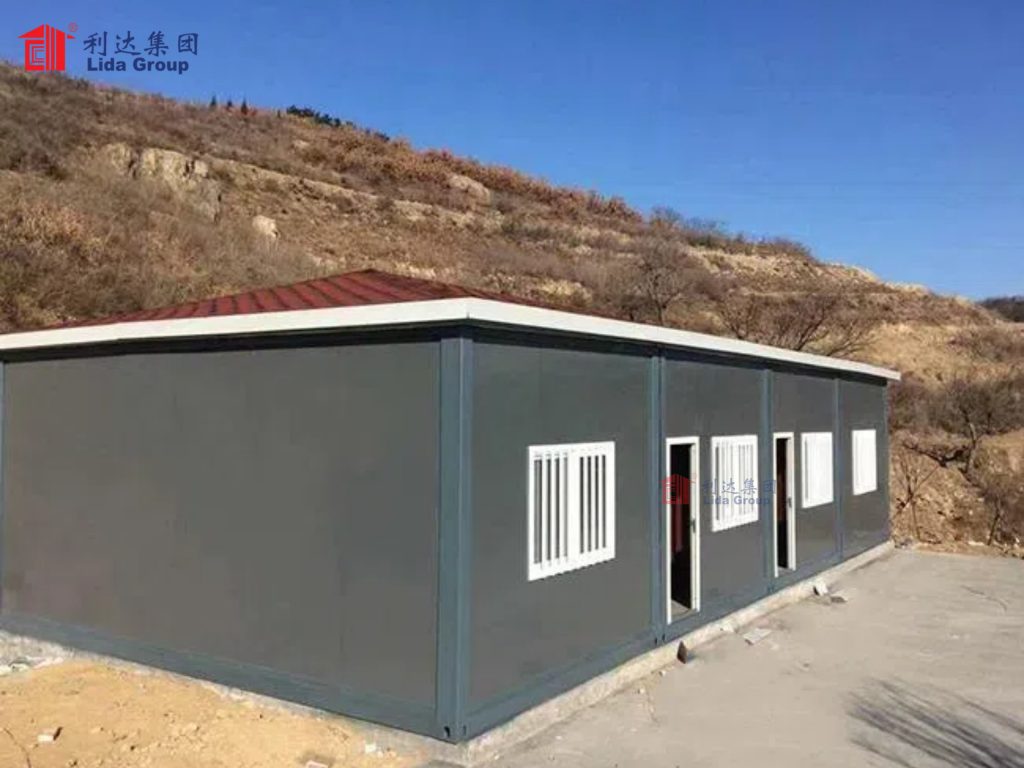
1. The Case for Cost-Effective Prefab Construction: Market Drivers and Industry Needs
The adoption of prefab construction is accelerating globally, driven by urgent industry challenges and compelling economic incentives. As construction costs rise by 5-10% annually (McGraw Hill Construction) and labor shortages affect 80% of contractors (Associated General Contractors of America), prefab’s ability to deliver speed and savings has become a competitive necessity.
1.1 Key Market Drivers
- Escalating Construction Costs: Traditional building materials (steel, concrete, lumber) have seen price volatility of 20-30% in the past decade, while labor costs have risen by 4-6% annually. Prefab construction reduces material waste by 70% (World Green Building Council) and cuts on-site labor needs by 40-60%, mitigating these cost pressures.
- Labor Shortages: The global construction industry faces a shortage of 10 million workers by 2030 (Oxford Economics). Prefab’s factory-based production requires fewer on-site workers and leverages skilled labor more efficiently, addressing staffing gaps.
- Tight Project Timelines: Developers and governments increasingly demand faster project delivery to capture market opportunities or address crises (e.g., housing shortages, natural disasters). Prefab construction compresses project timelines by 30-50%, enabling earlier occupancy and revenue generation.
- Sustainability Mandates: While sustainability is often a secondary benefit, prefab’s reduced waste and energy efficiency align with global carbon reduction targets, unlocking green building incentives that further lower project costs.
The global prefab construction market is projected to grow at a CAGR of 15.6% from 2024 to 2030, reaching $78.9 billion by 2030 (Grand View Research). This growth is fueled by demand across sectors: residential (affordable housing, modular homes), commercial (offices, retail), industrial (warehouses, factories), and public infrastructure (schools, hospitals, emergency shelters).
1.2 The Cost-Speed Paradox: Why Traditional Construction Fails
Traditional on-site construction suffers from a fundamental inefficiency: linear production. Each phase (foundation, framing, plumbing, electrical, finishing) must be completed sequentially, with delays in one phase cascading through the entire project. Compounding this:
- Weather Delays: 20-30% of on-site construction time is lost to inclement weather (National Institute of Building Sciences), adding weeks or months to projects.
- Rework and Errors: On-site construction has an error rate of 5-10% (Construction Industry Institute), requiring costly rework that accounts for 10-15% of total project costs.
- Material Waste: On-site cutting and fitting generate 15-20% material waste (EPA), driving up material costs and disposal fees.
- Labor Inefficiency: On-site workers spend 30-40% of their time on non-productive tasks (e.g., waiting for materials, setting up equipment), increasing labor costs.
Prefab construction eliminates these inefficiencies by shifting production to climate-controlled factories, where components are built to precise specifications, inspected for quality, and shipped to site ready for assembly. This parallel production model—where factory work and site preparation occur simultaneously—cuts project timelines in half while reducing waste and errors to less than 2% (Modular Building Institute).
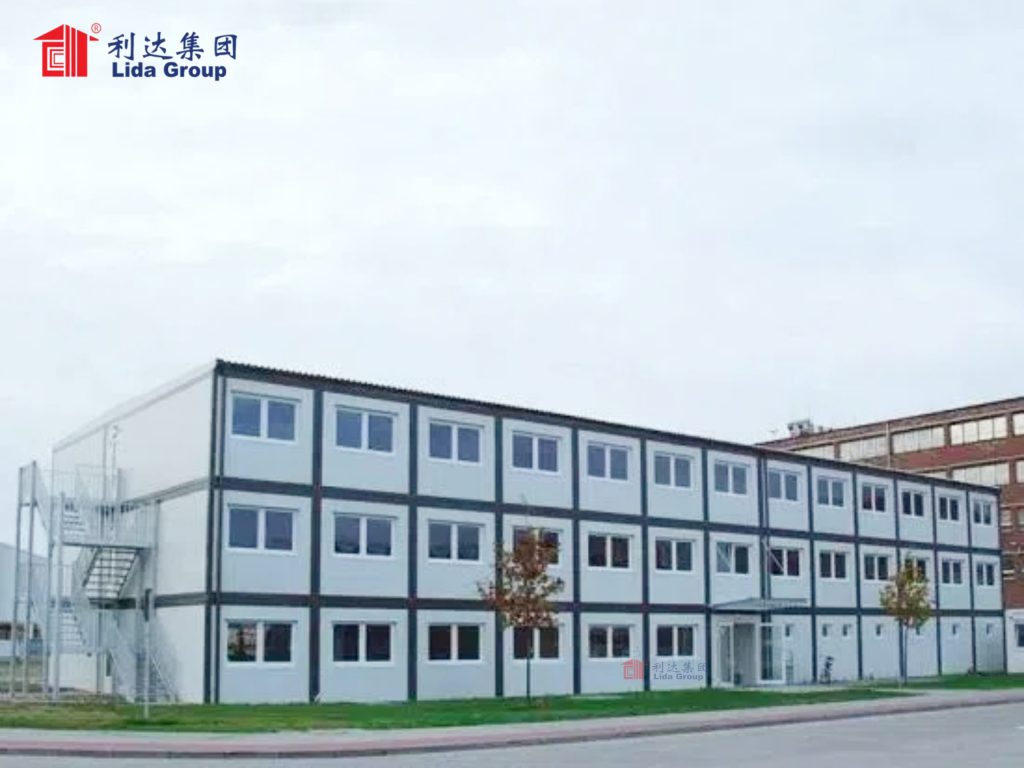
2. How Prefab Construction Delivers Speed: Technical Innovations and Process Optimization
The speed advantage of prefab construction stems from four interconnected innovations: modular design, factory automation, streamlined logistics, and rapid on-site assembly. Together, these elements create a production system that is faster, more predictable, and less prone to delays than traditional construction.
2.1 Modular Design: The Foundation of Speed
Modular design involves breaking buildings into standardized, self-contained units (modules) that are manufactured off-site and assembled on-site like building blocks. Key speed-enhancing features:
- Standardization: Modules are built to uniform dimensions (e.g., 20ft/40ft container-based modules, or custom-sized modules) that optimize manufacturing and transportation. Standardization reduces design time by 30-40% and eliminates on-site customization delays.
- Integrated Systems: Plumbing, electrical, HVAC, and finishes are installed in modules at the factory, reducing on-site work by 60-70%. Modules arrive “move-in ready,” with fixtures, appliances, and even furniture pre-installed.
- Scalability: Modules can be stacked vertically (up to 10 stories with structural reinforcement) or arranged horizontally, enabling rapid expansion of projects. For example, a 100-unit apartment building can be assembled in weeks by adding identical modules.
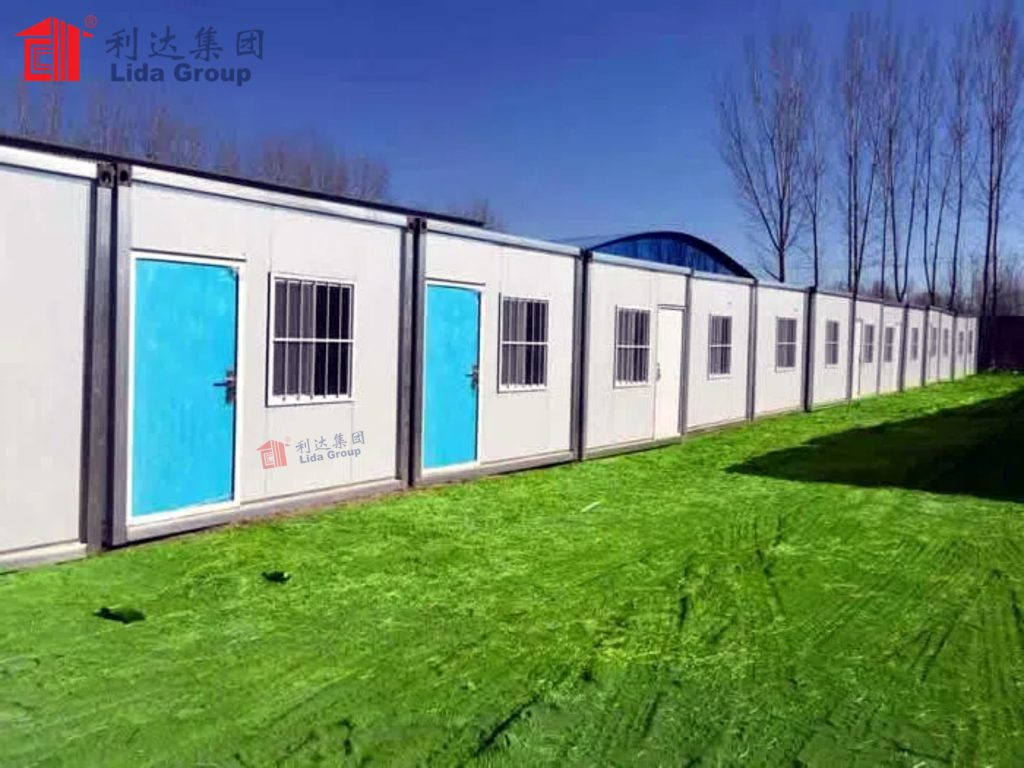
Lida Group, a global leader in prefab construction, exemplifies modular speed with its container-based modules. The company’s standard 20ft residential module includes a bedroom, bathroom, and kitchen, with all systems pre-installed. On-site assembly of a 50-unit apartment complex takes just 4-6 weeks, compared to 6-9 months for traditional construction.
2.2 Factory Automation: Precision and Efficiency
Modern prefab factories leverage automation and advanced manufacturing technologies to produce modules faster and with higher quality than on-site construction. Key technologies:
- Automated Cutting and Fabrication: CNC (Computer Numerical Control) machines and laser cutters precision-cut steel, wood, and other materials, reducing production time by 25-30% and eliminating human error. Lida Group’s factories use AI-powered nesting software to optimize material layout, maximizing yield and minimizing waste.
- Robotic Assembly: Robots perform repetitive tasks such as welding, screwing, and painting, increasing production speed by 40-50% and improving consistency. For example, robotic welding of steel frames is 3x faster than manual welding with 99.9% precision.
- Quality Control Systems: Automated inspection tools (e.g., 3D scanners, thermal imaging) check modules for dimensional accuracy and structural integrity, reducing rework and ensuring modules fit together seamlessly on-site. Lida Group’s factories achieve a 99.8% first-pass yield rate, compared to 85-90% for on-site construction.
- Lean Manufacturing: Prefab factories adopt lean production principles (e.g., just-in-time inventory, continuous flow) to minimize downtime and maximize throughput. Lida’s Weifang factory produces 800 modules per month with a 24/7 production line, enabling rapid delivery of large-scale projects.
2.3 Streamlined Logistics: Getting Modules to Site On Time
Efficient logistics are critical to prefab speed, ensuring modules arrive at site exactly when needed for assembly. Key logistics innovations:
- Just-In-Time Delivery: Modules are shipped to site in the order they will be assembled, reducing storage costs and on-site congestion. GPS tracking and real-time inventory management ensure timely delivery, with 95% on-time delivery rates (Modular Building Institute).
- Optimized Transportation: Modules are designed to fit standard trucks, trains, and ships, reducing transportation costs and enabling global delivery. Flat-pack modules—where components are disassembled for shipping and reassembled on-site—reduce transportation volume by 60%, lowering costs and carbon emissions.
- Site Preparation Parallelism: While modules are manufactured in the factory, site preparation (foundation, utilities) occurs simultaneously. This parallel process cuts project timelines by 30-40% compared to traditional construction, where site work must be completed before building begins.
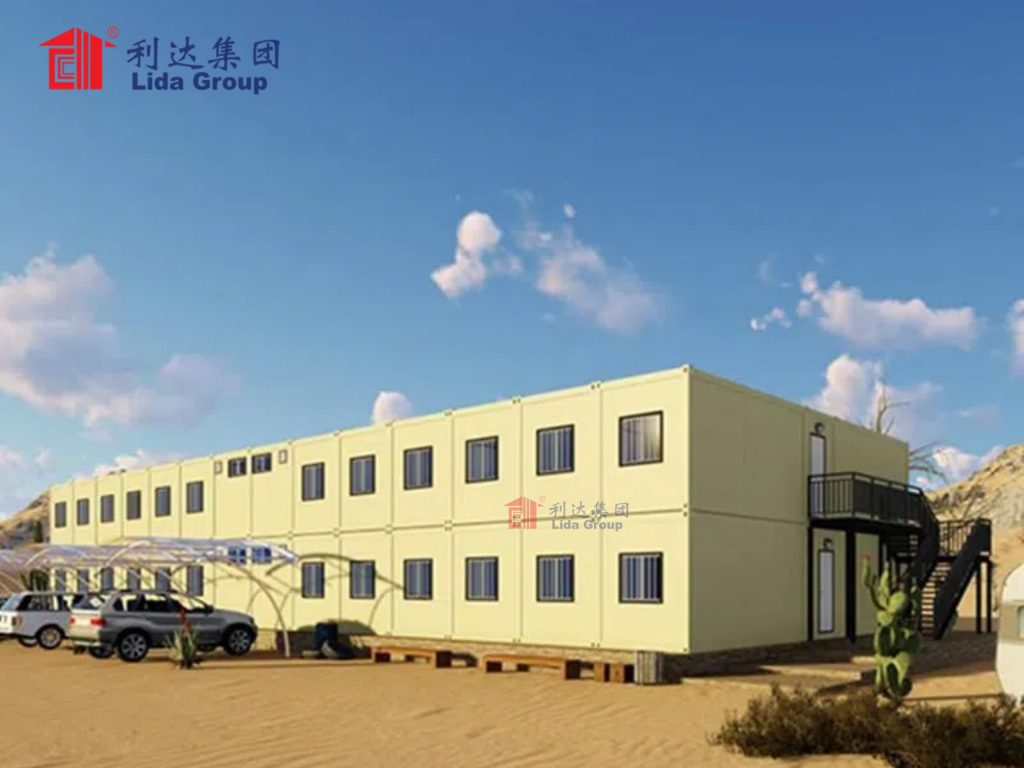
For example, Lida Group’s Australian Outback Mining Camp project involved shipping 150 flat-pack modules from China to Western Australia. While modules were in transit, the mine site prepared foundations and utilities. Upon arrival, modules were assembled in 6 weeks—6 months faster than traditional construction.
2.4 Rapid On-Site Assembly: From Modules to Buildings
On-site assembly is the final speed advantage of prefab construction, with modules installed in days or weeks rather than months. Key assembly innovations:
- Simplified Connection Systems: Modules are equipped with universal connection points (e.g., bolted joints, interlocking frames) that enable quick assembly without specialized tools. A 20ft module can be placed and secured in 30-60 minutes by a small team.
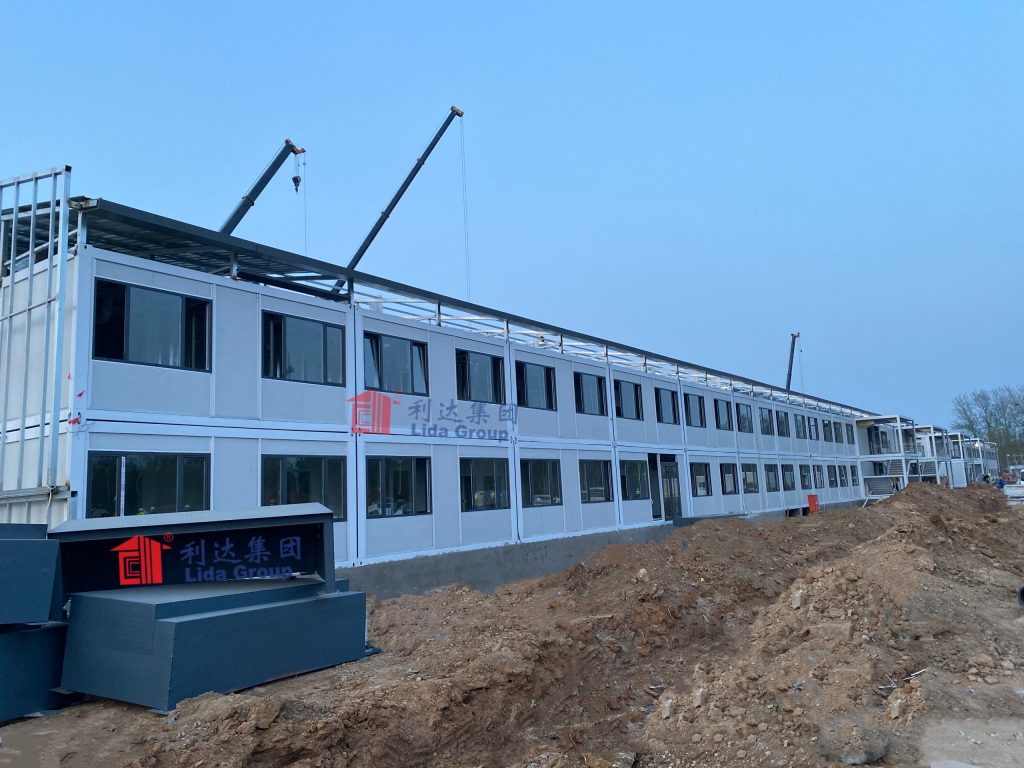
- Crane Optimization: Prefab projects use cranes to lift and place modules, reducing the need for heavy on-site equipment. Crane schedules are optimized to minimize downtime, with assembly of a 3-story building taking just 1-2 weeks.
- Minimal On-Site Work: After modules are assembled, only final connections (utility hookups, exterior cladding) are required—typically 10-20% of total project work. This reduces on-site labor needs and accelerates occupancy.
Lida Group’s South Sudan Refugee Shelter project demonstrates rapid assembly: 800 flat-pack modules were assembled by local workers (trained in 1 week) at a rate of 40 modules per day. The entire camp—sheltering 4,000 refugees—was operational in 3 months, compared to 9-12 months for traditional emergency shelters.
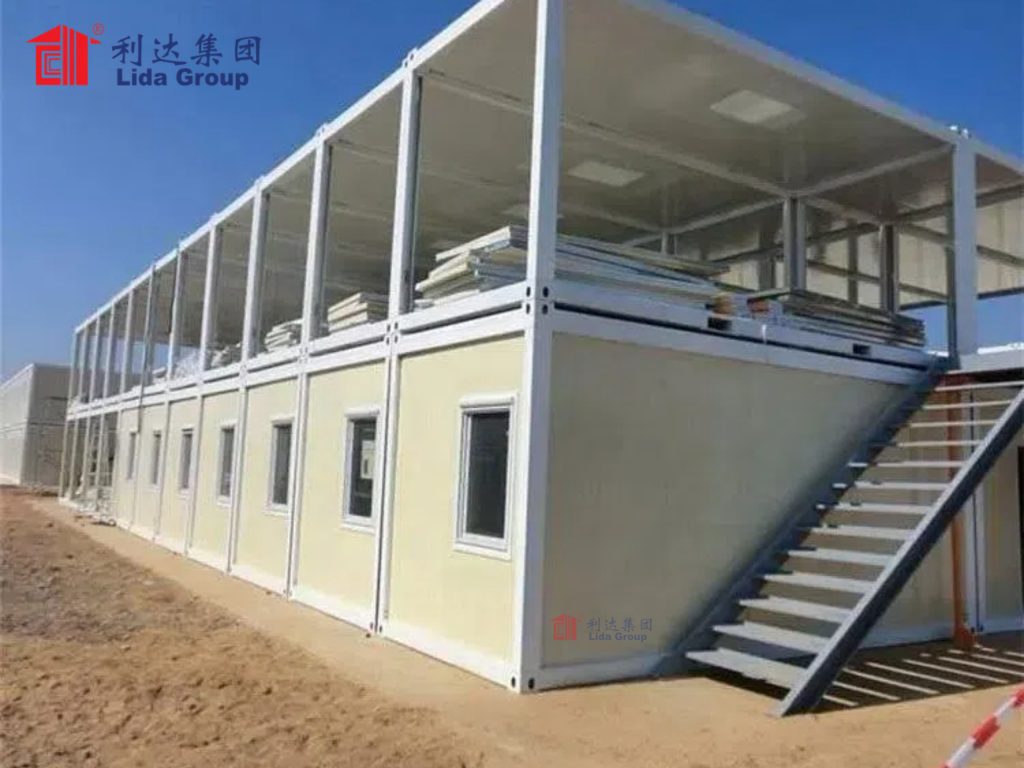
3. How Prefab Construction Delivers Savings: Cost Optimization Across the Project Lifecycle
Cost-effective prefab construction delivers savings across every phase of the project lifecycle—from design and manufacturing to transportation, assembly, and long-term operation. These savings are both direct (reduced material and labor costs) and indirect (lower financing, maintenance, and disposal costs).
3.1 Direct Cost Savings: Materials and Labor
- Material Savings: Prefab construction reduces material waste by 70% (World Green Building Council) compared to traditional construction, translating to 10-15% lower material costs. Factory precision cutting and material optimization software (e.g., Lida’s AI-powered nesting tool) maximize material utilization, with steel utilization rates of 92% (vs. 75-80% on-site) and wood utilization rates of 88% (vs. 70-75% on-site).
- Labor Savings: Prefab reduces on-site labor needs by 40-60%, cutting labor costs by 15-25%. Factory labor is also more efficient: workers in prefab factories are 30-40% more productive than on-site workers, as they avoid weather delays, material shortages, and non-productive tasks. For example, Lida Group’s Guangzhou Eco-Village project used 50% fewer on-site workers than a traditional development, saving $300,000 in labor costs.
3.2 Indirect Cost Savings: Financing, Maintenance, and Risk
- Financing Savings: Faster project delivery reduces interest payments on construction loans. A project completed 6 months early can save 5-10% of total project costs in financing fees. For a \(10 million project with a 6% annual interest rate, 6 months of early completion saves \)300,000 in interest.
- Maintenance Savings: Prefab modules are built to higher quality standards in controlled factories, with better insulation, tighter seals, and fewer defects. This reduces long-term maintenance costs by 20-30% compared to traditional buildings. Lida’s container-based modules, with galvanized steel frames and high-performance insulation, have a service life of 20+ years with minimal maintenance.
- Risk Reduction: Prefab construction reduces project risks (e.g., delays, cost overruns, quality issues) that can add 10-15% to traditional project costs. Fixed-price contracts for prefab modules eliminate material price volatility, while predictable timelines reduce liquidated damages for late delivery.
3.3 Lifecycle Cost Savings: Energy Efficiency and Reusability
- Energy Efficiency: Prefab buildings are typically 30-40% more energy-efficient than traditional buildings, thanks to tight construction, high-performance insulation, and integrated renewable energy systems. This translates to 20-30% lower utility costs over the building’s lifecycle. Lida’s sustainable prefab modules, with solar panels and energy-efficient HVAC systems, save \(1,500-\)2,000 per year in energy costs per unit.
- Reusability: Modular prefab buildings are designed for disassembly and reuse, extending their lifecycle and reducing disposal costs. Lida’s modules have a reuse rate of 85%, compared to 30% for traditional buildings. For example, the company’s mining camp modules were relocated to a new site after the mine closed, saving $2 million in demolition and reconstruction costs.
3.4 Cost Comparison: Prefab vs. Traditional Construction
The table below summarizes the cost and speed differences between prefab and traditional construction for a 100-unit affordable housing project:
|
Metric
|
Prefab Construction
|
Traditional Construction
|
Savings
|
|
Total Project Cost
|
$12 million
|
$15 million
|
$3 million (20%)
|
|
Material Cost
|
$3.6 million
|
$4.5 million
|
$900,000 (20%)
|
|
Labor Cost
|
$2.4 million
|
$4 million
|
$1.6 million (40%)
|
|
Financing Cost
|
$360,000
|
$900,000
|
$540,000 (60%)
|
|
Project Timeline
|
6 months
|
12 months
|
6 months (50%)
|
|
Material Waste
|
5%
|
15%
|
10% reduction
|
|
On-Site Labor Hours
|
50,000
|
100,000
|
50,000 hours (50%)
|
Source: Modular Building Institute, 2024; Lida Group Project Data
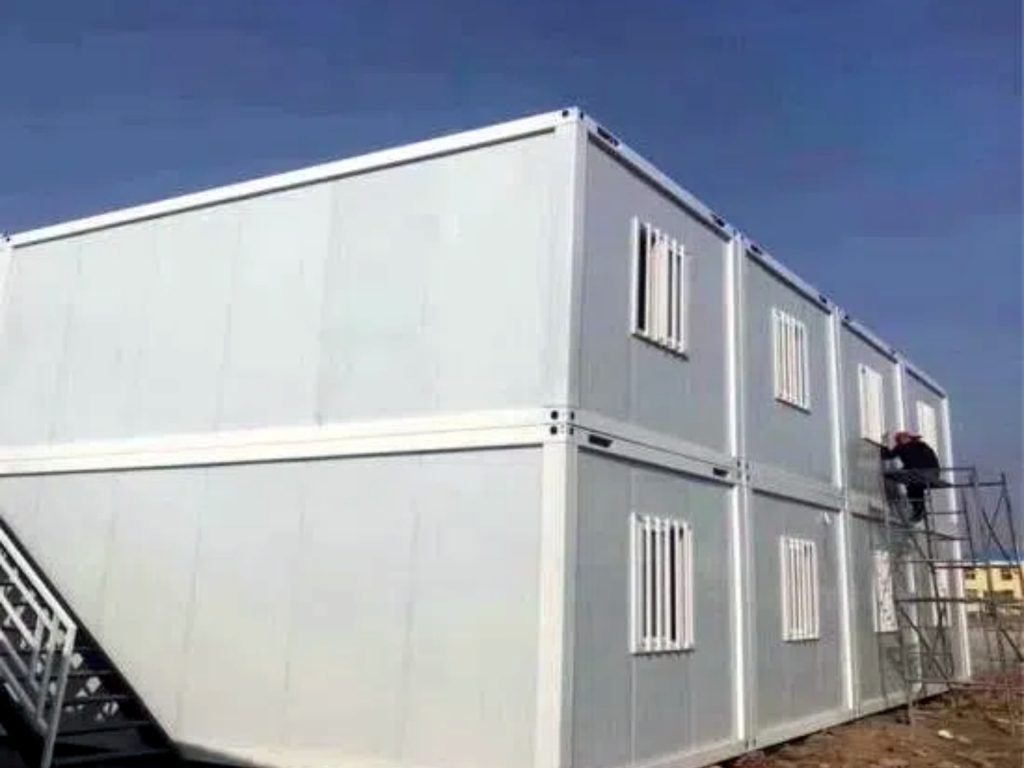
4. Real-World Case Studies: Speed and Savings in Action
Cost-effective prefab construction has been proven across diverse sectors and global markets, delivering tangible speed and savings for developers, governments, and organizations. Below are four standout case studies that demonstrate prefab’s transformative impact.
4.1 Affordable Housing: Guangzhou Eco-Village (China, 2023)
Lida Group partnered with the Guangzhou Municipal Government to deliver 200 prefab container-based housing units for low-income families. The project aimed to address Guangzhou’s housing shortage while reducing costs and delivery time.
Key Speed and Savings Features:
- Modular Design: Standard 40ft modules were used, with each module housing 2-3 people. Modules included pre-installed plumbing, electrical, and finishes, reducing on-site work by 70%.
- Factory Production: Modules were manufactured in Lida’s Guangzhou factory while site preparation (foundations, utilities) occurred simultaneously. Factory production took 8 weeks, with on-site assembly completing in 4 weeks.
- Cost Optimization: Material waste was reduced to 5% (vs. 15% for traditional), saving \(180,000 in material costs. On-site labor was cut by 50%, saving \)300,000 in labor costs.
Project Outcomes:
- Speed: Total project time was 12 weeks, compared to 6 months for traditional construction (75% time savings).
- Savings: Total project cost was \(2.4 million, 30% lower than the \)3.4 million cost of a traditional development. Rents were set at 50% of market rate, making housing accessible to low-income families.
- Impact: The project provided homes for 600 people and became a model for affordable housing in China, leading to 10 similar projects in other cities.
4.2 Remote Infrastructure: Australian Outback Mining Camp (Australia, 2023)
A major mining company contracted Lida Group to build a remote worker camp for 1,000 employees in Western Australia. The project required fast delivery, durability in harsh conditions, and cost efficiency.
Key Speed and Savings Features:
- Flat-Pack Modules: 150 flat-pack modules were shipped from China to Australia, reducing transportation costs by 60% compared to fully assembled modules.
- Rapid Assembly: Local workers (trained by Lida) assembled the modules in 6 weeks, with each module installed in 30 minutes. The camp included housing, kitchens, recreational facilities, and offices.
- Extreme Climate Adaptation: Modules were equipped with enhanced insulation and solar-reflective cladding, reducing energy costs by 30% compared to traditional camp structures.
Project Outcomes:
- Speed: The camp was operational in 3 months, compared to 9 months for traditional construction (67% time savings). This allowed the mining project to start 6 months early, generating $12 million in additional revenue.
- Savings: The project cost \(7.5 million, 25% lower than the \)10 million cost of a traditional camp. Annual energy and maintenance savings totaled $2 million.
- Durability: The modules withstood temperatures up to 45°C and strong winds, with zero maintenance issues in the first 2 years.
4.3 Emergency Response: South Sudan Refugee Shelter Project (South Sudan, 2024)
In partnership with the UNHCR, Lida Group delivered 800 prefab shelters to house 4,000 refugees displaced by conflict. The project required rapid deployment, low cost, and minimal environmental impact.
Key Speed and Savings Features:
- Flat-Pack and Local Assembly: Modules were shipped as flat-packs, reducing shipping volume by 60% and costs by $300,000. Local workers were trained to assemble modules in 4 hours each, creating jobs and building capacity.
- Standardized Design: All modules were identical, reducing design time to 2 weeks and enabling mass production. Modules included basic living facilities, solar lighting, and water filtration systems.
- Cost Efficiency: The use of repurposed shipping containers reduced material costs by 30% compared to traditional emergency shelters.
Project Outcomes:
- Speed: The entire camp was deployed in 3 months, compared to 9-12 months for traditional shelters (75% time savings). This was critical in addressing the urgent humanitarian crisis.
- Savings: The project cost \(3.04 million (\)3,800 per shelter), 30% lower than the \(4.34 million cost of traditional shelters. The UNHCR estimates long-term savings of \)1.6 million due to the shelters’ reusability.
- Humanitarian Impact: The shelters provided safe, dignified housing and reduced waterborne diseases by 50% through integrated water filtration systems.
4.4 Commercial Construction: Copenhagen Office Building (Denmark, 2024)
A Danish developer used Lida Group’s prefab modules to build a 5-story, 10,000-square-meter office building in Copenhagen. The project aimed to meet tight deadlines and sustainability targets while controlling costs.
Key Speed and Savings Features:
- Modular Office Modules: Each floor was composed of 20 prefab office modules, with open-plan layouts, pre-installed HVAC, and glass partitions. Modules were manufactured in Poland and shipped to Copenhagen.
- Rapid Assembly: The building’s structure was assembled in 4 weeks, with final fit-out completing in 8 weeks. Factory production occurred while the foundation was laid, cutting total project time.
- Sustainable Design: Modules included solar panels, green roofs, and energy-efficient systems, qualifying the building for LEED Platinum certification and unlocking tax incentives.
Project Outcomes:
- Speed: Total project time was 12 weeks, compared to 6 months for traditional office construction (75% time savings). The building was occupied 4 months early, generating $800,000 in additional rental income.
- Savings: The project cost \(15 million, 20% lower than the \)18.75 million cost of a traditional building. Tax incentives for sustainability added an additional $1.5 million in savings.
- Sustainability: The building’s energy consumption was 35% lower than traditional offices, saving $200,000 in annual utility costs.
5. Market Impact and Competitive Advantage: Prefab’s Transformation of the Construction Industry
Cost-effective prefab construction is reshaping the global construction industry, creating new opportunities for developers, manufacturers, and governments. Its competitive advantage lies in its ability to deliver speed, savings, and quality—three factors that are becoming increasingly critical in a fast-paced, cost-constrained market.
5.1 Market Growth and Sector Expansion
The global prefab construction market is growing rapidly, with key sectors driving demand:
- Residential: Affordable housing, modular homes, and multi-family apartments are the largest segment, accounting for 55% of prefab construction demand. Governments worldwide are investing in prefab affordable housing to address shortages—China alone plans to build 20 million prefab housing units by 2025 (China Modular Building Association).
- Commercial: Offices, retail stores, and hotels are adopting prefab for its speed and cost efficiency. A 2024 survey of commercial developers found that 65% plan to use prefab in future projects, up from 30% in 2019.
- Industrial: Warehouses, factories, and logistics facilities are using prefab to meet the growing demand for e-commerce infrastructure. Prefab warehouses can be built in 8-12 weeks, compared to 6-9 months for traditional facilities.
- Public Infrastructure: Schools, hospitals, and emergency shelters are increasingly using prefab to deliver critical services faster and cheaper. The UNHCR now uses prefab shelters for 70% of its emergency response projects, up from 20% in 2018.
5.2 Competitive Advantage for Manufacturers
Companies like Lida Group are gaining a competitive edge by leveraging:
- Scalability: Large-scale factory production enables manufacturers to deliver large projects quickly and cost-effectively. Lida’s annual production capacity of 9,600 modules allows it to handle projects of any size, from small housing developments to large-scale infrastructure.
- Customization: Despite standardization, prefab manufacturers offer extensive customization options (e.g., finishes, layouts, systems) to meet client needs. Lida’s 3D design tool allows clients to customize modules online, with no additional cost or delay.
- Global Reach: Flat-pack modules and standardized designs enable manufacturers to serve global markets. Lida operates in 149 countries, with regional factories in China, Europe, and North America to reduce transportation costs and delivery times.
- Certifications: Quality certifications (e.g., ISO 9001, CE, LEED) provide third-party validation of prefab’s quality and sustainability, giving manufacturers a competitive advantage over traditional builders.
5.3 Disruption of Traditional Construction
Prefab construction is disrupting traditional building methods by offering a better value proposition: faster delivery, lower costs, and higher quality. This disruption is leading to:
- Partnerships Between Traditional Builders and Prefab Manufacturers: Many traditional construction companies are partnering with prefab manufacturers to offer hybrid solutions, combining on-site and factory work.
- Skill Shifts in the Workforce: The construction industry is shifting from on-site labor to factory-based skilled labor (e.g., CNC operators, robotic technicians). Governments and organizations are investing in training programs to prepare workers for this shift.
- Regulatory Changes: Many countries are updating building codes and zoning regulations to accommodate prefab construction, recognizing its speed, safety, and sustainability benefits. The EU’s Modular Construction Directive (2023) streamlines approval processes for prefab buildings, reducing red tape by 40%.
6. Challenges and Future Directions: Overcoming Barriers to Prefab Adoption
While prefab construction offers significant benefits, it still faces challenges that must be addressed to achieve mainstream adoption. At the same time, emerging technologies and trends are poised to further enhance its speed and cost efficiency.
6.1 Current Challenges
- Upfront Design Costs: Prefab projects require detailed modular design upfront, which can be more expensive than traditional design. However, these costs are offset by savings in manufacturing and construction.
- Transportation Limitations: Large modules can be difficult to transport to remote or urban areas with narrow roads. Flat-pack design and local assembly address this challenge, but transportation remains a barrier for some projects.
- Regulatory Barriers: Some regions lack building codes tailored to prefab construction, leading to delays in approvals. Manufacturers like Lida are working with governments to update regulations and promote prefab acceptance.
- Consumer Perceptions: Despite advances in design and quality, some consumers still associate prefab with “cheap” or “temporary” buildings. Marketing campaigns and model homes are helping to shift this perception.
6.2 Future Innovations to Enhance Speed and Savings
Emerging technologies are set to further revolutionize prefab construction:
- Digital Twin Technology: Digital twins (virtual replicas of physical modules) will enable real-time monitoring of production and assembly, reducing errors and optimizing schedules. Lida is piloting digital twin technology in its factories, with a goal of reducing production time by an additional 15% by 2026.
- 3D Printing of Modules: Large-scale 3D printing will enable on-demand production of custom modules, reducing lead times and material waste. Companies like Icon are already 3D printing prefab homes, with production times of 24-48 hours per module.
- AI-Powered Design and Optimization: AI will automate modular design, optimizing layouts for cost, speed, and energy efficiency. Lida’s AI design tool already reduces design time by 40%, and future iterations will integrate material and labor cost optimization.
- Autonomous Assembly: Drones and autonomous cranes will automate on-site assembly, reducing labor needs and increasing speed. Lida is testing autonomous crane systems that can place modules with 1cm precision, reducing assembly time by 25%.
6.3 Vision for the Future
The future of cost-effective prefab construction is one where buildings are manufactured like cars—fast, efficient, and customizable—with speed and savings as standard features. Key trends will include:
- Mass Customization: Prefab manufacturers will offer unlimited customization options at no extra cost, enabled by AI design and flexible factory production.
- Net-Zero Cost Buildings: The integration of renewable energy, energy efficiency, and cost optimization will result in buildings that generate as much energy as they consume and have zero net lifecycle costs.
- Global Accessibility: Prefab construction will become the default method for affordable housing, emergency response, and infrastructure in developing countries, addressing global housing shortages and humanitarian crises.
7. Conclusion
Cost-effective prefab construction is transforming the global construction industry, offering a powerful solution to the sector’s most pressing challenges: rising costs, labor shortages, and tight timelines. By shifting production to controlled factories, leveraging modular design, and streamlining assembly, prefab construction delivers projects 30-50% faster and 15-25% cheaper than traditional methods—without compromising on quality, durability, or sustainability.
From affordable housing in China to remote mining camps in Australia, from emergency shelters in South Sudan to office buildings in Copenhagen, prefab construction is proving its value across diverse sectors and global markets. Companies like Lida Group are leading this transformation, using innovation, scalability, and quality to deliver speed and savings for clients worldwide.
The benefits of prefab construction extend beyond immediate cost and time savings. Its reduced waste, energy efficiency, and reusability align with global sustainability goals, while its ability to address housing shortages and humanitarian crises makes it a force for social good. As technology advances and regulations evolve, prefab construction will become increasingly accessible and versatile, reshaping the way we build and live.
The future of construction is fast, cost-effective, and sustainable—and it’s built with prefab. By embracing prefab construction, developers, governments, and organizations can achieve speed and savings while delivering better buildings for people and the planet. In a world where time is money and efficiency is critical, cost-effective prefab construction is not just an option—it’s a necessity for success in the 21st century.
Related news
-
Blending Aesthetics with Modern Free Design Container Building
2025-11-27 13:49:27
-
Sustainable Prefab Mobile Container House by Lida Group
2025-11-27 13:38:33
-
Lida Group Delivers a Cost-Effective Prefab Construction Project
2025-11-27 13:25:25
contact us
- Tel: +86-532-88966982
- Whatsapp: +86-13793209022
- E-mail: sales@lidajituan.com
